


Double Upholstered Bedstead
These double upholstered bedstead pieces combine fabric panels with timber frames for a classic bedroom centrepiece.
Double Upholstered Bedstead
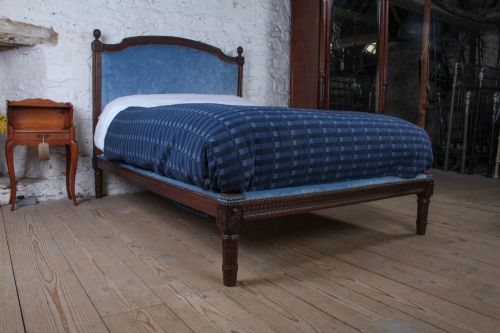
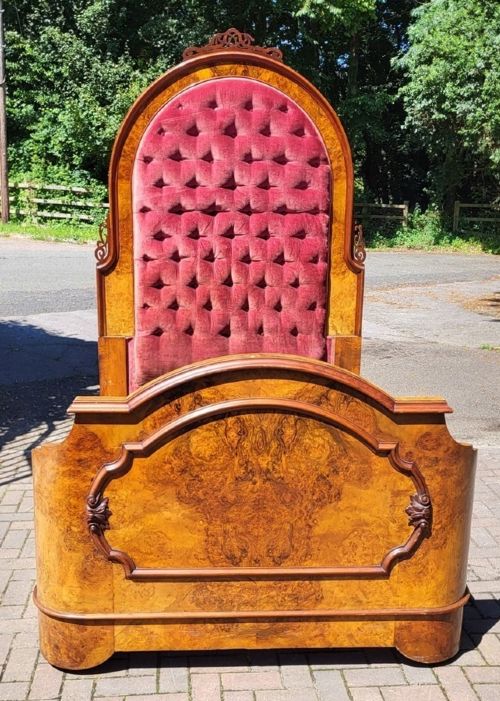
A double upholstered bedstead provides a sleeping platform defined by textile elements set into wooden or brass structures. The items on this page span several eras, including Victorian, Edwardian, and Regency periods, alongside 19th-century and 1920s examples.
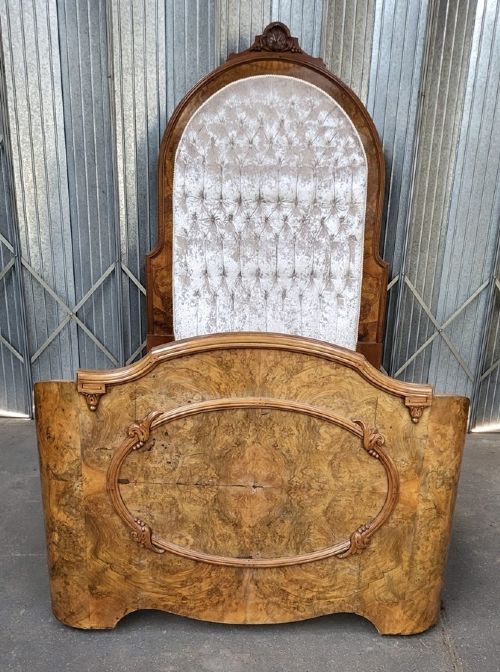
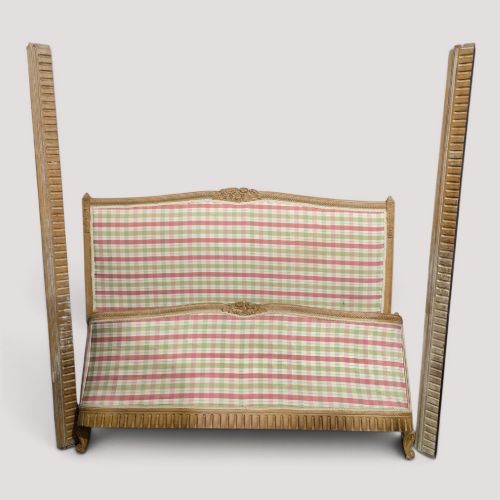
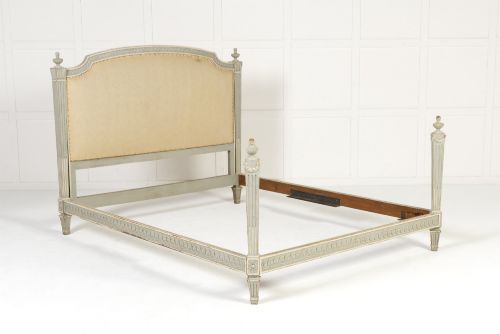
Most pieces follow distinct regional styles, frequently drawing on French provincial, Louis XV, and Louis XVI aesthetics. Forms range from high-button-back walnut frames to painted and parcel gilt carved wood configurations.
Buyers encountering these items will find double beds and bed frames featuring side rails and headboards covered in velvet, fabric, or other textiles. Timber choices include mahogany, burr walnut, oak, Hungarian ash, and painted wood.
How they were made
Maker construction combines traditional woodworking with upholstery techniques, utilising timber frames carved from mahogany, walnut, oak, and ash. Joinery secures structural stability for daily use while supporting side rails and headboards.
Surfaces receive various finishes, spanning polished timber grains, painted coatings, and parcel gilt highlights. Textile components employ fabric or velvet panels, occasionally featuring button-back detailing or newly applied upholstery.
Design influences span French provincial, Louis XV, Louis XVI, and Dutch styles.
What varies in quality
Quality differences emerge in the complexity of the timber carving and the finish applied to the wood. Solid brass components and intricate parcel gilt detailing separate standard production from exhibition quality craftsmanship.
The choice and execution of the upholstery also define the tier of the piece, from simple fabric panels to buttoned velvet backs set within burr walnut or mahogany structures.
Harrods
The Double Upholstered Bedstead Glossary
- Bedstead
- The framework of a bed supporting the mattress and headboard, distinct from the bedding itself. These structures often incorporate decorative timber and fabric panels.
- Burr walnut
- Timber taken from the wart or burl of a walnut tree, prized for its swirling, highly figured grain patterns. It frequently appears on high-end Victorian frames.
- Parcel gilt
- A decorative technique where specific carved details of a wooden object receive a thin layer of gold leaf while the rest of the surface is painted. This method highlights specific ornamental motifs.
- Louis XVI Style
- A neoclassical design vocabulary characterised by straight lines, symmetrical proportions, and classical architectural details. Pieces in this style often use light timber and restrained carving.
- Half tester
- A canopy that projects from the wall over the head of the bed without full vertical posts at the foot. It provides a decorative overhead element above the mattress.
Double Upholstered Bedstead: Frequently Asked Questions
What periods do these beds come from?
The pieces span multiple eras, including Regency, Victorian, Edwardian, and 1920s examples. Each period brings distinct stylistic traits to the timber and textile elements.
Buyers will also find pieces dated to the nineteenth century, reflecting regional European and British cabinet-making traditions.
How do I identify a French style bed?
French style beds often display carved wood, painted surfaces, and curved profiles inspired by Louis XV and Louis XVI designs. These frames frequently use beech, walnut, or painted finishes.
Upholstery on these models may include neutral fabrics or newly fitted coverings that match provincial or chateau aesthetics.
What woods were used for these bedframes?
Cabinet makers utilised a variety of timbers, with mahogany, oak, burr walnut, and Hungarian ash appearing across the collection. Some pieces also feature painted wood or parcel gilt surfaces.
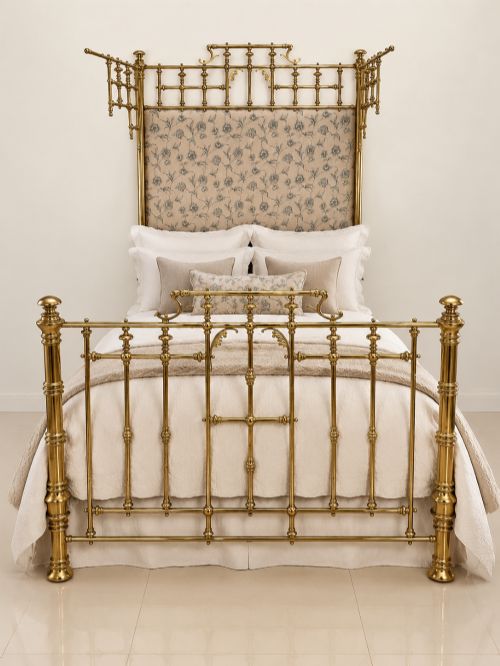
In addition to timber, certain models incorporate solid brass for structural and decorative elements.
Are the upholstery panels original?
Upholstery condition varies, with some listings noting newly upholstered fabric or velvet panels. Historical pieces may retain older textile work or feature refreshed coverings.
Inspecting the listing details clarifies whether the fabric is a recent addition or a period-appropriate survival.