

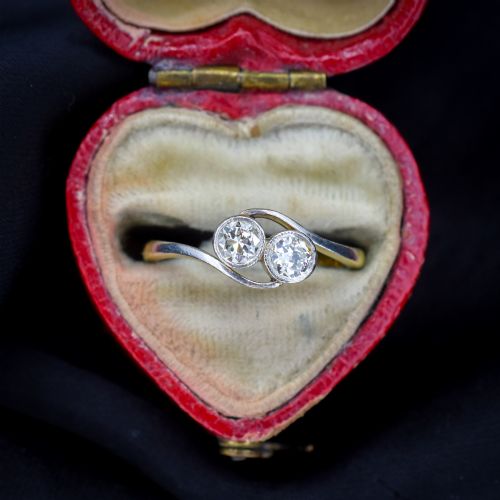
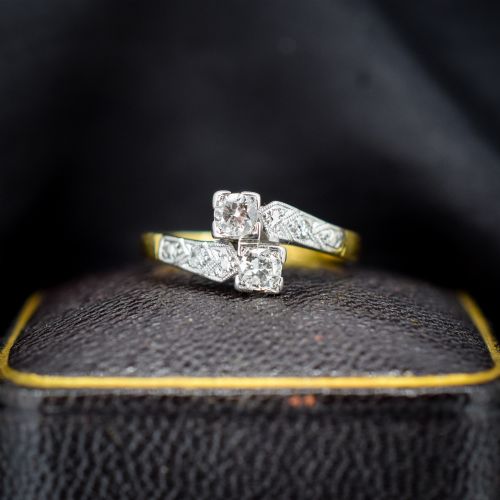
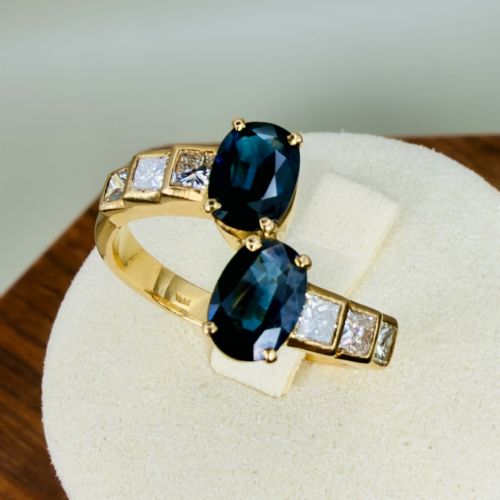
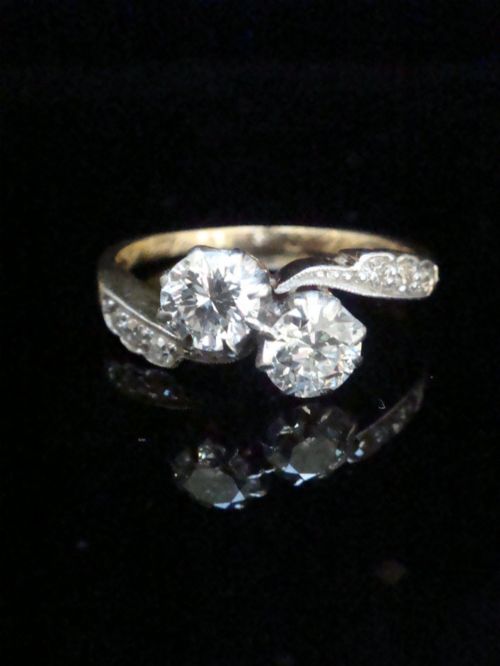
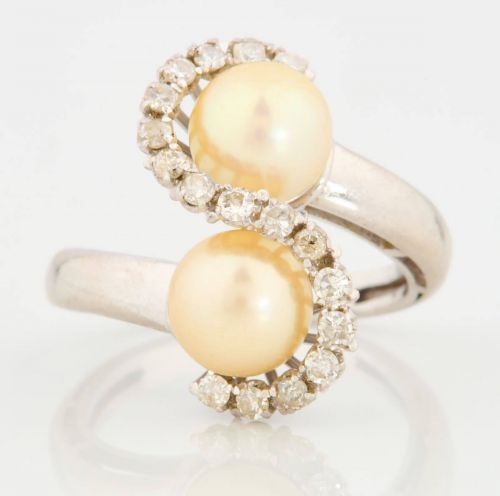
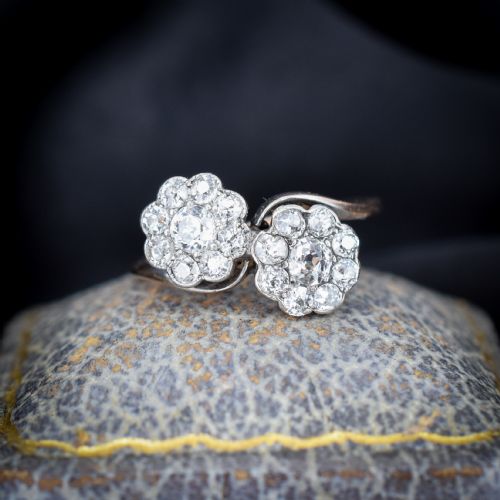


Double Stone Diamond Ring
A double stone diamond ring pairs two brilliant gems in a single setting, offering remarkable presence on the hand.
Double Stone Diamond Ring
The versions most commonly met span the Edwardian era through to the mid-century decades, including the 1920s, 1930s, 1940s, 1950s, and 1960s. Alongside pure diamond duos, these rings frequently incorporate accompanying gems such as emerald, ruby, sapphire, pearl, and aquamarine.
Makers often fashioned these pieces as cocktail rings, cluster rings, or crossover bands. The aesthetic shifts from delicate Edwardian gold mountings to geometric platinum twists and substantial mid-century white gold settings.
Materials and construction
Goldsmiths utilised platinum and various carats of gold, including 18ct yellow gold, 18ct white gold, and 14ct gold, to mount the stones securely. Platinum offered the strength required for delicate twists and intricate settings, while yellow and white gold provided traditional warmth and modern contrast.
Gemstone selection relies heavily on old cut diamonds, paired alongside precious coloured stones or pearls. Master jewellers set these gems by hand, shaping the metal into intricate swirl, halo, daisy cluster, and crossover formations.
Double Stone Diamond Ring Retail Price Guide 2026
Typical asking prices for double stone diamond ring among the pieces listed under this phrase on Sellingantiques today, from the lower quarter to the upper quarter. They describe what is for sale here now, not the wider market.
One sweet piece pairs a moonstone with a sweetheart bow, proving that past romantics had a flair for theatrical sentiment.
Assessing craftsmanship and design
Quality rests in the harmony of the two primary stones and the fluidity of the surrounding metalwork. A superior mounting feels seamless, with prongs or bezels holding the gems securely while allowing maximum light entry.
The choice of supporting materials also elevates a piece, particularly when old cut diamonds are matched with vibrant emeralds, rubies, or sapphires. The precision of the twist or crossover dictates the overall grace of the silhouette.
The Double Stone Diamond Ring Glossary
- Toi et Moi
- A French term meaning you and me, describing a ring style featuring two main stones placed side by side or in a crossover design. This configuration symbolises two souls entwined.
- Old cut diamond
- A hand-faceted diamond cut popular in antique and Edwardian jewellery, featuring a small table, high crown, and large open culet. These stones catch candlelight and low light with a distinctive, softer brilliance.
- Crossover ring
- A band where the shank sweeps upwards and crosses over the finger, often cradling two feature stones. This design creates a dynamic sense of movement.
- Cluster ring
- A jewellery arrangement where a central stone or duo is surrounded by a border of smaller gems. This maximises visual impact and perceived size.
- Platinum
- A dense, durable, and naturally white precious metal used in fine jewellery. It allows for secure, slender settings that do not tarnish.
Double Stone Diamond Ring: Frequently Asked Questions
What is a toi et moi ring?
A toi et moi ring is a historic design featuring two principal gems that sit close together or entwine. The layout represents two distinct entities united as one.
Jewellers have favoured this romantic configuration for centuries, often pairing diamonds with coloured stones like rubies or sapphires.
How do I care for an antique diamond ring?
Care requires gentle cleaning with warm soapy water and a soft brush to remove everyday oils. Avoid harsh chemical dips, particularly if the ring contains softer gems or pearls.
Store the piece separately in a fabric-lined box to prevent the diamonds from scratching softer metals or other jewellery.
What era do most twist rings come from?
Twist and crossover rings appear frequently from the Edwardian period through the Art Deco era and into the mid-century decades. Edwardian examples often feature intricate yellow gold work, while later pieces lean towards platinum and white gold.
Design cues such as claw settings and shank profiles help pinpoint the exact decade of manufacture.