

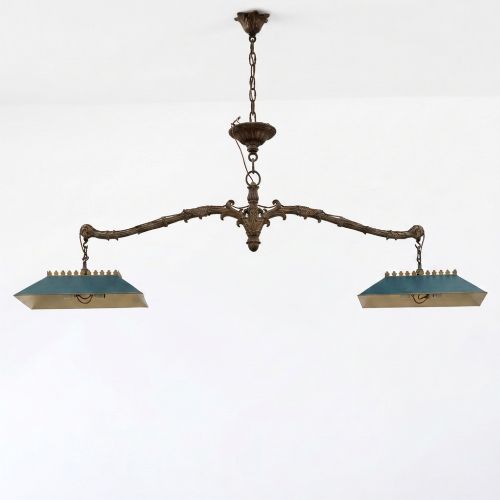


Double Pendant Ceiling Fixture
These double pendant ceiling fixture examples bring historic illumination into domestic spaces, offering layered light through multi-tiered frames and robust brass or bronze constructions.
Double Pendant Ceiling Fixture
A double pendant ceiling fixture search reveals substantial overhead lighting spanning from the nineteenth century through the nineteen-forties. These pieces encompass elaborate multi-light chandeliers and specialised industrial shades designed to anchor large rooms.
The selection on this page leans heavily towards grand multi-tiered chandeliers in French bronze and Italian gilded metal, alongside industrial prismatic pendants. Buyers frequently encounter complex configurations featuring numerous lights arranged across double tiers.
Origins stretch across European workshops, taking in French chateau designs, Dutch baroque forms, and Florentine polychrome finishes. Each piece reflects the decorative priorities of its specific period, from Edwardian gothic brass to nineteen-thirties gilded elegance.
How they were made
Foundry work dominates the construction of these fixtures, utilising cast bronze, brass, copper, and gilt metal to form robust skeletal frames. Metalworkers shaped these durable materials into intricate scrolling arms and multi-tiered structures capable of supporting numerous candle or bulb points.
Glass and crystal elements complement the heavy metalwork, incorporating prismatic components, moulded globes, and hanging crystals to diffuse illumination. These transparent additions work alongside polychrome and gilded surface treatments to catch and reflect light.
Double Pendant Ceiling Fixture Retail Price Guide 2026
Typical asking prices for double pendant ceiling fixture among the pieces listed under this phrase on Sellingantiques today, from the lower quarter to the upper quarter. They describe what is for sale here now, not the wider market.
Materials across these listings concentrate on brass, bronze, copper, and gilt metal, paired with glass and crystal elements.
What varies in quality
The refinement of the casting and the complexity of the tiers dictate the upper echelon of these fixtures. Heavier bronze work and intricate detailing on multi-tiered frames separate standard functional lighting from ambitious decorative statements.
Material integration also marks the distinction between grades, particularly in how crystal components, glass globes, and prismatic shades meet the metal armature. Superior examples maintain balanced proportions across massive sixteen or eighteen light structures.
The Double Pendant Ceiling Fixture Glossary
- Double Tiered
- A lighting configuration featuring two distinct horizontal levels of light arms arranged vertically on a single central shaft. This arrangement allows for substantial illumination capacity in large spaces.
- Prismatic
- Formed with geometric light-refracting surfaces designed to diffuse glare while maximising brightness. This optical treatment appears frequently on industrial and early twentieth-century shades.
- Gilt Metal
- Base metal treated with a thin layer of gold paint, leaf, or gilding to simulate solid gold enrichment. It provides a reflective surface that enhances the decorative impact of period chandeliers.
- Polychrome
- Decorated in multiple colours, often applied to wood, metal, or plaster components to achieve a vivid appearance. This finish is typical of certain regional Italian decorative traditions.
- Gothic Revival
- An architectural and decorative style drawing inspiration from medieval forms, incorporating pointed arches and robust metalwork. This aesthetic found expression in Edwardian brass ecclesiastical and domestic lighting.
Double Pendant Ceiling Fixture: Frequently Asked Questions
Where do double pendant ceiling fixtures work best?
These substantial fixtures suit rooms with generous ceiling heights, such as dining halls, reception spaces, and grand stairwells. Their scale demands sufficient clearance to allow multi-tiered frames and large drops to hang properly.
Industrial prismatic variants also find placement in kitchens or workspaces where direct, diffused illumination is required. Their historic presence anchors the spatial design of a room.
How do I identify a French chateau style fixture?
French chateau style pieces typically feature cast bronze or gilded metal frames adorned with elaborate scrolling and multiple light tiers. They lean towards formal symmetry and grand decorative ambition.
These chandeliers often incorporate numerous light points and crystalline elements that reflect nineteenth-century and early twentieth-century salon aesthetics.
What is the difference between brass and bronze fixtures?
Bronze fixtures generally offer heavier casting potential and a darker, richer metallic patina that develops over extended periods. They form the structural backbone of many antique French chandeliers.
Brass variations, conversely, often appear in Edwardian gothic designs and industrial pieces, presenting a brighter golden tone when polished or a warmer aged finish.
How do I date a ceiling fixture from this period?
Dating relies on examining the combination of materials, construction methods, and stylistic cues present in the metalwork and glass. Edwardian pieces often display gothic brass idioms, while nineteen-thirties examples favour gilded bronze or specialised prismatic glass.
Reference to documented regional styles, such as Florentine polychrome or Dutch baroque copper, further clarifies the era of production.