

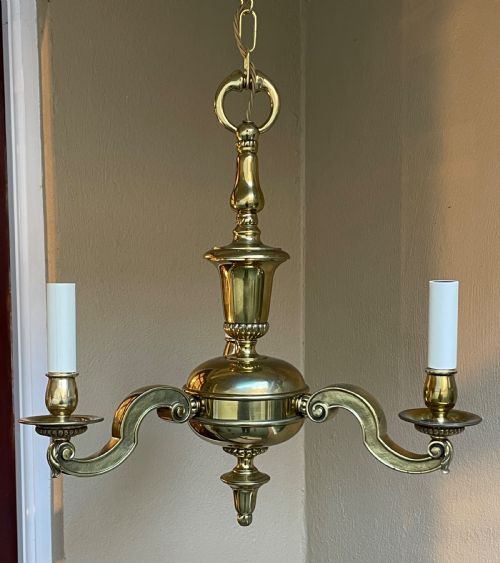
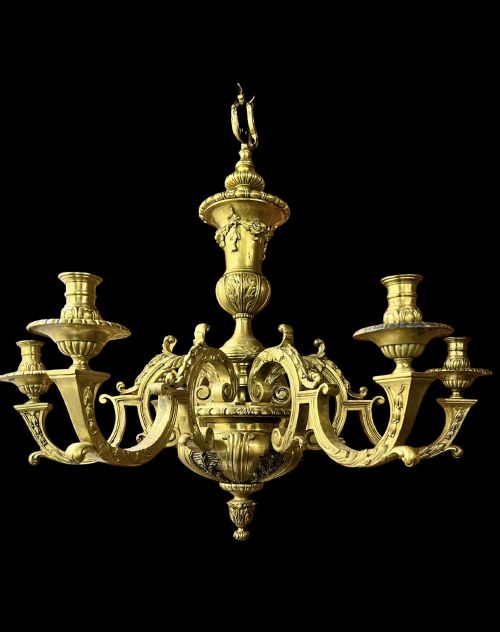


Cast Brass Chandelier Arm
These cast brass chandelier arm components and complete fixtures bring substantial metalwork and period lighting to a room.
Cast Brass Chandelier Arm
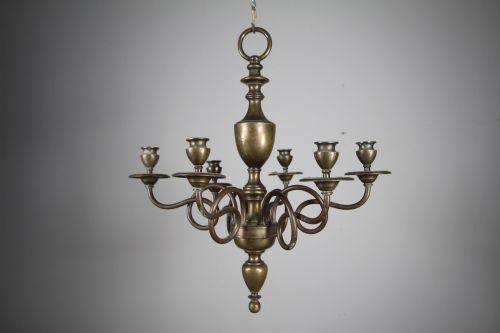
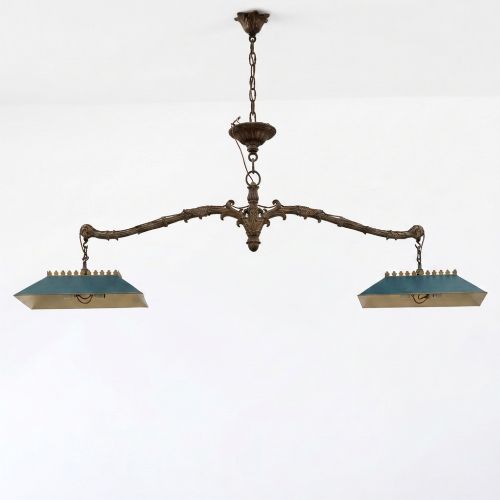
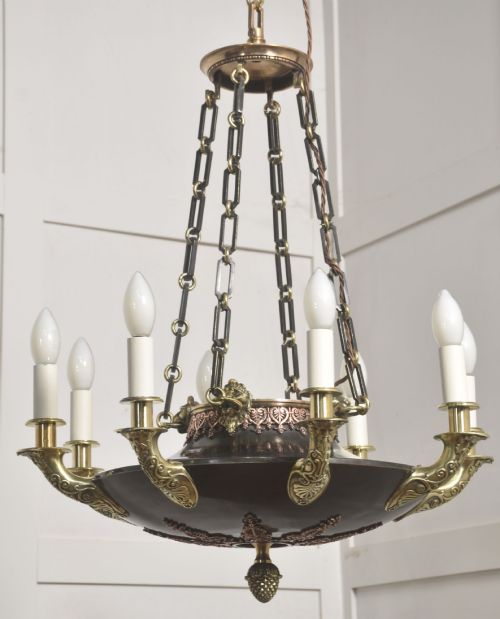
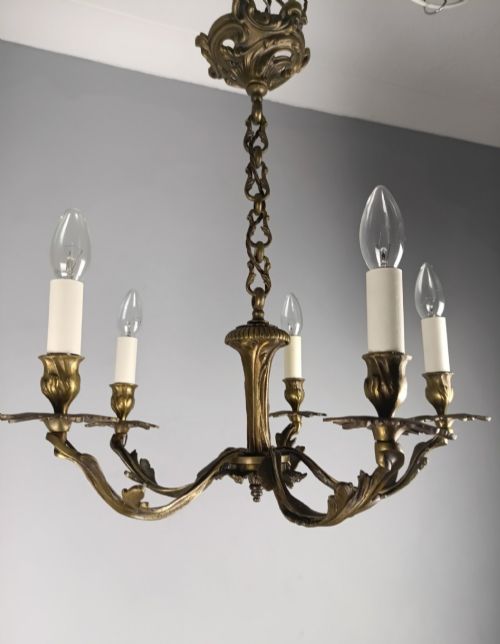
A cast brass chandelier arm forms the structural and decorative branch of a multi-light ceiling fixture, carrying the internal wiring or gas channels to the light holders. When searching for a cast brass chandelier arm, buyers encounter complete chandeliers, ceiling lights, and individual components dating from the nineteenth century into the early twentieth century.
The selections span distinct historical aesthetics including French Rococo, Empire Revival, Victorian, and Edwardian periods. Many pieces display elaborate branch formations with multiple arms branching outwards from a central stem to support three, six, eight, or up to twenty-four lights.
Materials and construction methods
Foundries produced these components primarily in brass, bronze, and cast brass, occasionally employing copper, silvered bronze, gilt bronze, or ormolu finishes. Molten metal was poured into moulds to create sturdy structural arms and detailed decorative elements.
Craftspersons then finished the cast components by hand, adding chased or engraved details such as acanthus leaf mounts and ornate period motifs. This combination of casting and hand-finishing ensured each branch possessed structural rigidity alongside intricate surface decoration.
Cast Brass Chandelier Arm Retail Price Guide 2026
Typical asking prices for cast brass chandelier arm among the pieces listed under this phrase on Sellingantiques today, from the lower quarter to the upper quarter. They describe what is for sale here now, not the wider market.
Listings feature brass, bronze, copper, silvered bronze, and ormolu materials across French Rococo, Empire Revival, Victorian, and Edwardian styles.
Distinctions in manufacturing quality
Quality in these lighting components depends largely on the weight of the metal and the crispness of the casting. Heavier cast brass and bronze pieces exhibit deeper relief in their decorative mounts and offer superior structural integrity across multi-branch spans.
The refinement of the surface finish also separates standard production from finer work. Superior examples display carefully chased details and rich patination on gilt bronze, ormolu, or silvered bronze surfaces.
The Cast Brass Chandelier Arm Glossary
- Cast brass
- An alloy of copper and zinc melted and poured into a mould to form solid, ornate shapes. This technique allowed makers to produce robust chandelier arms with complex three-dimensional relief.
- Ormolu
- Finely ground high-carat gold applied to a bronze base using a mercury amalgamation process. This finish provides a brilliant, lasting golden lustre seen on high-end period light fittings.
- Acanthus leaf
- A classical ornamentation motif modelled on the foliage of the Mediterranean plant. It frequently appears cast onto the shoulders and mounts of period chandelier arms.
- Branch
- An individual arm extending from the central body of a chandelier to support a light source. Multi-branch fixtures organise these arms symmetrically around a central vertical axis.
Cast Brass Chandelier Arm: Frequently Asked Questions
How do I date a brass chandelier?
Dating relies on stylistic clues, manufacturing techniques, and material finishes recorded across pieces from the nineteenth and early twentieth centuries. Elements like Empire Revival motifs or Edwardian proportions help place a fixture within its specific era.
Examining the casting quality and assembly methods also aids in determining whether a piece originates from the eighteen-eighties or the nineteen-twenties.
What is the difference between brass and bronze?
Brass is primarily an alloy of copper and zinc, whilst bronze typically combines copper with tin. Both materials were utilised extensively for heavy cast ceiling lights and their supporting arms.
Surface treatments such as gilt bronze, ormolu, or silvered finishes were often applied to enhance the appearance of the underlying metal.
Can I rewire an antique chandelier?
Rewiring allows historic multi-light fixtures to meet modern electrical standards whilst retaining their original metalwork. Professional electricians can thread new wiring through the internal channels of cast brass arms.
Careful rewiring preserves the structural integrity of Edwardian and nineteenth-century chandeliers for daily domestic use.
How many lights did Edwardian chandeliers have?
Edwardian chandeliers commonly featured three, six, eight, or twelve branches radiating from a central stem. These configurations provided balanced illumination for period interiors.
Larger variations with even higher light counts were produced for substantial rooms and formal spaces.