

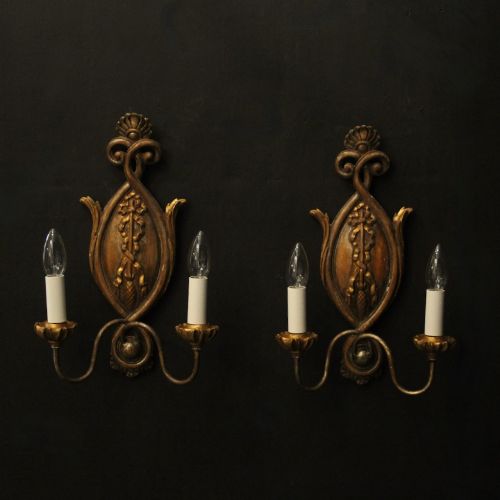
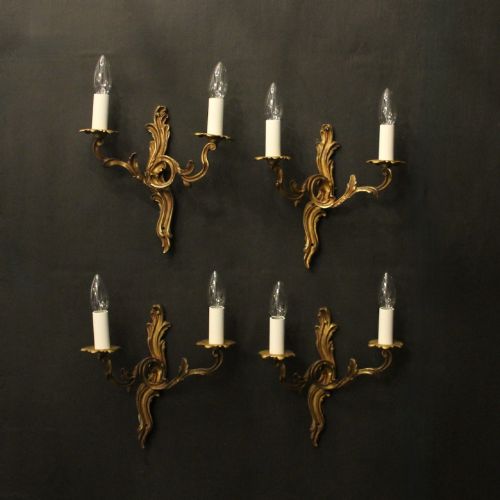
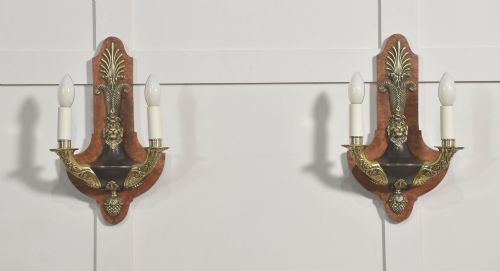
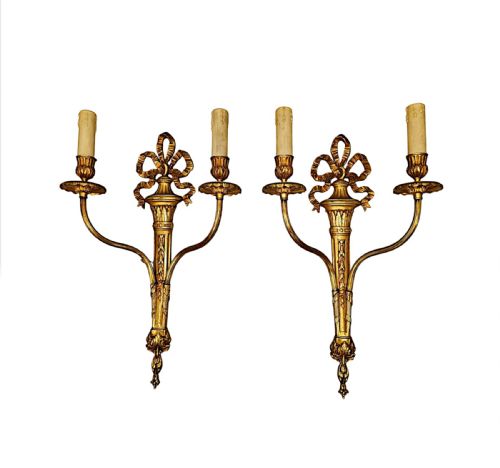

Double Light Sconces
Double light sconces bring paired illumination to walls, combining functional twin-branch design with period metalwork and decorative casting.
Double Light Sconces
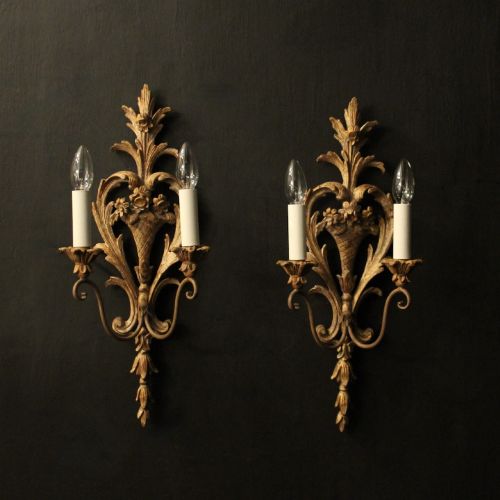
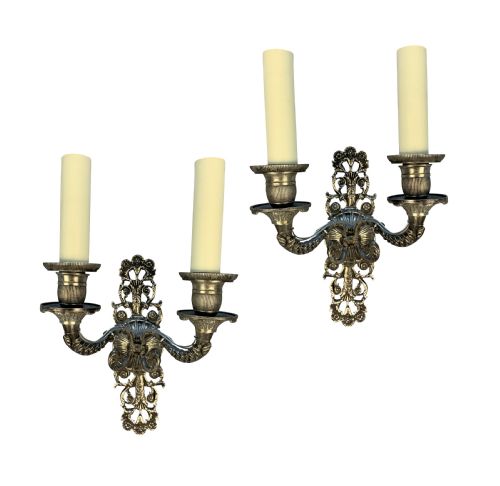
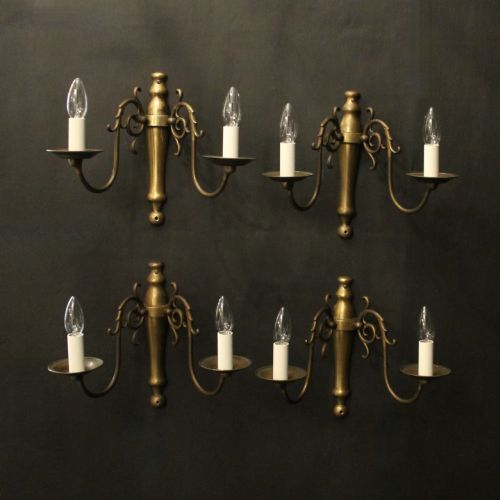
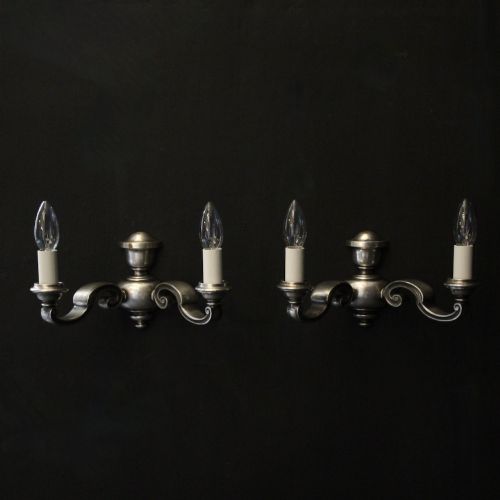
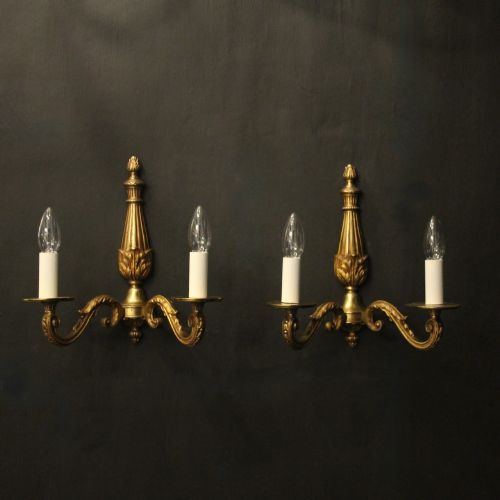
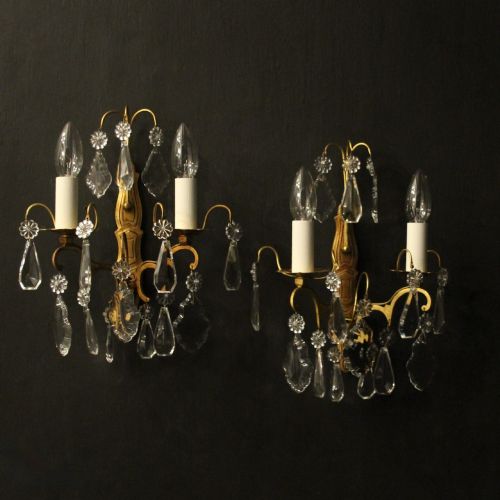
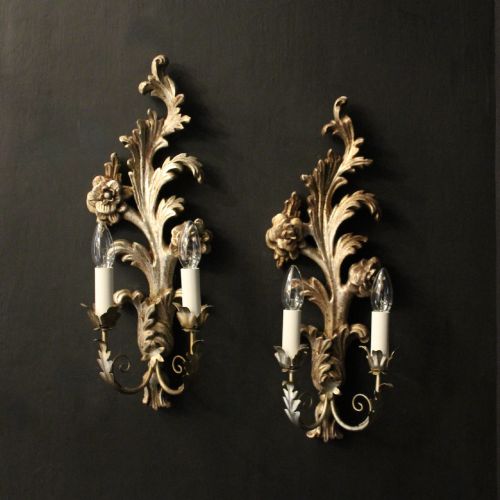
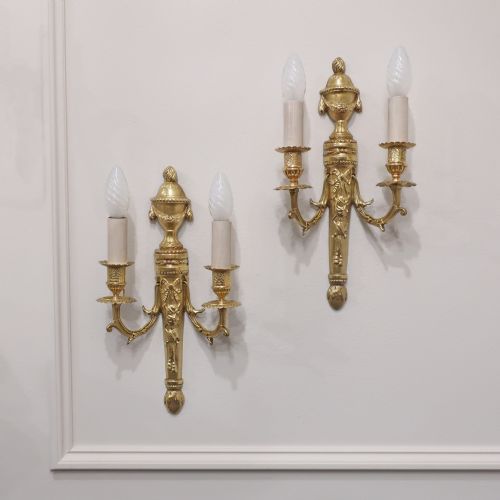
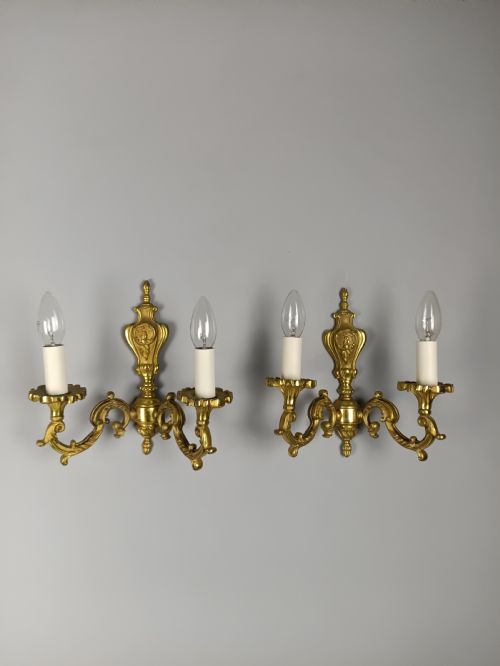
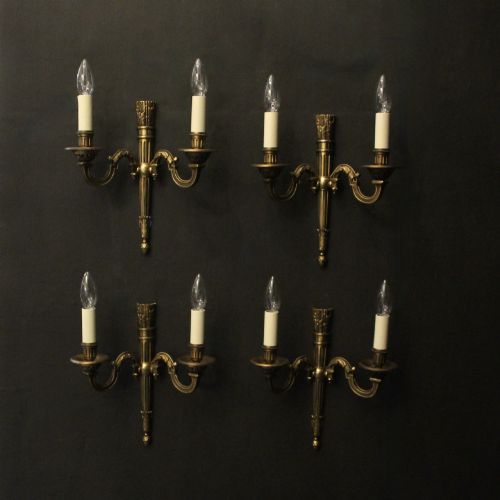
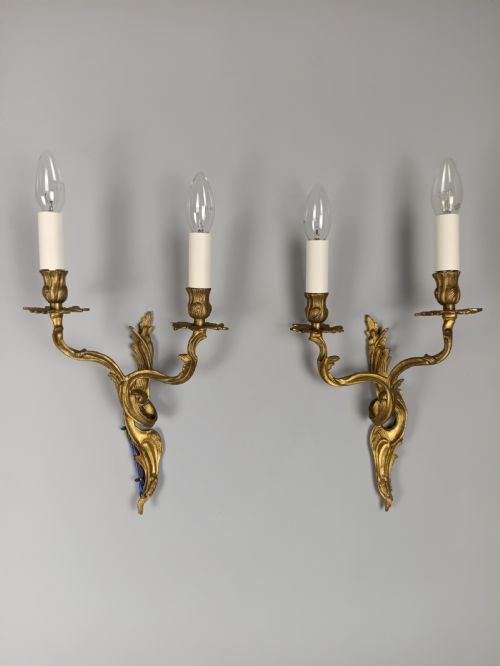
Double light sconces are wall-mounted fixtures designed to carry two arms, candles, or bulbs, appearing frequently in pairs or sets across the nineteenth and early twentieth centuries. When you search for double light sconces, you encounter French and English forms ranging from compact Victorian brass pieces to expansive 1930s gilded twin-arm fixtures.
The selections span distinct stylistic revivals, including French Rococo, Empire, and Adam Revival designs, alongside simpler English brass and silver-plated wall lights. Most pieces utilise twin branches or twin arms, holding candles or electric fittings against wood-panelled or plastered walls.
Origins heavily lean towards French workshops and English makers, utilising materials such as ormolu, gilt bronze, and solid brass. These fixtures served historical interiors as principal sources of reflected and direct wall illumination, remaining adaptable for modern domestic settings.
Materials and Construction
Makers shaped these fixtures primarily from cast brass, bronze, and gilt metal, often applying layers of gold leaf or ormolu to achieve a rich surface finish. Silver plating also appears on both English and French examples, providing a reflective metallic sheen suited to Edwardian and Victorian schemes.
Casting techniques allowed workshops to produce intricate ornamentation, such as ribbon motifs, Rococo scrolls, and neoclassical acanthus leaves. Structural arms were joined firmly to backplates designed to mount securely onto walls, supporting twin candle nozzles or electric lamp holders.
Double Light Sconces Retail Price Guide 2026
Typical asking prices for double light sconces among the pieces listed under this phrase on Sellingantiques today, from the lower quarter to the upper quarter. They describe what is for sale here now, not the wider market.
One early twentieth-century Scottish castle managed to lose seven matching twin arms before someone finally noticed the dining room looked lopsided.
Judging Quality and Execution
Superior double light sconces are distinguished by the crispness of their bronze or brass casting, where intricate chasing reveals sharp botanical or scroll details rather than soft edges. Finer examples exhibit heavy, solid metal construction and well-preserved original gilding that patinates evenly over decades.
The assembly of the twin arms and the backplate indicates the maker's standard, with top-tier pieces offering tight joints and balanced symmetry across both branches. Inferior items often rely on lightweight pressed metal with thin plating that wears through to base layers under repeated cleaning.
Casier·F. & C. Osler·Villeroy & Boch
The Double Light Sconces Glossary
- Ormolu
- A technique of applying finely ground high-carat gold to a bronze base, producing a warm golden lustre characteristic of French decorative metalwork.
- Girandole
- An ornamental wall-mounted bracket holding candles, frequently incorporating a mirror backplate to reflect and amplify the light.
- Giltwood
- Timber carved and coated with a thin layer of gold leaf, often found in Florentine and period decorative wall sconces.
- Twin Arm
- A configuration featuring two distinct branching arms extending from a central backplate to hold dual light sources.
- Adam Revival
- An architectural and decorative style drawing on neoclassical motifs popularised by the Adam brothers during the eighteenth and later revived in the nineteenth century.
Double Light Sconces: Frequently Asked Questions
How do I install antique sconces?
Many period wall lights require conversion or secure mounting by a qualified electrician to ensure proper wiring and weight distribution on plaster walls.
Heavier bronze and brass pieces need solid anchors, while lighter models fit standard wall junction boxes.
Were these originally for candles or electricity?
Earlier Victorian and nineteenth-century pieces were built strictly for candles, while 1920s and 1930s examples often incorporated electric fittings from the outset.
Many surviving candle sconces undergo careful electrification later in life to function safely in modern rooms.
How should I clean gilded brass?
Gilded surfaces require gentle dusting with a soft dry cloth to avoid stripping the thin layer of gold leaf or original lacquer.
Harsh chemical polishes and abrasive cloths permanently damage historical patinas and remove the underlying gilt.
How do I identify French Empire style?
French Empire pieces display classical symmetry, military motifs, and clean architectural lines inspired by antiquity and the Napoleonic era.
They frequently utilise gilt bronze and ormolu with laurel wreaths, urns, and strict geometric proportions.