
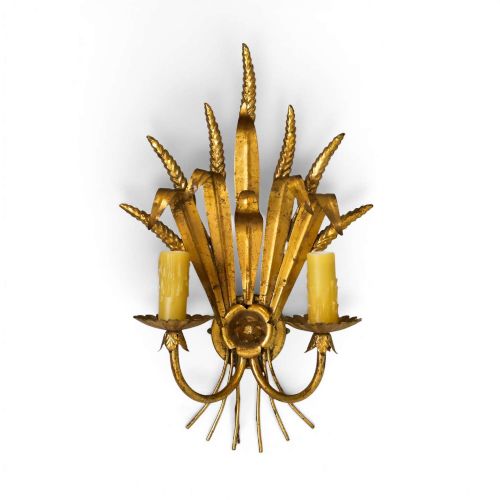
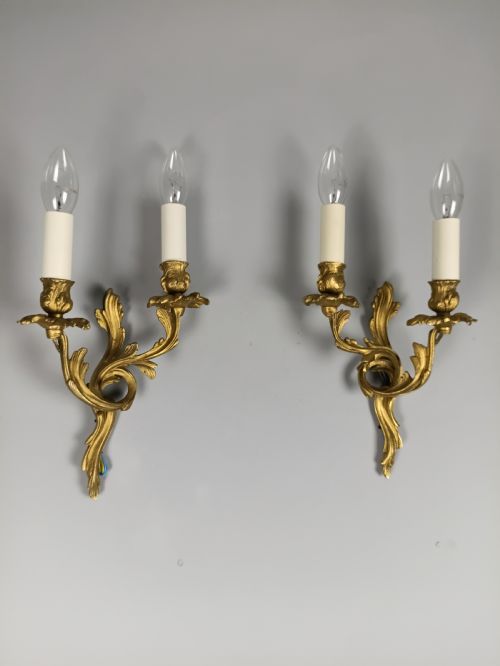


Double Candle Bracket
A double candle bracket provides twin illumination on a wall, offering period character and warm candle or electric light.
Double Candle Bracket
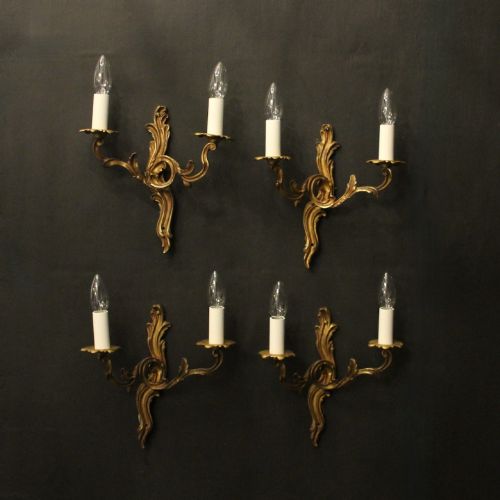
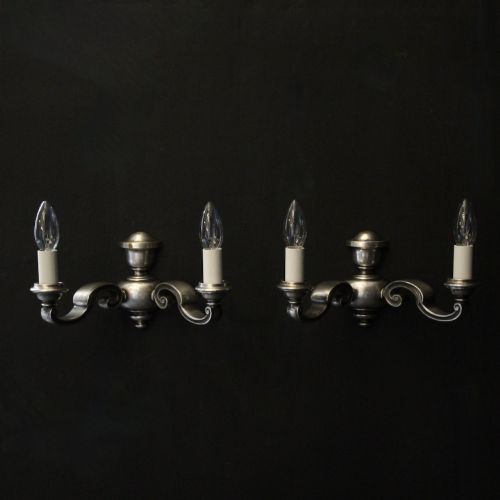
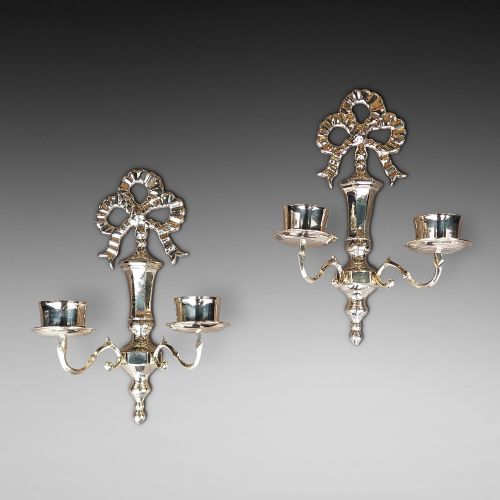
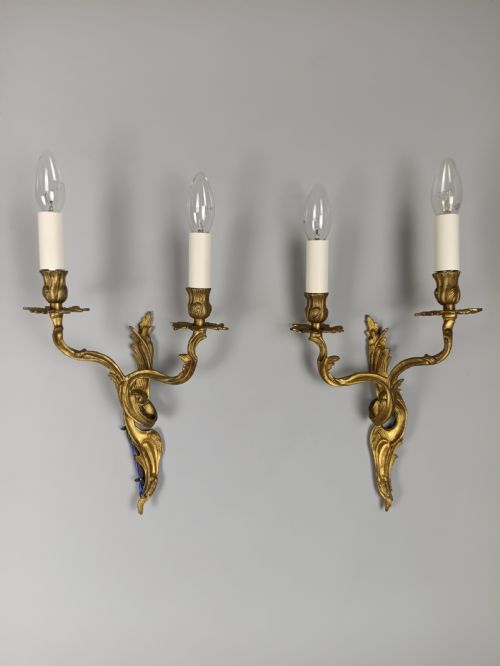
A double candle bracket combines twin arms to hold candles or electric bulbs against a vertical surface, functioning primarily as a wall light or sconce. These pieces emerge in various forms across the nineteenth and twentieth centuries, spanning Victorian, Edwardian, and mid-century periods. The selection here includes English and French pieces designed to mount securely on interior walls.
Most items on this page appear as pairs or sets, featuring two branches that extend outwards from a central backplate. Brass and gilt metal dominate the construction, while bronze, silver plate, and carved giltwood appear among the listings. Buyers encounter styles ranging from French Rococo and Neoclassical to Adam Revival and Edwardian interpretations.
The objects serve practical lighting needs while introducing distinct historical ornament to domestic spaces. Certain pieces retain their original candle fittings, whereas others show adaptation for mid-century electric wiring. The physical scale varies from small French wall lights to larger matched sets intended for principal rooms.
Materials and construction
Metal fabrication forms the foundation of these wall lights, utilising brass, bronze, and gilt metal shaped through casting and assembly. Founders poured molten brass and bronze into moulds to create decorative backplates and sweeping arms, finishing the surfaces with gilding or polished metallic sheens. Silver plating provides an alternative reflective finish seen on specific English examples.
Wood carving and gesso application represent alternative methods used for decorative backplates, particularly within nineteenth-century pieces. Artisans carved timber into intricate scrollwork and floral motifs before applying layers of gesso and gold leaf to achieve a gilded surface. These combined techniques secure structural durability while supporting elaborate ornamental detail.
Designs encompass French Rococo, Neoclassical, Adam Revival, and Edwardian styles, configured primarily as twin-armed wall lights and sconces.
Judging quality in brackets
The refinement of the casting and hand-finishing determines the visual standard of a metal wall light. Crisp detail in the acanthus leaves, scrollwork, and moulded backplates distinguishes superior work from softer, mass-produced alternatives. Heavier gauge metals and robust arm joints provide structural integrity that lighter constructions lack.
Surface treatment significantly influences the overall character of each piece. Intentionally applied gilding, patinated bronze, and silver plating demonstrate skill in finishing that preserves the integrity of the material over decades. Original mounting hardware and intact structural components further indicate careful manufacture.
F. & C. Osler·VON SCHIERHOLZ
The Double Candle Bracket Glossary
- Backplate
- The flat or shaped portion of the wall light that fastens directly to the wall surface. It supports the weight of the extending arms.
- Twin arm
- A configuration featuring two distinct branches extending from a single mounting point to hold light sources. This layout defines the double candle bracket form.
- Gilt bronze
- Metal cast in bronze and treated with a gold-coloured finish or gold leaf layer. It offers a rich, reflective appearance associated with French decorative arts.
- Rococo style
- An ornamental design movement characterised by asymmetrical scrollwork, C-scrolls, and organic plant motifs. It recurs frequently across nineteenth and early twentieth-century wall lights.
- Sconce
- A wall-mounted lighting fixture designed to hold candles or electric lamps. The term is often used interchangeably with wall light.
Double Candle Bracket: Frequently Asked Questions
How do I install a double candle bracket?
Installation typically involves securing the backplate firmly to wall studs or using appropriate masonry fixings to support the weight of the metal or wood structure. Professional electricians should handle any wiring conversions if the bracket is intended for modern electric circuits.
Positioning the fixture at eye level or slightly above ensures balanced illumination and proper clearance for furniture or architectural mouldings below.
Can these wall lights use electricity?
Many historical wall lights arrive adapted for electricity, while others retain provisions solely for candles. Examining the backplate and arms reveals whether wiring channels or bulb sockets have been integrated during past restorations.
Buyers intending to use electric power should consult a qualified technician to verify that internal components comply with current safety standards.
How do I clean antique brass and bronze?
Gentle dusting with a soft, dry cloth removes surface particles without disturbing the underlying metallic patina. Aggressive commercial metal polishes should be avoided because they strip away historical finishes and valuable age-related coloration.
Consulting a professional conservator remains the safest approach for pieces requiring deeper cleaning or restoration of gilded surfaces.
What rooms suit a twin-armed wall light?
Twin-armed wall lights suit hallways, dining rooms, and living spaces where balanced ambient illumination is desired. Placing a pair on either side of a mirror, fireplace, or doorway creates a symmetrical focal point.
The historical styles represented on this page integrate effectively into both traditional period interiors and eclectic modern spaces.