
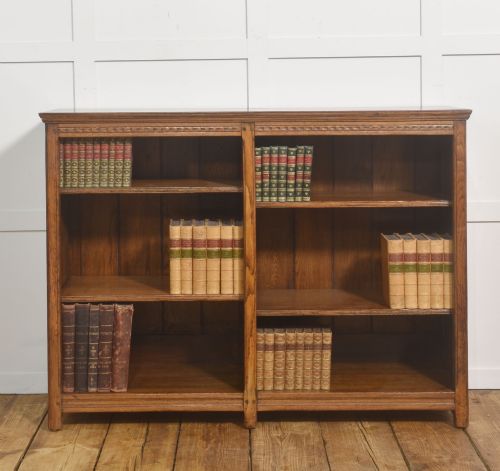
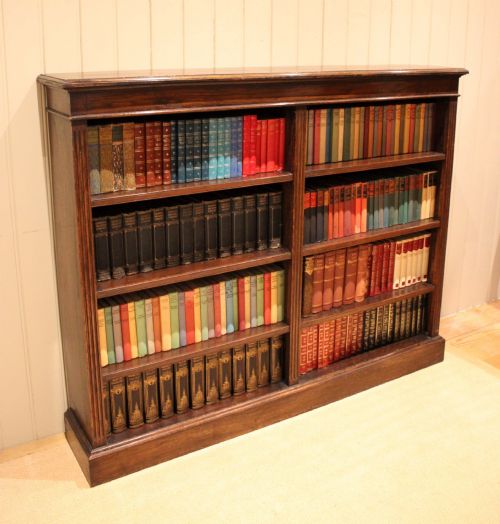
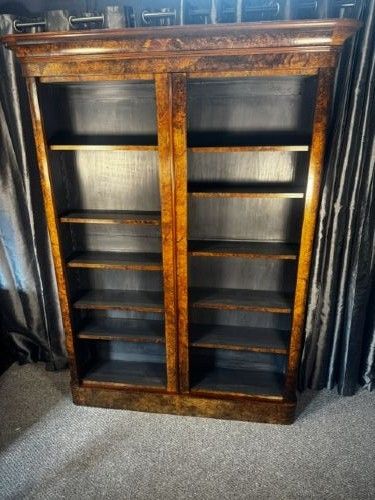
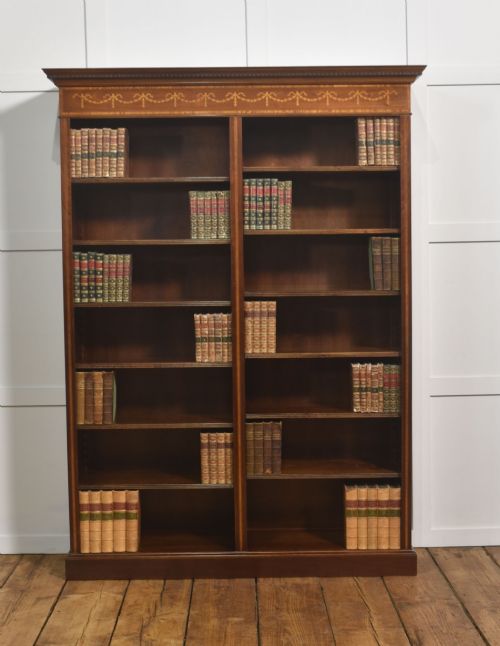
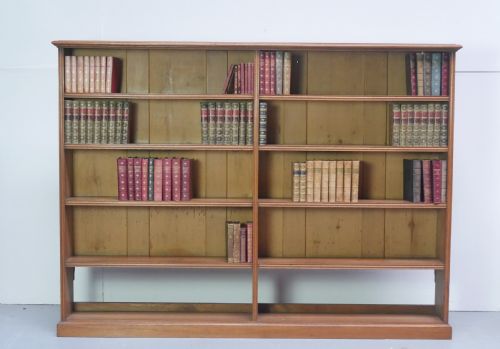
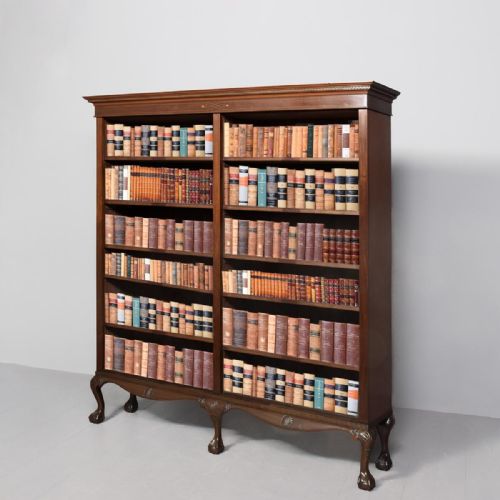


Double Bay Open Bookcase
A double bay open bookcase gives you generous, accessible shelf space that shows off a proper collection without hiding the bindings behind glass.
Double Bay Open Bookcase
A double bay open bookcase offers two distinct vertical sections of shelving within a single timber frame, providing a practical layout for sorting large libraries. The pieces available here span from the mid-nineteenth century through the Edwardian period and into the 1930s, offering substantial scale for domestic rooms.
Most examples you will meet on this page are constructed from oak or mahogany, often featuring adjustable shelves that make it simple to house books of varying heights. These items frequently draw on Georgian, Victorian, and Edwardian cabinet-making traditions, favouring functional open fronts over glazed doors.
You will also find select pieces finished in burr walnut, rosewood, satinwood, and ebonised timber, reflecting the decorative tastes of the nineteenth and early twentieth centuries. Whether rendered in plain oak or inlaid mahogany in the Sheraton Revival style, these bookcases remain straightforward pieces designed for daily utility.
Construction and materials
Makers built these bookcases using solid timbers like oak and mahogany, alongside decorative veneers such as burr walnut and satinwood applied to carcass foundations. Wood inlay and careful carving appear on specific styles, adding decorative contrast to the structural grain of the wood.
Adjustable shelf mechanisms rely on traditional wooden ratchets, metal shelf studs, or enclosed upright tracks cut directly into the interior partition walls. Carcass construction prioritises stability across the double bay span to support heavy runs of volumes without sagging.
Listings feature periods from the nineteenth century through the Edwardian era up to the 1930s, utilising oak, mahogany, walnut, rosewood, and satinwood.
Assessing quality and finish
The distinction between standard utility pieces and finer examples rests on the choice of primary timber and the crispness of any inlaid decoration. Pieces executed in burr walnut, rosewood, or satinwood generally represent more ambitious cabinet-making than straightforward structural oak.
Attention to interior detailing, such as finely fitted adjustable shelf supports and clean timber thickness across the divider uprights, separates better-made library furniture from plain workshop output.
Waring and Gillows
The Double Bay Open Bookcase Glossary
- Double bay
- A bookcase structure divided vertically into two distinct sections or compartments sharing a central upright support. This configuration doubles the storage width while keeping the books easily reachable.
- Open front
- A cabinet design without doors, allowing direct, unobstructed access to the contents within. It is intended for everyday working libraries rather than dust-sealed display.
- Adjustable shelves
- Internal boards that can be moved up or down to accommodate books of different heights. This system uses slotted pilasters, wooden toothing, or metal pins.
- Burr walnut
- A highly figured wood veneer taken from the warted growths of walnut trees. Cabinet-makers prized it for its swirling, organic patterns on prominent exterior surfaces.
Double Bay Open Bookcase: Frequently Asked Questions
What is a double bay open bookcase?
A double bay open bookcase is a large freestanding piece of furniture featuring two side-by-side vertical sections of shelving without doors. This layout creates an expansive display area that keeps numerous volumes visible and close at hand.
Such pieces typically date from the Victorian and Edwardian eras, constructed to hold substantial home libraries. The open front design makes them distinct from enclosed cabinets or glazed bookcases.
How do I adjust the shelves?
Many period bookcases use internal wooden slots, metal pins, or adjustable side racks to let you reposition shelves at different heights. This flexibility helps you arrange heavy folios alongside smaller octavo volumes without wasting vertical space.
When altering shelf heights, check the condition of the supporting strips inside each bay to ensure they bear the weight securely.
Where should I place an open bookcase?
These large timber pieces suit studies, libraries, or living rooms with adequate wall space to accommodate their width. Positioning them away from direct sunlight protects the polished mahogany, oak, or walnut surfaces from fading.
Ensure the floor is reasonably level so the double bay carcass remains square and the adjustable shelves sit evenly within their tracks.
How do I identify Victorian pieces?
Victorian bookcases often utilise dense timbers like mahogany, rosewood, or solid oak with heavier proportions and robust structural framing. You can often observe traditional joinery methods and darker patinated finishes developed over generations of use.
Later Edwardian and 1930s examples sometimes show lighter satinwood highlights, simpler lines, or Sheraton Revival influences while retaining the same functional open format.