
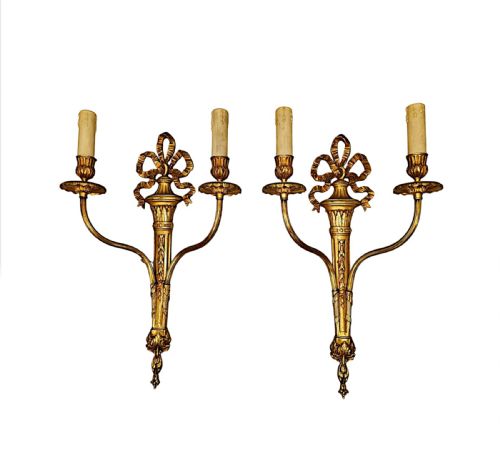
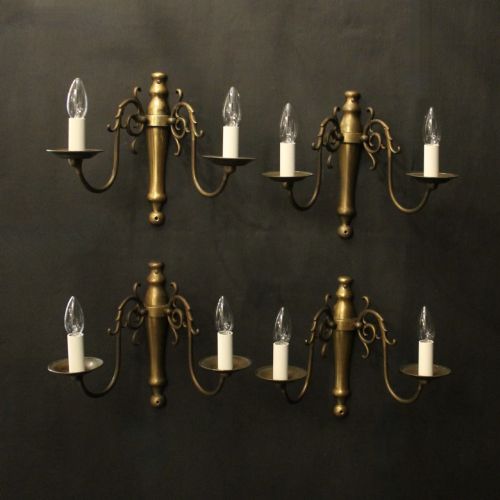
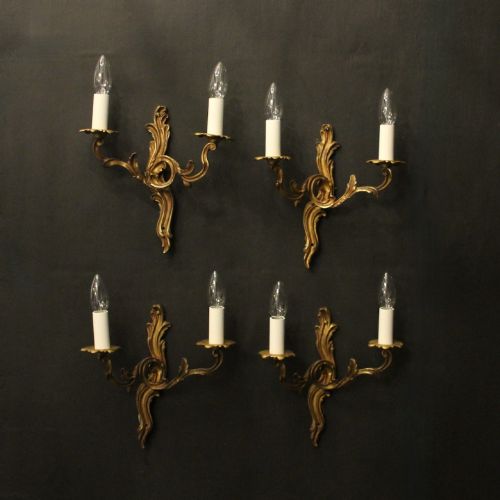
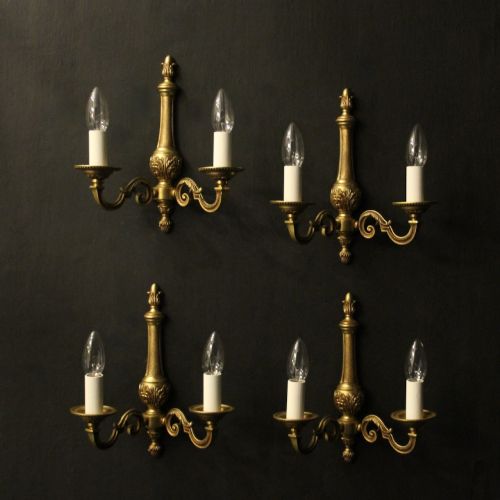
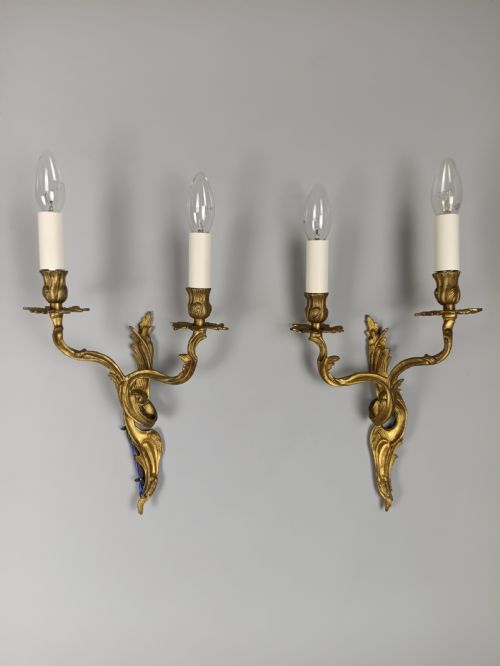
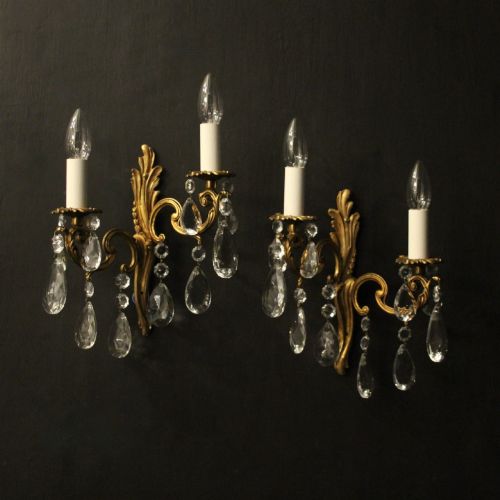
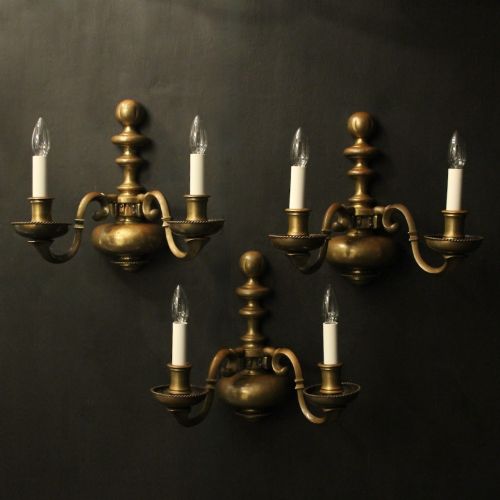
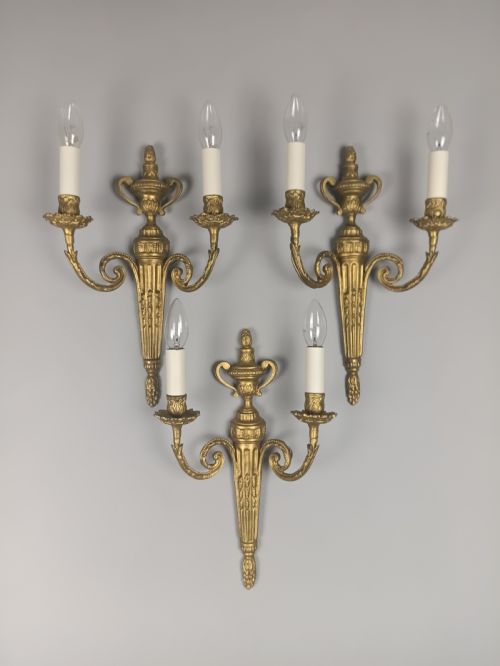
Double Arm Wall Appliques
Double arm wall appliques bring ambient illumination to a room, casting warm light from pairs of branching arms secured directly to the wall surface.
Double Arm Wall Appliques
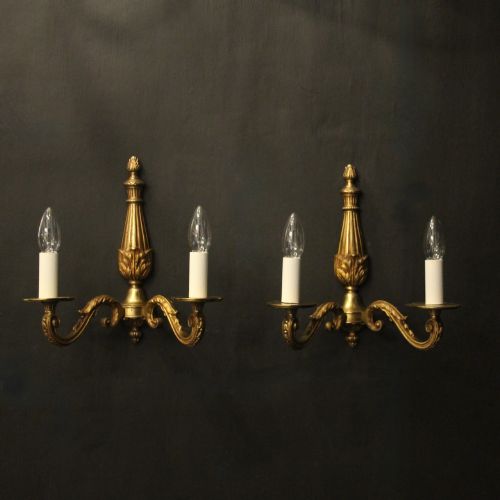
Double arm wall appliques are light fixtures designed to mount onto vertical surfaces, featuring two distinct branches or arms to hold candles or electric lamps. When exploring double arm wall appliques, buyers typically encounter pieces originating from French and English workshops spanning the Victorian era through the early twentieth century.
The selection on this page leans heavily towards French production from the 1920s and 1930s, alongside 19th-century examples. Common formats include matched pairs and larger sets intended for balanced placement across a room.
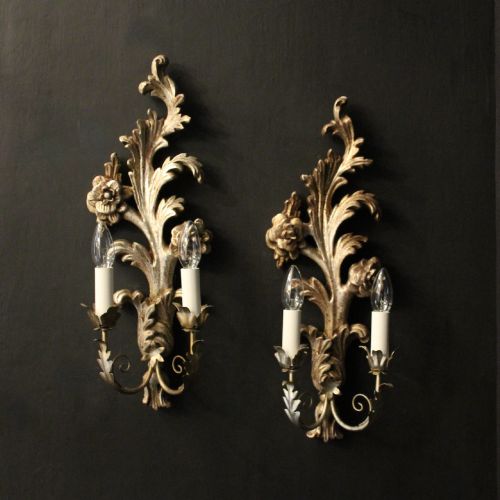
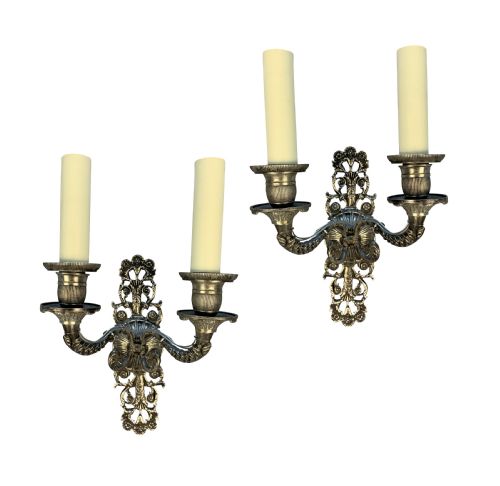
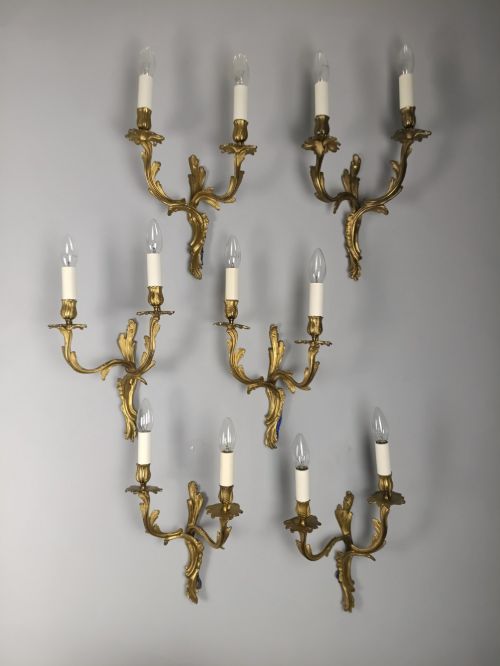
Stylistic influences range from French Rococo and Empire to Neoclassical designs. These fixtures frequently take the form of wall lights and wall sconces that project outward to maximise light distribution.
Materials and construction methods
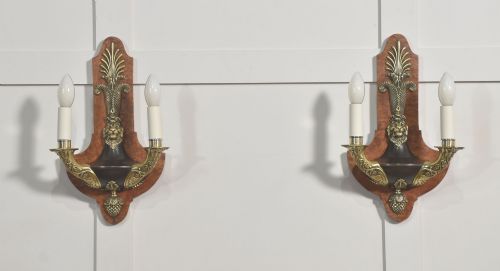
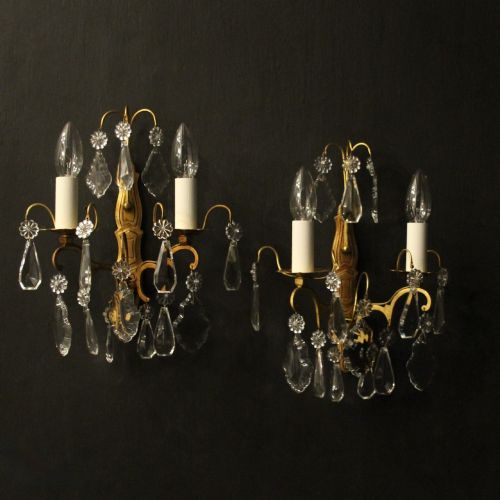
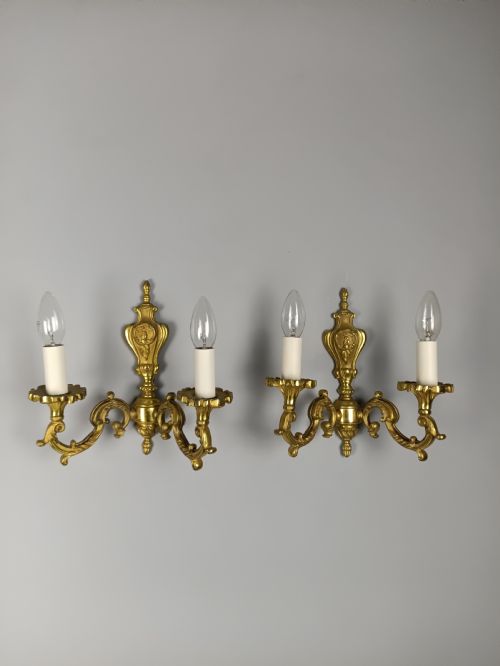
Makers utilised cast and chased metals, predominantly brass, bronze, and ormolu, often applying a gilded surface finish to catch the light. Giltwood and silver-gilt variations also appear, alongside combinations incorporating burr walnut and crystal elements.
Foundry work involved traditional casting techniques to shape the twin branches and backplates, followed by hand-chasing to define surface details. Gilt finishes were applied using mercury gilding or gold leaf depending on the period and workshop standards.
Some twin-arm fixtures retain tiny drip pans that caught melted beeswax centuries before electricity reached the wall.
Markers of quality and craftsmanship
Quality rests in the crispness of the metal casting and the depth of the hand-chasing on the arms and backplates. Superior examples exhibit sharply defined ornamentation without softness in the botanical scrolls or architectural motifs.
The integrity of the original surface finish, whether fire gilding, gold leaf on wood, or patinated bronze, separates standard production from finer decorative pieces. Heavier gauge metalwork ensures structural rigidity across the branching arms.
F. & C. Osler
The Double Arm Wall Appliques Glossary
- Ormolu
- Finely chopped and dismally melted high-zinc brass applied as a surface gilding to bronze items. This technique creates a rich golden appearance characteristic of French decorative pieces.
- Giltwood
- Timber, often gessoed and carved, coated with a thin layer of gold leaf. It appears on Florentine wall lights from the early decades of the twentieth century.
- Wall sconce
- A lighting fixture fixed to a wall that uses brackets or plates for support. These items project illumination outward into the interior space.
- Rococo
- A decorative style characterised by asymmetrical scrollwork, C-curves, and naturalistic plant motifs. It heavily influences the ornamentation of 19th-century bronze wall lights.
Double Arm Wall Appliques: Frequently Asked Questions
How were double arm wall appliques originally lit?
These fixtures were designed to hold wax candles secured in small drip pans or nozzles atop each branch. The twin arms maximised the available flame illumination within domestic spaces before the adoption of gas and electricity.
Surviving examples frequently undergo rewiring for modern electric bulbs while retaining their original metal frames and backplates.
Where should wall appliques be positioned in a room?
Appliques are traditionally mounted at eye level or slightly above to prevent glare and ensure even light distribution across wall surfaces. Placing matching pairs on either side of a fireplace, mirror, or doorway creates visual symmetry.
Consider the height of the ceiling and the surrounding furniture scale when determining the exact hanging position.
How do I identify French Empire style appliques?
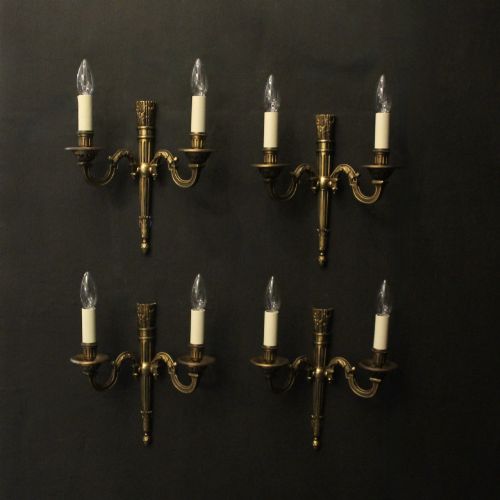
Empire style fixtures draw on neoclassical motifs inspired by ancient Rome and Greece, featuring symmetrical designs, palmettes, and classical urns. The metalwork often combines polished bronze with matte or gilded surfaces to create strong visual contrast.
These pieces typically date from the 19th century or early 20th-century revivals.
Are these wall lights suitable for modern electrical systems?
Most antique wall appliques found on the market have been adapted for modern wiring to comply with current safety standards. Qualified electricians can easily install them using standard wall junctions.
It remains important to check the internal lampholders and wiring condition upon acquisition.