
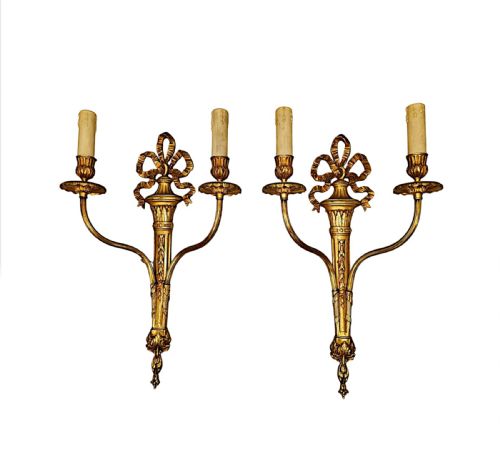
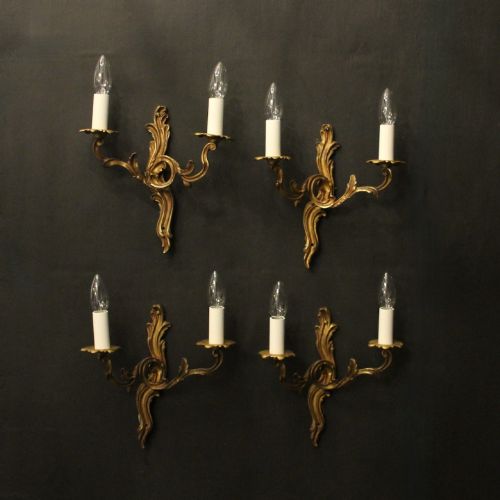
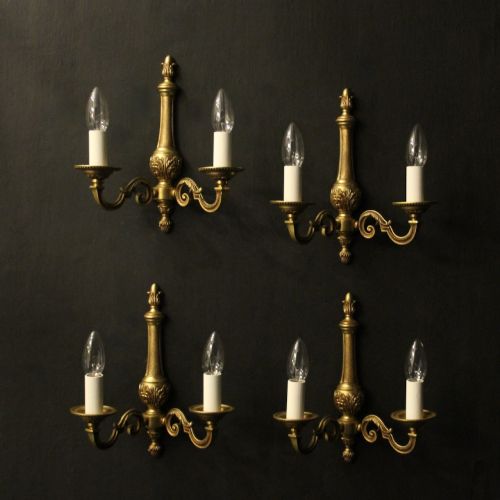
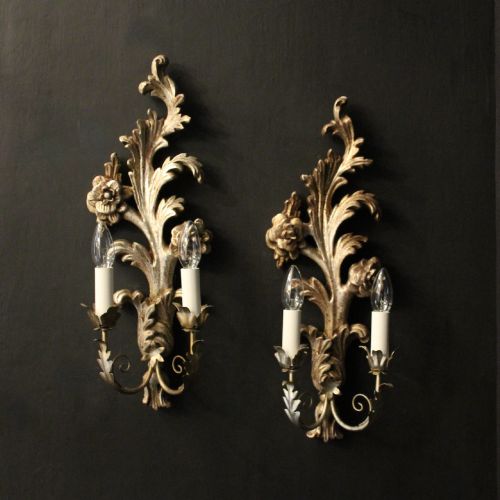
Double Arm Sconce Pair
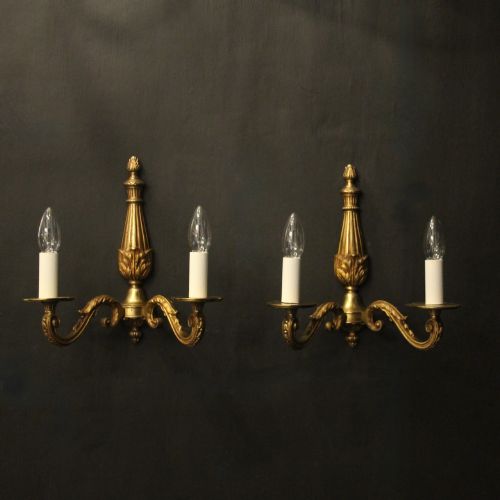
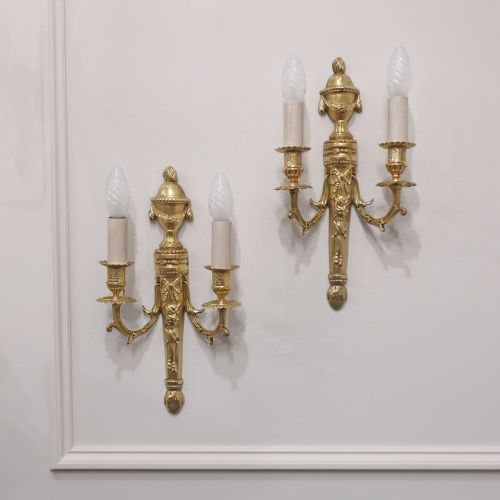
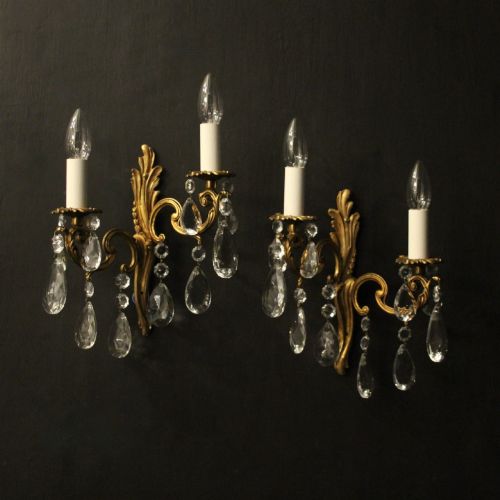
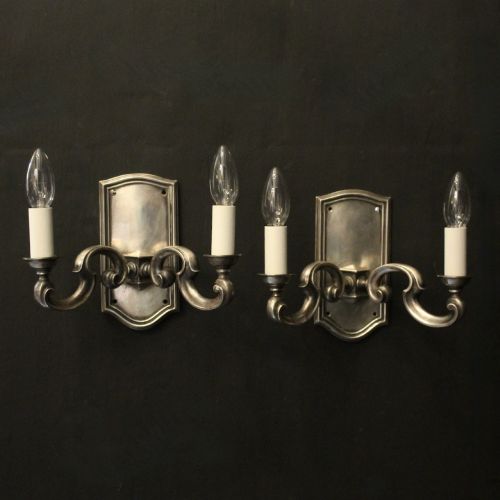
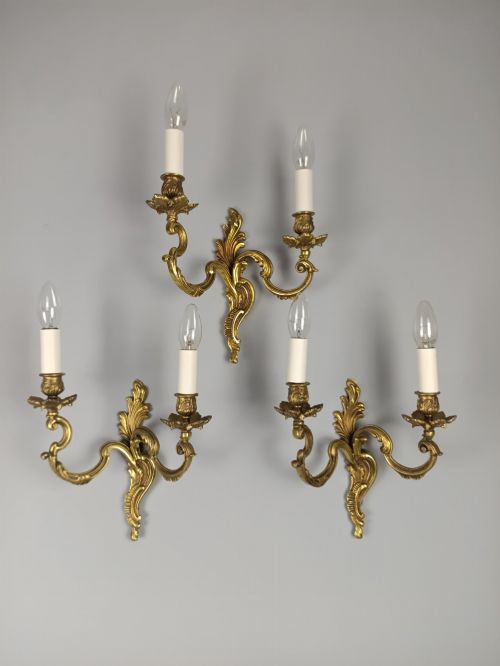
A double arm sconce pair brings balanced wall illumination and symmetry to a room, cast in heavy metals and styled after historic French and English designs.
Double Arm Sconce Pair
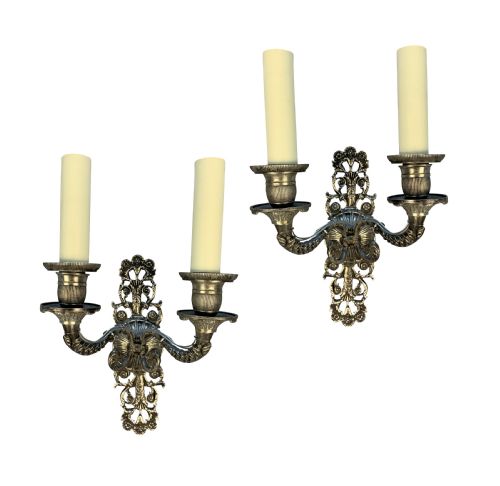
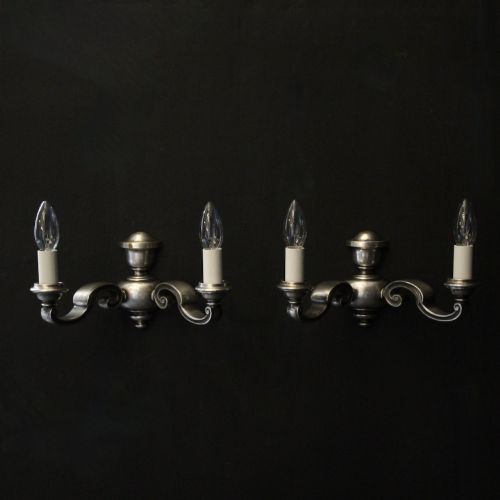
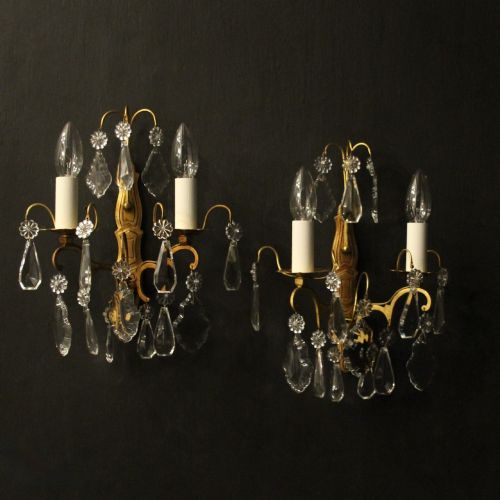
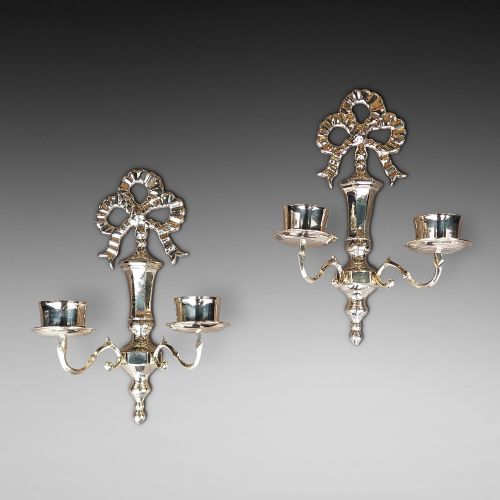
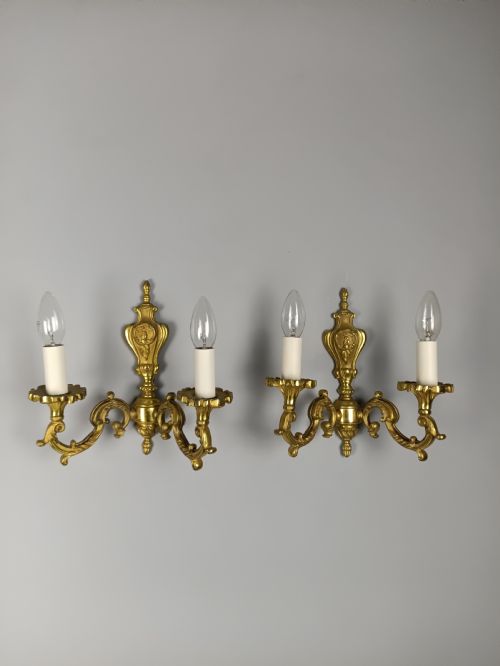
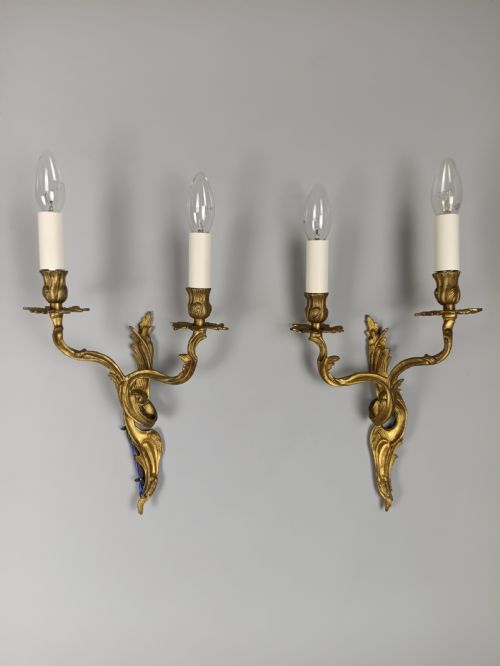
A double arm sconce pair consists of matching wall-mounted light fixtures featuring two branches designed to hold candles or electric bulbs. When you browse this selection of a double arm sconce pair, you encounter matched sets intended to flank a mirror, fireplace or architectural feature.
The objects span periods from the nineteenth century through the Edwardian era and the nineteen-thirties, with French workshops supplying many of the surviving examples. Forms range from compact, modest brass brackets to elaborate multi-branched creations.
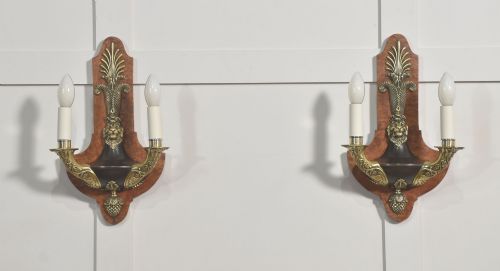
Makers drew upon historical vocabularies, producing pieces styled after Rococo, Neoclassical and Empire revivals. The surviving inventory leans heavily towards matched pairs outfitted with twin arms, though occasional sets of four also appear.
Materials and construction methods
Foundry work dominates the construction, utilising bronze, brass and ormolu cast into intricate backplates and curving arms. Many items feature applied surface treatments, including mercury gilding, silver plating and silver giltwood.
Artisans combined cast metal components with crystal drops or burr walnut panels, assembling the pieces through threaded rods, pins and screws. The detailing relies on chased surface work that defines scrollwork, acanthus leaves and classical motifs.
Materials across the inventory include crystal drops, silver plating, and carved giltwood alongside standard cast brass and bronze.
Assessing quality and craftsmanship
Quality rests primarily on the crispness of the casting and the depth of the subsequent chasing. Superior examples display sharp foliage, well-defined facial or animal motifs, and heavy gauge metal that resists flexing at the joints.
The integrity of the surface finish dictates visual success, separating pieces with thick, warm fire gilding from those with thin, flat plating. Matching components within the pair demonstrate consistent hand-finishing rather than mass-produced uniformity.
Casier·F. & C. Osler
The Double Arm Sconce Pair Glossary
- Ormolu
- Finely ground high-zinc brass applied to bronze objects via a mercury amalgamation process, yielding a rich gold-coloured finish. This technique creates a durable surface that retains its lustre over centuries.
- Gilt bronze
- Bronze metal that has received a microscopic layer of gold leaf or gilt wash across the exterior. The application highlights cast details and protects the underlying alloy from oxidation.
- Rococo revival
- A nineteenth-century design movement characterised by asymmetrical scrollwork, C-scrolls, and organic plant motifs. It draws directly upon the decorative arts of the mid-eighteenth-century French court.
- Empire style
- A neoclassical aesthetic originating in nineteenth-century France, featuring militaristic trophies, sphinxes, laurel wreaths and geometric symmetry. The look projects imperial authority and archaeological precision.
- Backplate
- The flat or shaped section of a sconce that attaches directly to the wall surface and supports the projecting arms. It serves both structural stability and decorative framing functions.
Double Arm Sconce Pair: Frequently Asked Questions
How do I install antique sconces?
Most period wall lights require professional wiring to integrate modern electrical systems safely with historical mounting brackets. Installers must secure the heavy brass or bronze backplates to wall studs to support the weight of the metal arms.
For non-electric candle sconces, hanging involves heavy-gauge masonry or wood screws matched to the load-bearing capacity of the specific wall type. Careful alignment ensures the twin branches project at identical angles.
What periods are these sconces from?
The inventory spans the nineteenth century, Victorian and Edwardian periods, and extends into the nineteen-twenties and thirties. Makers frequently adopted earlier design idioms, producing revival pieces that emulate eighteenth-century French aesthetics.
Distinguishing the exact decade requires examining casting seams, fastening hardware, and the wear patterns on the gilt or plated surfaces. Nineteenth-century examples typically display heavier hand-chasing than later twentieth-century iterations.
Are these sconces wired for electricity?
Many surviving wall lights undergo conversion for electrical use during their working life, adapting original candle branches to house internal wiring and lamp holders. Some examples retain their original configuration for wax candles.
Buyers should examine the specific listing details to confirm whether a set is currently wired or remains configured for ambient candle use. Conversion details often reflect mid-century electrical updates rather than original factory wiring.
How should I clean gilded brass?
Maintenance requires gentle dusting with a soft, dry brush to prevent abrasive particles from scratching the delicate metallic surfaces. Liquid chemical cleaners and harsh polishes strip away thin layers of ormolu and vintage gilding.
Professional conservation advice is necessary if deeper cleaning becomes essential to remove stubborn accumulated residue from intricate cast crevices. Maintaining a stable indoor humidity prevents active oxidation of the exposed bronze alloys.