





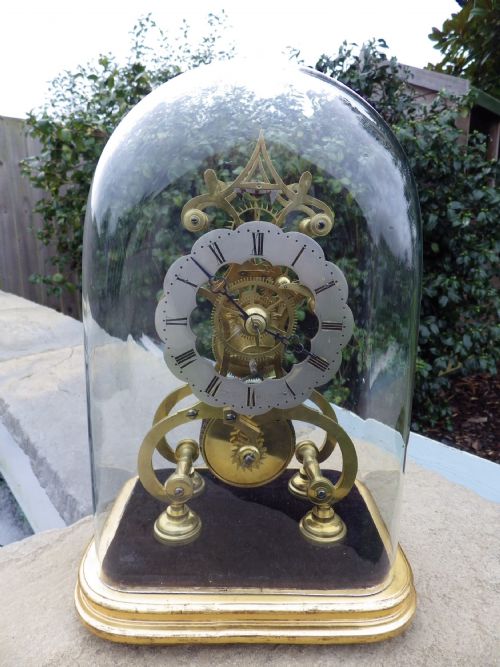

Domed Mantel Clock
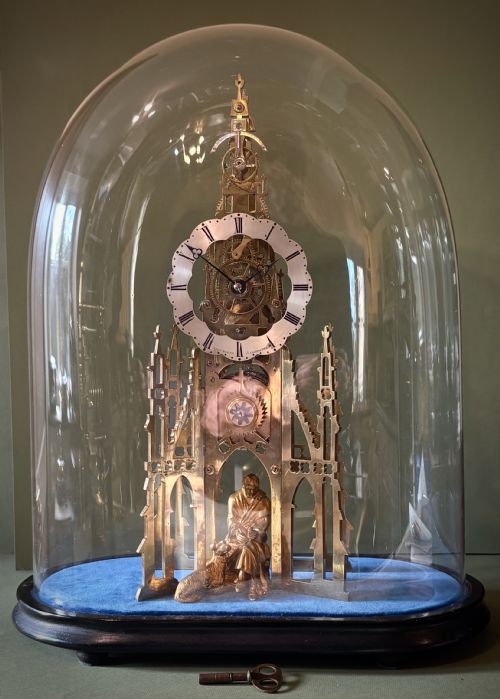
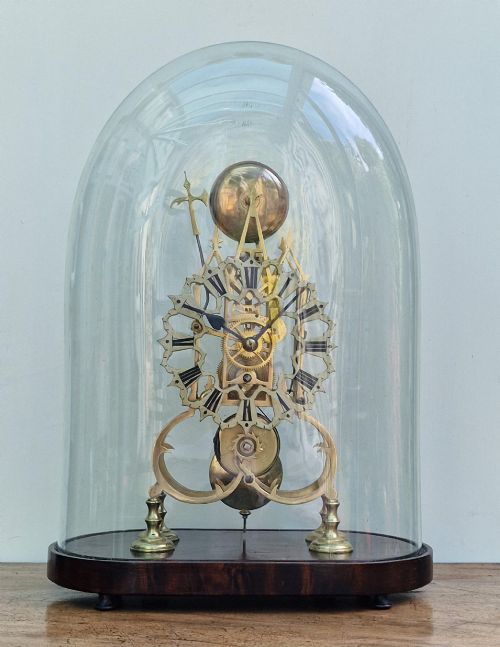
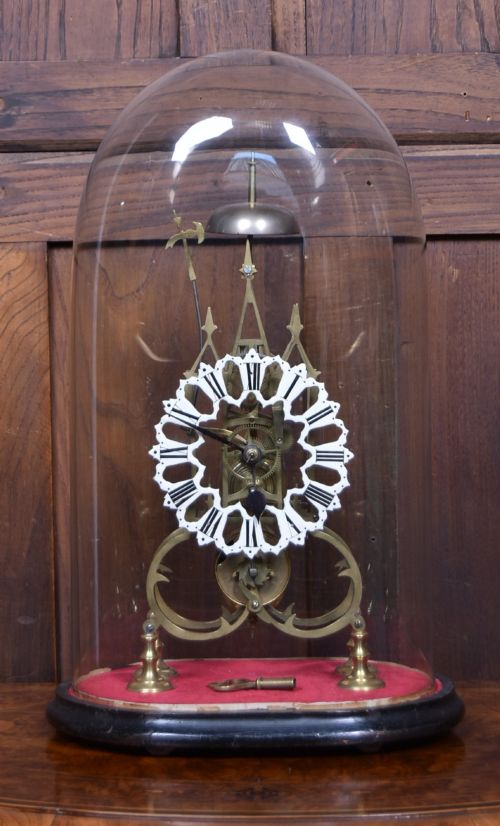
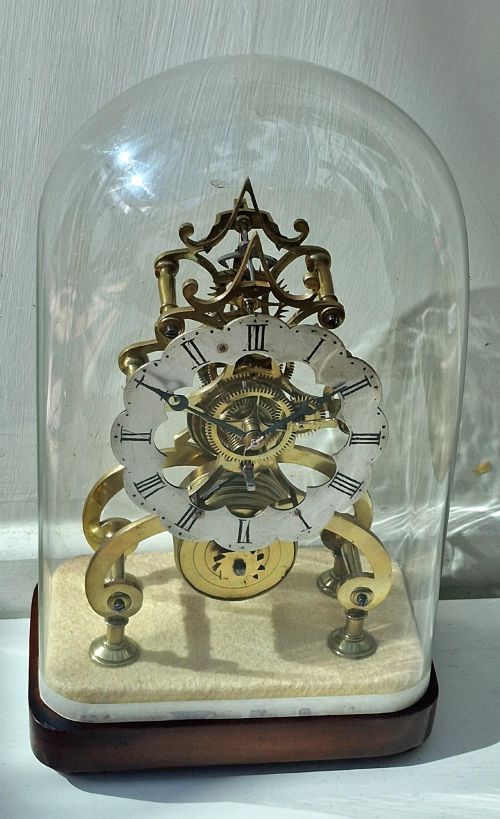
A domed mantel clock brings precision engineering together with protective glass, revealing intricate skeletons and polished wood to the eye.
Domed Mantel Clock
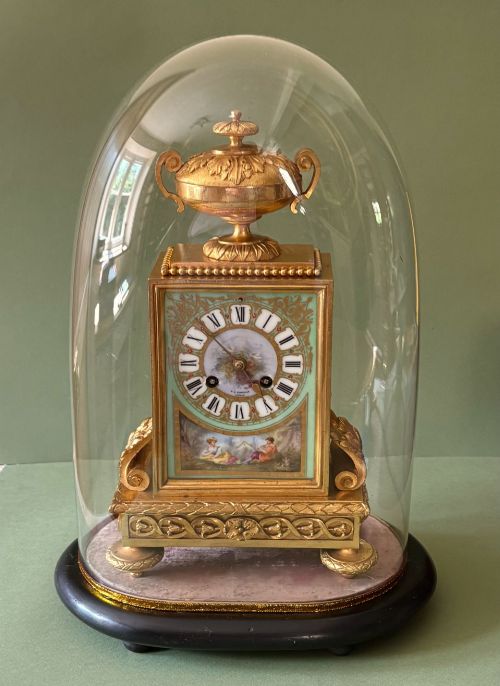
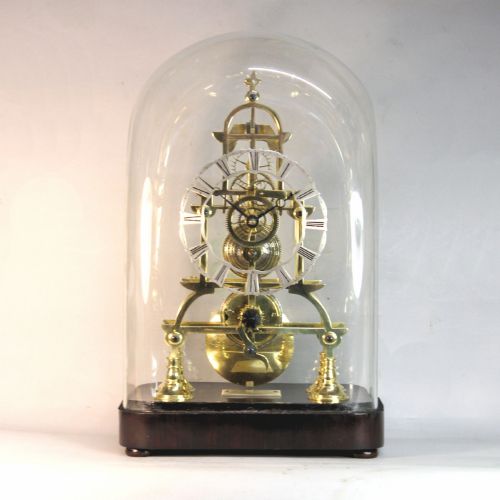
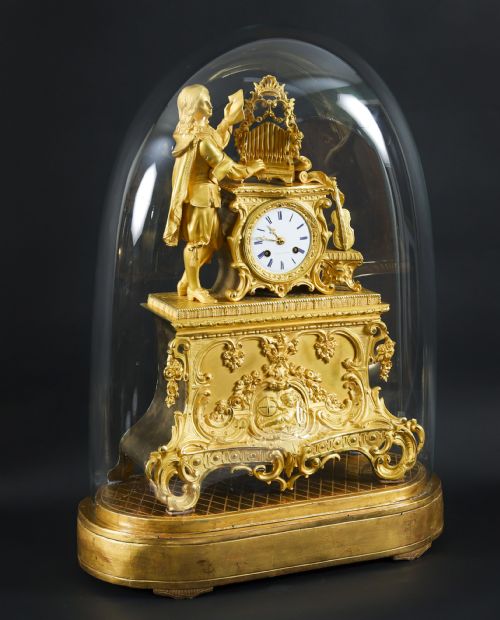
A domed mantel clock combines a striking horological movement with a fitted glass cover, protecting delicate brass wheels and swinging pendulums from dust while displaying them fully. These domestic timepieces range from elaborate French ormolu and porcelain assemblies to disciplined English skeleton movements and architectural mahogany cases.
The selections encountered here span the Victorian era into the early twentieth century, taking forms such as skeleton clocks, portico clocks, and heavy marble or wooden housings. Many incorporate glass domes and cloches originally designed to shield complex wheelwork or delicate taxidermy showcases from ambient disruption.
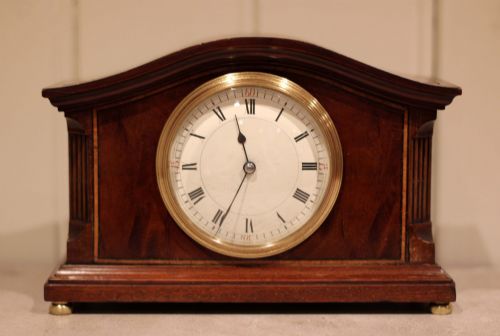
Makers from English workshops and French ateliers utilised varied stylistic vocabulary, moving from Gothic cathedral arches and rococo revival curves to clean Edwardian mahogany cases and electrical Bulle movements. The presence of an original hand-blown glass dome over a fusee mechanism defines the core appeal for collectors.
How they were made
Horologists constructed these clocks using brass, bronze, and steel for the internal gear trains, often mounting skeleton movements on marble or wood bases. Casework drew upon mahogany, ebonised wood, rosewood, and cast ormolu, while dials featured painted enamel or porcelain plaques.
Protective covers relied on hand-blown glass domes and cloches resting upon wooden or velvet-lined stands, shielding fragile escapements. Movement assembly involved fusee chains, spring barrels, or torsion pendulums executed by skilled hands in English and French workshops.
Domed Mantel Clock Retail Price Guide 2026
Typical asking prices for domed mantel clock among the pieces listed under this phrase on Sellingantiques today, from the lower quarter to the upper quarter. They describe what is for sale here now, not the wider market.
Some nineteenth-century French clockmakers even housed swinging cherubs and thermometers beneath their glass domes.
What varies in quality
Quality rests upon the crispness of the brass wheelwork cutting, the weight and gilding of ormolu mounts, and the purity of the glass dome itself. Hand-blown domes possessing natural ripples and bubbles indicate higher age and originality compared to later replacements.
The refinement of the movement distinguishes standard production from master work, seen in fusee timepieces with six-spoke wheel work and delicate passing strikes. Cabinets finished in solid mahogany, fine marquetry, or carved alabaster elevate the overall architectural presence.
Richard Winter of Chieveley·Thwaites of London·Leroy Paris·Jean Baptiste Delettrez·Allen Colyer
The Domed Mantel Clock Glossary
- Skeleton clock
- A timepiece designed with an open brass framework that exposes the entire gear train and escapement to view. These movements are frequently sheltered beneath glass domes.
- Fusee
- A conical pulley used in spring-driven clocks to maintain equal power as the mainspring unwinds. This mechanism improves timekeeping accuracy across the duration of the wind.
- Ormolu
- Gilt bronze ornamentation applied to clock cases and architectural elements. The technique involves treating metal with a mercury and gold amalgam.
- Portico clock
- A mantel clock styled after classical architecture, featuring vertical pillars supporting an entablature that houses the dial. These often sit upon stepped bases within protective cloches.
- Torsion clock
- A timepiece regulated by a slow-rotating pendulum suspended on a thin strip of metal, commonly known as a four-hundred-day clock. They operate for extended periods on a single wind.
Domed Mantel Clock: Frequently Asked Questions
What is a domed mantel clock?
A domed mantel clock is a shelf timepiece housed beneath a protective glass cover or cloche. The arrangement shelters intricate mechanical movements from dust while offering a clear view of the dial and ticking mechanism.
These pieces range from exposed skeleton movements on marble bases to solid mahogany Edwardian timepieces and ornate French porcelain assemblies.
How do you wind a fusee clock?
Winding requires inserting the key into the dial aperture and turning it clockwise until resistance halts the motion. Fusee mechanisms utilise a chain coiled around a conical drum to equalise power delivery.
Care must be taken not to overwind the mainspring, ensuring the brass teeth and delicate escapement maintain steady tension throughout the operational cycle.
Are the glass domes original?
Original glass domes often display minor surface irregularities, subtle thickness variations, and tiny air bubbles characteristic of nineteenth-century hand-blown production methods. They sit flush upon fitted wooden or velvet-lined bases.
Replacement domes generally feature uniform modern glass thickness and lack the minor optical distortions found in period pieces.
How do I care for my clock?
Placement requires a stable, level surface away from direct sunlight, heating vents, and damp environments to protect the wood case and metal movement. Professional cleaning every few years prevents dried oils from impeding the gear trains.
Lifting the glass dome should be done with both hands, grasping the lower edges securely while keeping fingers clear of delicate balance wheels and pendulums.