



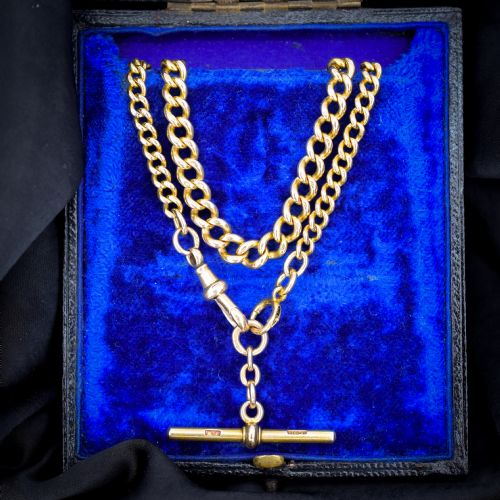
Dog Clip Chain Necklace
When you search for a dog clip chain necklace, you enter a world of utilitarian watch chains repurposed as distinct neckwear.
Dog Clip Chain Necklace
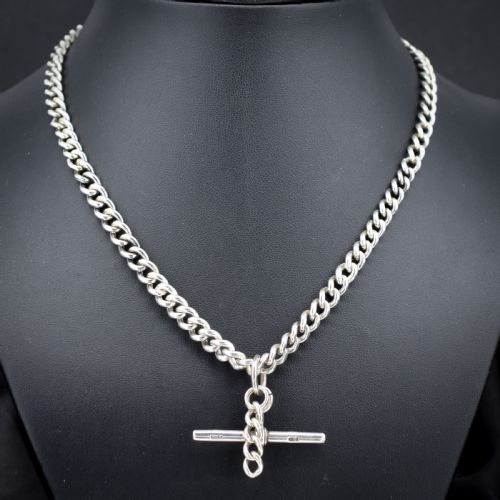
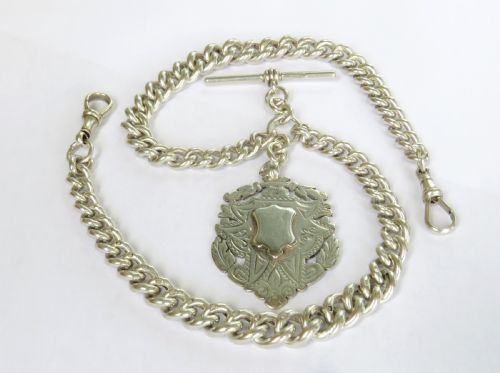
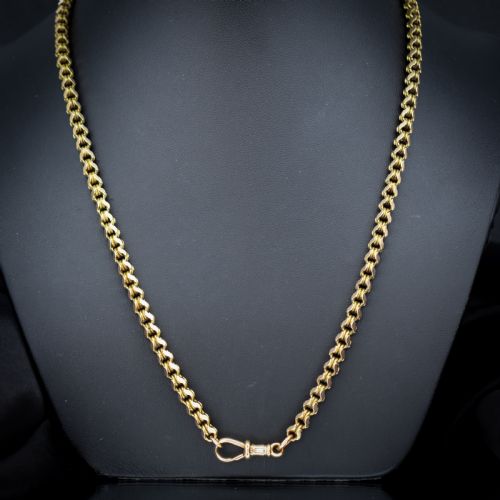
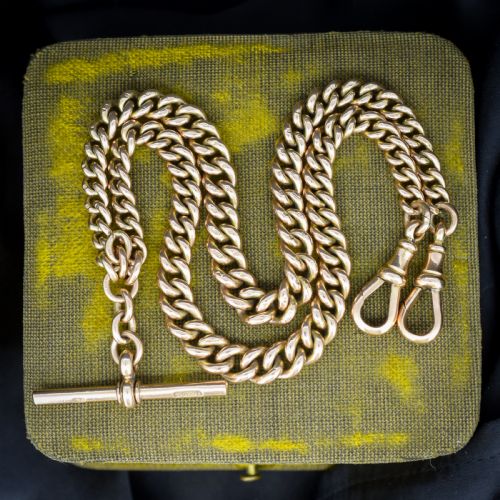
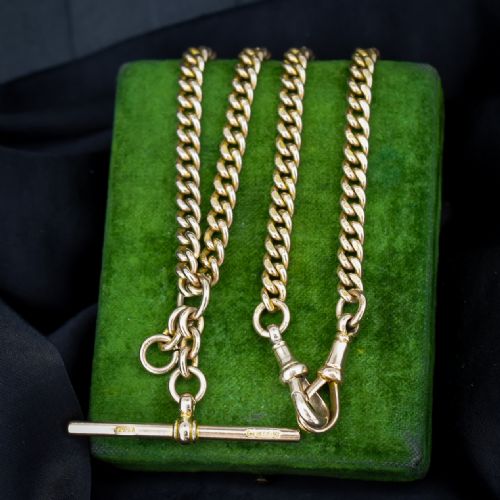
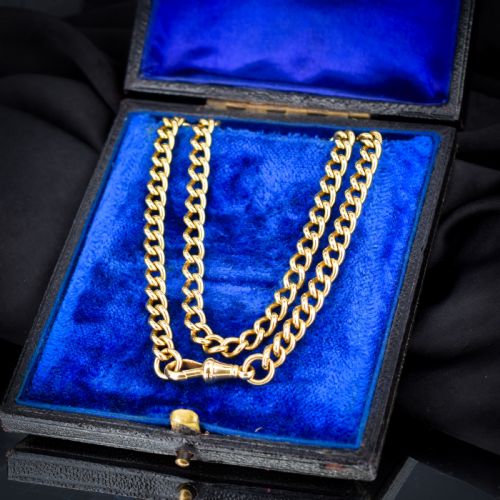
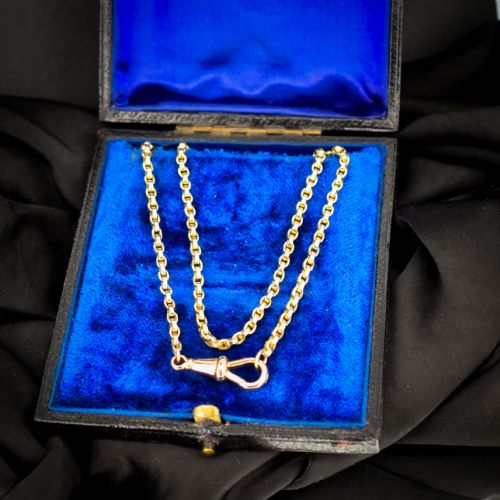
A dog clip chain necklace originates from the Victorian and Edwardian periods, when these robust links served primarily to secure pocket watches to waistcoats and garments. Today, collectors and buyers seek out these pieces to wear them as striking necklaces, often retaining their original T-bars, swivel clasps, and spring-loaded dog clips.
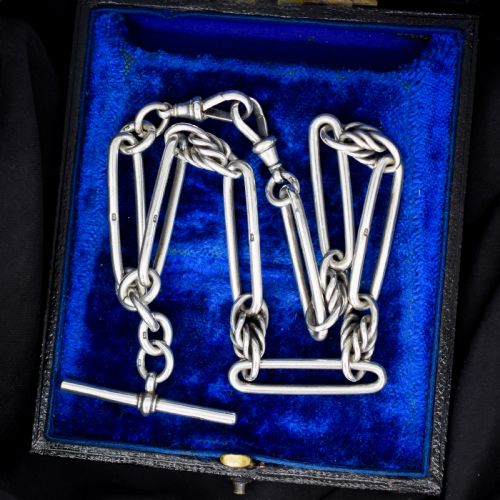
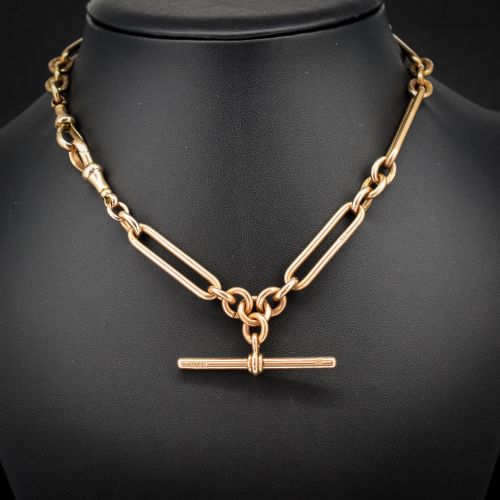
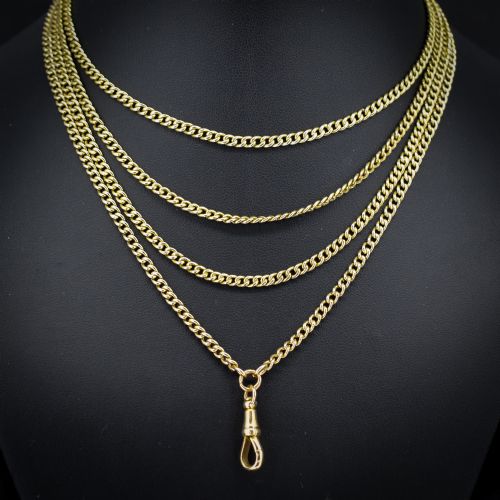
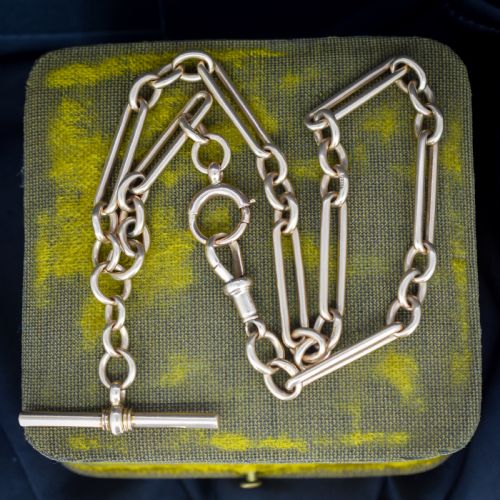
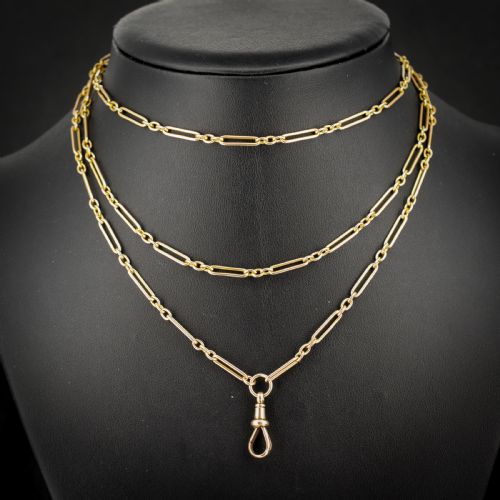
The most common examples met on this page are classic curb link and trombone link albert chains, alongside longer muff and guard chains designed to loop multiple times around the neck. Spanning the nineteenth century into the 1920s, these items bridge the gap between functional Victorian timekeeping accessories and modern jewellery statements.
Precious Metals and Link Construction
The materials recorded in these pieces rely heavily on solid 9ct gold, 15ct gold, 18ct yellow gold, and sterling silver, alongside occasional rolled gold variants. Goldsmiths and silversmiths fabricated each link individually, connecting curb, fancy, paper, and trombone patterns by hand before soldering.
The distinctive dog clip mechanism requires a precise steel spring enclosed within the hollow cast metal arm, allowing the fastener to snap securely shut against a fixed loop or ring.
Evaluating Weight and Link Integrity
The distinction between ordinary and exceptional pieces rests upon the overall mass, metal purity, and structural preservation of the links. Heavier gram weights and higher gold karatages, such as 15ct or 18ct, command greater interest than standard 9ct or rolled gold alternatives.
The crispness of hallmarks struck into individual links or T-bars, alongside the snap tension within the dog clip mechanism, dictates the degree of craftsmanship retained over the decades.
The Dog Clip Chain Necklace Glossary
- Dog clip
- A spring-loaded clasp featuring a lever-operated opening, originally designed to secure a pocket watch to an albert chain. These clips form the focal point of many converted necklaces.
- T-bar
- A short transverse bar suspended from the centre of a watch chain, used traditionally to anchor the chain through a waistcoat buttonhole. It now hangs as a decorative feature on neckwear.
- Albert chain
- A sturdy watch chain named after Prince Albert, configured as either a single strand or a double chain meeting at a central drop. They are frequently worn today as heavy choker or neck chains.
- Trombone link
- A fancy watch chain link pattern composed of alternating small round links and elongated rectangular bar links. This geometric design gained popularity during the late Victorian period.
- Muff chain
- An exceptionally long chain designed to be worn doubled or tripled around the neck, historically used to secure a hand muff during cold weather. They often feature sliding elements or dog clips at the terminals.
Dog Clip Chain Necklace: Frequently Asked Questions
How do I wear a pocket watch chain as a necklace?
These pieces wrap easily around the neck, utilising the built-in dog clip to fasten onto any link along the chain to create an adjustable length. The attached T-bar and second clips simply drop down as decorative accents.
Many wearers choose to clip charms, lockets, or fob medals directly onto the dog clip to customize the finished look.
What is the difference between an albert chain and a guard chain?
Albert chains are shorter, heavier lengths designed with a T-bar, meant to sit snugly around the neck or collarbone. Guard chains and muff chains are much longer continuous loops measuring fifty inches or more, intended to drape downwards.
Both styles incorporate the signature dog clip, but their original functions in gentleman's tailoring and ladies' accessories dictate their distinct proportions.
How can I tell the gold purity of an antique chain?
British pieces typically feature hallmarks stamped directly onto the links, the T-bar, or the dog clip itself, indicating the assay office, the maker, and the metal standard such as nine or fifteen carat gold. Rolled gold items are usually marked to denote a gold plating over a base metal core.
Inspecting these tiny stamped marks with a loupe reveals the exact composition and age of the metal.
Are these chains strong enough for daily wear?
Solid gold and silver examples from the Victorian and Edwardian eras were built for daily utility by men and women of the period, making them exceptionally durable. The heavy solid links and robust spring mechanisms in the dog clips withstand regular use.
Care should be taken with hollow or rolled gold variations, which require a lighter touch compared to solid curb and albert links.