


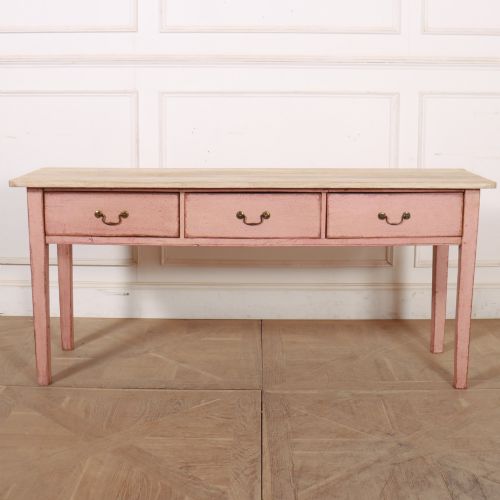
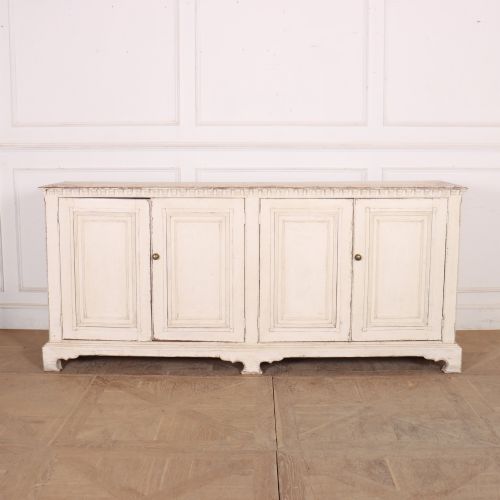


Distressed Wooden Sideboard
A distressed wooden sideboard brings centuries of regional utility and weathered character into a room.
Distressed Wooden Sideboard
When you search for a distressed wooden sideboard, you encounter a wide selection of storage furniture including dresser bases, servers, buffets, commodes, and linen cupboards. These pieces originate from various domestic settings, ranging from English farmhouses and Scottish kitchens to French provincial interiors and Scandinavian country homes.
The selection on this page relies heavily on nineteenth-century and eighteenth-century examples, alongside a smaller number of vintage and Victorian pieces. You see traditional forms built for practical storage, often finished in original paint, polychrome decoration, or aged timber surfaces.
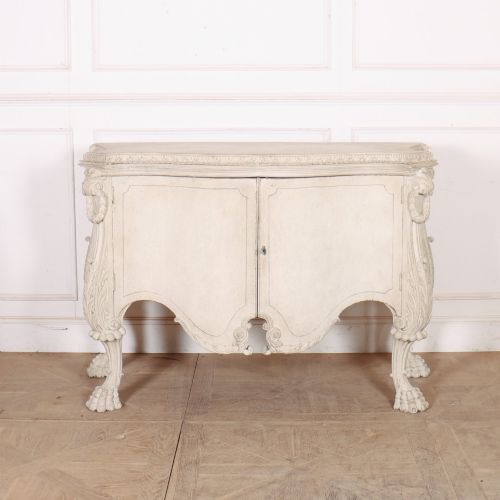
Regional variations dictate the silhouette, from the serpentine fronts of Italian and Portuguese commodes to the clean proportions of Swedish linen cupboards and the sturdy construction of English farmhouse dresser bases.
How they were made
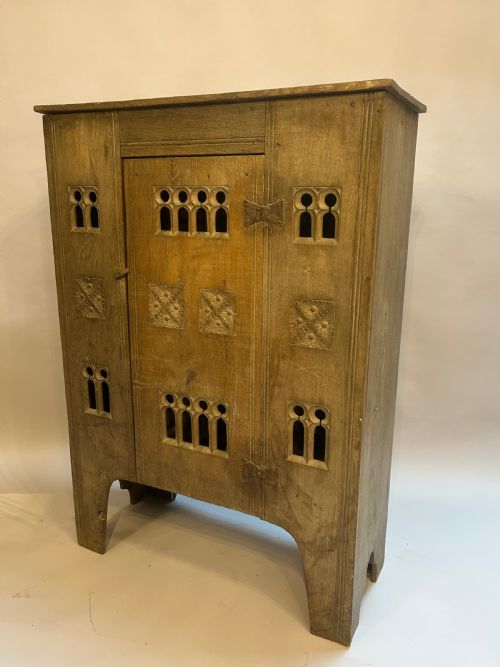
Makers constructed these sideboards primarily using pine and painted timber, relying on solid wood construction to withstand decades of daily use in kitchens, hallways, and dining rooms. Carpenters joined panels and frames by hand, often incorporating pegged mortise and tenon joints.
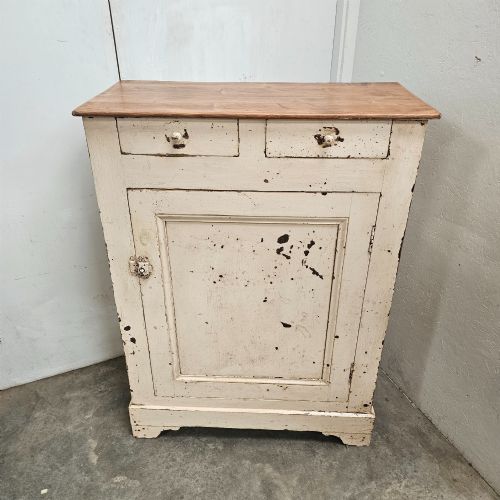
Many surfaces carry layers of original paint or pigmented washes applied over pine and wood substrates. Iron and brass hardware, including drop handles, hinges, and escutcheons, complete the construction of these utilitarian storage items.
Distressed Wooden Sideboard Retail Price Guide 2026
Typical asking prices for distressed wooden sideboard among the pieces listed under this phrase on Sellingantiques today, from the lower quarter to the upper quarter. They describe what is for sale here now, not the wider market.
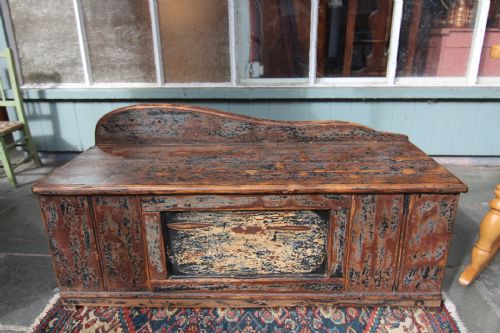
Some nineteenth-century barge box seats hide unexpected storage compartments beneath painted lids, built for life on the canals.
What varies in quality
Quality in these pieces rests upon the integrity of the original surface and the honesty of the weathering. Pieces that retain their genuine early paint layers or natural timber patination carry greater historical interest than those with altered or modernised finishes.
Construction standards also separate standard utilitarian items from finer regional examples, visible in the hand-cut dovetails of drawers, the thickness of timber used in top boards, and the retention of original brass or iron hardware.
The Distressed Wooden Sideboard Glossary
- Dresser base
- A low sideboard or cabinet featuring drawers and cupboards, traditionally used in kitchens for food preparation and storage. They form a core part of English and European country furniture.
- Commode
- A low decorative cabinet or chest of drawers, often featuring a serpentine or curved front. Eighteenth-century examples from France, Italy, and Portugal demonstrate sophisticated regional shaping.
- Enfilade
- A long sideboard or buffet designed for dining rooms, typically featuring a row of multiple cabinet doors. Italian and French makers produced these substantial storage pieces.
- Confiturier
- A small French jam cupboard or cabinet designed to hold preserves and provisions. These provincial pieces usually feature a single door above a compact base.
- Polychrome
- Decoration employing multiple colours applied to wood or metal surfaces. Nineteenth-century examples utilise this technique for folk art motifs and decorative highlights.
Distressed Wooden Sideboard: Frequently Asked Questions
What is a distressed wooden sideboard?
A distressed wooden sideboard is a practical storage piece featuring aged timber or original worn paint. These items include dresser bases, buffets, and servers from various European regions.
They offer deep cupboards and drawers combined with decorative surface character accumulated over generations of domestic use.
How do I identify eighteenth-century pieces?
Eighteenth-century pieces typically show hand-cut joinery, pegged construction, and early patination on the timber. Regional styles often feature curved serpentine fronts and heavy mouldings.
Hardware such as brass pull handles and iron hinges also helps date the construction of these older cupboards and commodes.
Where were these sideboards made?
These items originate from across Europe, including England, France, Sweden, Italy, Spain, and Portugal. Each country developed distinct regional forms suited to local domestic traditions.
For example, Swedish makers favoured pale painted linen cupboards, while English workshops produced sturdy pine and oak dresser bases.
How do I live with painted furniture?
Painted sideboards integrate easily into modern and traditional rooms by adding soft colour and texture to a space. Their deep surfaces provide functional storage for dining rooms, hallways, and living areas.
Maintenance involves simple dusting and protecting the aged painted surfaces from excessive moisture and direct heat.