

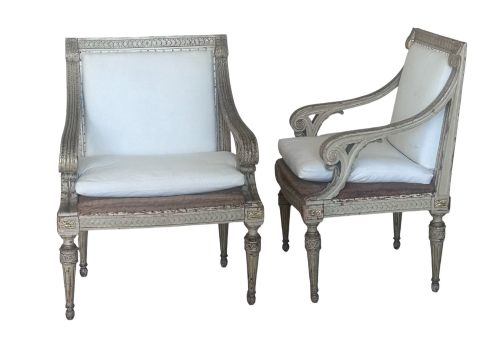
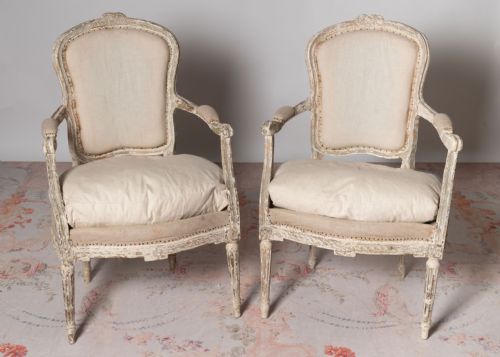
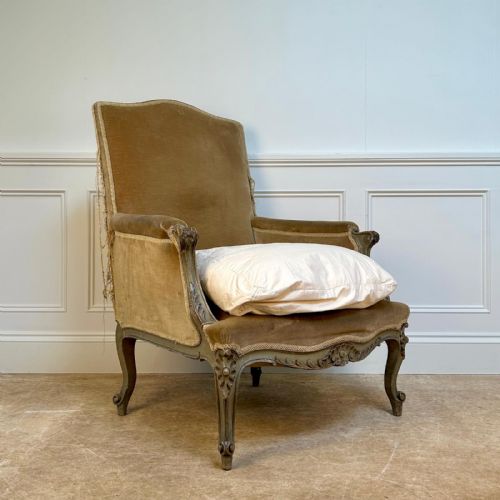


Distressed Wood Chairs
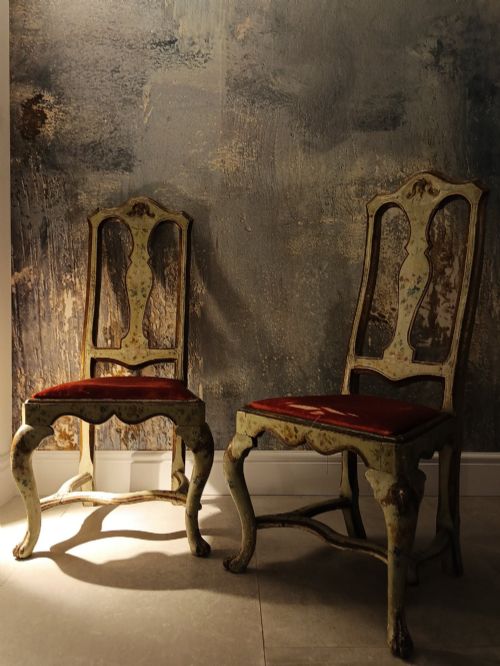
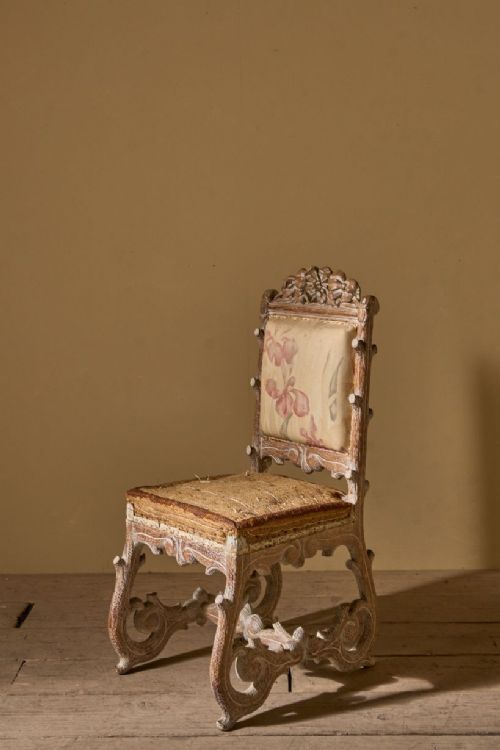
These distressed wood chairs bring centuries of character to a room through weathered paint and carved frames.
Distressed Wood Chairs
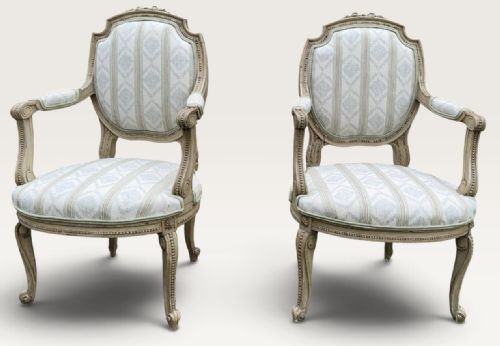
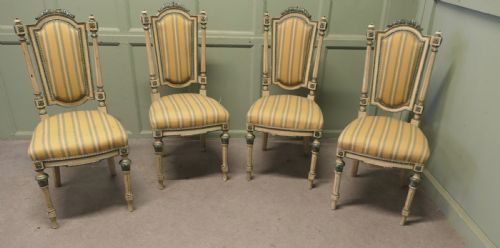
Distressed wood chairs encompass seating from the eighteenth century to the twentieth century, with French painted armchairs appearing most frequently alongside dining chairs and salon chairs. The selection ranges from nineteenth-century pieces to earlier examples showing layers of original or later paint.
Buyers encounter regional forms such as Italian rococo armchairs, Swedish seating, and Irish ash chairs with plaited straw seats. These items serve domestic spaces as functional dining seats, library armchairs, and decorative salon pieces.
The aesthetic bridges formal French provincial designs and rustic furniture, uniting neoclassical lines with weathered surfaces. Many survive in pairs or larger sets, offering matched seating options for interiors.
How they were made
Carpenters shaped beech, walnut, and ash into structural frames, often applying gesso to prepare surfaces for decorative paint. Carved wood details define styles like Louis XV and Louis XVI revivals, requiring skilled hand carving on armrests, legs, and crest rails.
Finishing involved layers of paint, sometimes in grey or neutral tones, which aged naturally over decades to create the distressed textures seen today. Upholstery techniques incorporated fabric, textile, and needlework, secured to the frames with traditional padding methods.
Distressed Wood Chairs Retail Price Guide 2026
Typical asking prices for distressed wood chairs among the pieces listed under this phrase on Sellingantiques today, from the lower quarter to the upper quarter. They describe what is for sale here now, not the wider market.
The inventory includes seating upholstered in textiles and needlework, alongside wooden frames finished in original paint, gesso, and ebonised treatments.
What varies in quality
The integrity of the underlying wood frame and the survival of original paint surfaces determine the distinction between average and exceptional examples. Hand-carved detailing on Italian and French chairs shows superior craftsmanship compared to simpler vernacular forms.
The authenticity of the paint layer matters significantly, with original finishes holding more interest than later overpainting. Furthermore, matched sets of dining chairs command greater cohesion than assembled pairs of salon seating.
The Distressed Wood Chairs Glossary
- Fauteuil
- An open-framed armchair with upholstered seat and back, and exposed wooden arms. These chairs typically display carved decoration and painted finishes.
- Gesso
- A plaster mixture applied to wood surfaces as a base for paint and gilding. It provides a smooth ground for decorative detailing on period chairs.
- Súgán
- An Irish chair featuring a seat made from plaited straw or organic cord. These rustic pieces utilise local woods like ash.
- Needlework
- Hand-stitched textile upholstery using yarn on canvas. This decorative technique appears frequently on period chair seats and backs.
Distressed Wood Chairs: Frequently Asked Questions
How do I clean a painted wooden chair?
Dust the painted surfaces gently with a dry, soft cloth to remove everyday particles without disturbing the finish. Avoid harsh chemical cleaners or excessive moisture that might lift fragile layers of historic paint.
Test any cleaning method on a hidden underside area first to ensure the pigment remains stable. Preserving the natural patina requires a light touch rather than aggressive scrubbing.
Can I use these chairs for daily dining?
Sturdy dining chairs and sets from the nineteenth and twentieth centuries function well for regular seating around a table. Check that the wooden joints remain stable and the underframe supports weight securely.
More delicate salon chairs or eighteenth-century pieces suit lighter use or decorative placement rather than heavy everyday dining. Assess the structural rigidity of each piece before putting it into service.
How do I identify a French provincial style?
French provincial chairs display softer, curved lines inspired by royal court designs but executed in simpler regional workshops. Look for cabriole legs, muted painted finishes, and restrained carved floral motifs.
These pieces balance elegance with rustic charm, distinguishing them from grander metropolitan furniture. The proportions remain comfortable and domestic rather than imposing.
What is faux bamboo furniture?
Faux bamboo refers to wood turned and carved by hand to imitate the segmented stalks of natural bamboo. This decorative technique gained popularity during the nineteenth century, particularly in Regency and Victorian designs.
Makers applied this exotic motif to armchairs and side chairs, often finishing them with paint or ebonised surfaces. The style reflects a broader nineteenth-century interest in Asian aesthetics.