

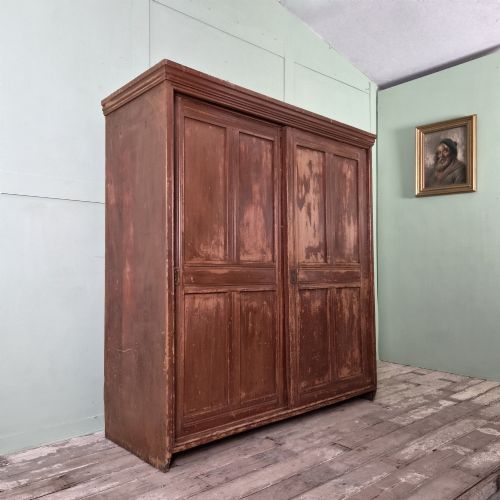

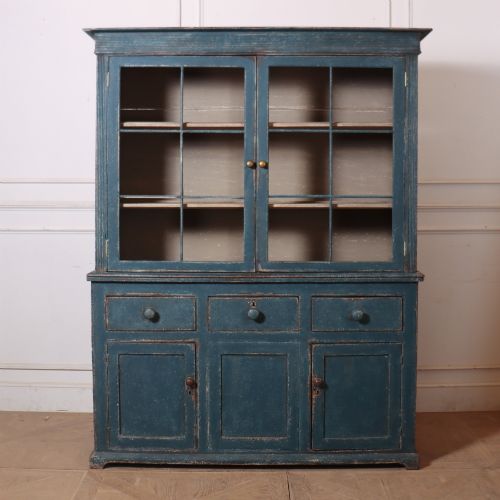
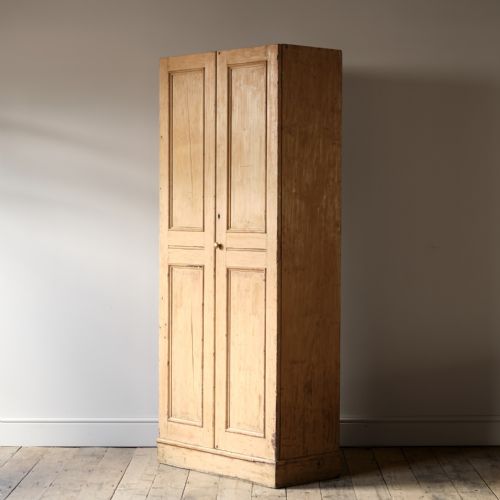
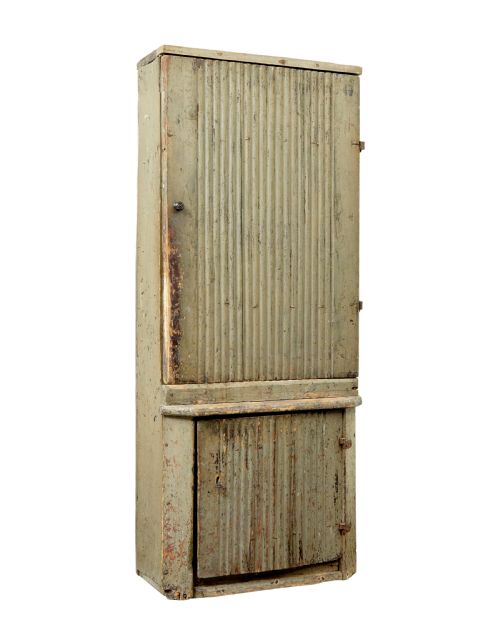
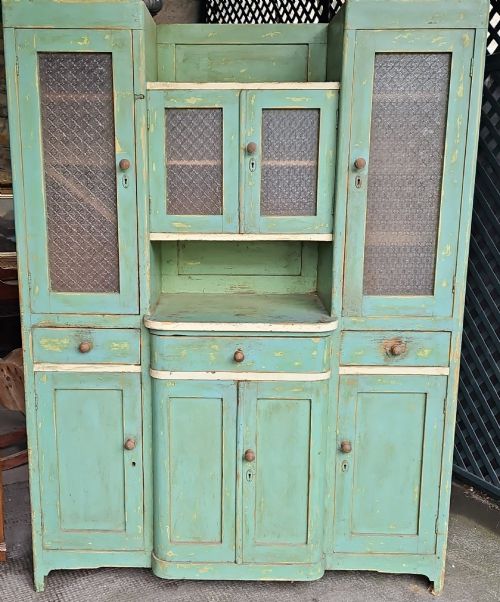


Distressed Pine Larder Cabinet
A distressed pine larder cabinet brings honest domestic history and robust storage to a modern kitchen.
Distressed Pine Larder Cabinet
A distressed pine larder cabinet is a utilitarian storage piece that originated in kitchens, sculleries and country houses for holding food, linen and household provisions. When searching for a distressed pine larder cabinet, buyers encounter practical cupboards, housekeepers' cupboards and kitchen cabinets designed for heavy daily use.
The pieces on this page span the Georgian, Edwardian and nineteenth-century periods, representing various regional traditions including English country, West Country and Scandinavian country styles. Most examples take the form of tall cupboards, sliding door cupboards and two-door housekeepers' cupboards built to store provisions efficiently.
While many feature weathered or painted surfaces that give a rustic farmhouse appearance, the core structure remains solid timber intended for utility. These cabinets serve as practical focal points in contemporary kitchens where extra storage and historical character are required.
Materials and construction
Makers built these cabinets primarily using solid pine, relying on its widespread availability and workability for domestic furniture. Surfaces frequently show layers of historic paint, which has aged and weathered naturally through decades of use in farmhouses and country kitchens.
Hardware elements such as brass and iron provide functional fastening and hinges, while occasional pieces incorporate glass or textured glass within the doors. Construction techniques focus on durability, utilising sturdy boards and straightforward joinery to withstand the demands of a working pantry.
Distressed Pine Larder Cabinet Retail Price Guide 2026
Typical asking prices for distressed pine larder cabinet among the pieces listed under this phrase on Sellingantiques today, from the lower quarter to the upper quarter. They describe what is for sale here now, not the wider market.
Listings feature nineteenth-century, Edwardian, and Georgian periods, utilising pine, paint, brass, iron, and textured glass.
Judging quality in pine cabinets
Quality in these cabinets rests upon the integrity of the original timber and the authenticity of its surface wear. Pieces that retain their balanced proportions, original iron or brass hardware, and honest traces of historic paint hold greater visual interest than those with overly reworked or synthetic distress.
The craftsmanship of the internal shelving and door mechanisms also distinguishes finer examples. Well-made cupboards feature solid backboards, stable joints and doors that hang true, reflecting the practical standards of nineteenth-century and earlier country joinery.
The Distressed Pine Larder Cabinet Glossary
- Pine
- A softwood commonly used in British and European country furniture for its accessibility and resilience. It accepts paint finishes readily and forms the structural base of most utilitarian farmhouse cupboards.
- Housekeeper's cupboard
- A large storage piece traditionally used in grander homes to store linen, dry goods and household supplies. These tall cupboards often feature multiple doors or internal shelving configured for dry provisions.
- Painted wood
- Timber surfaces finished with layers of decorative or protective paint. In country furniture, these finishes often acquire natural wear over generations of use.
- Textured glass
- Glass manufactured with a patterned or rippled surface to obscure contents while allowing light to pass through. It appears in upper cabinet doors where partial visibility is preferred.
- Georgian
- The architectural and design period spanning the eighteenth and early nineteenth centuries. Furniture from this era emphasises proportion and functional elegance.
Distressed Pine Larder Cabinet: Frequently Asked Questions
What were larder cabinets used for?
These cabinets originally stored perishable food items, dry goods, and kitchen utensils before modern refrigeration became common. Their enclosed shelving protected provisions from pests and kept items cool.
Over time, they evolved into general household storage units for linens and pantry supplies in farmhouses and large country homes.
How do I style a pine cabinet?
A distressed pine cabinet works well as a statement storage piece in modern or traditional kitchens. It provides practical shelving for dishware, cookbooks, or dried goods.
In living areas or hallways, the same cupboard functions as a linen press or general storage unit, bringing warmth and texture to the room.
How do I date a pine cupboard?
Dating relies on examining construction methods, nail types, and timber preparation. Earlier pieces from the Georgian period often feature hand-planed boards and pegged joinery.
Later nineteenth-century and Edwardian examples show machine-cut elements and different hinge styles while maintaining traditional country forms.
Are painted pine cabinets original?
Many country cupboards received coats of paint during their working lives to protect the soft pine or freshen the kitchen interior. Historic paint layers often show natural cracking and wear that accumulate over decades.
Distinguishing between original working paint and later decorative finishes involves looking closely at the underlying wood and wear patterns.