
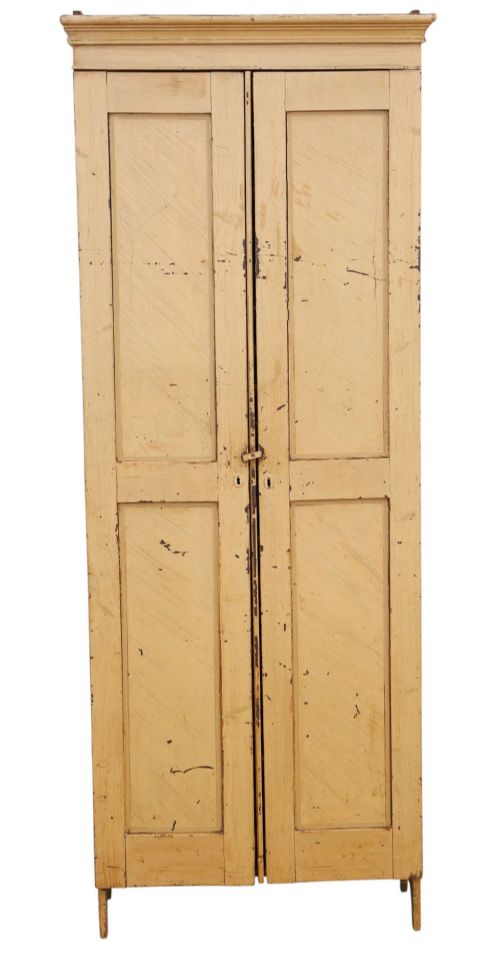
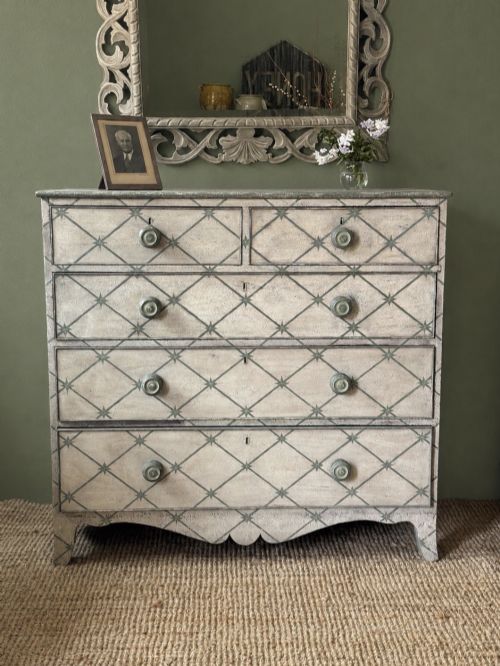
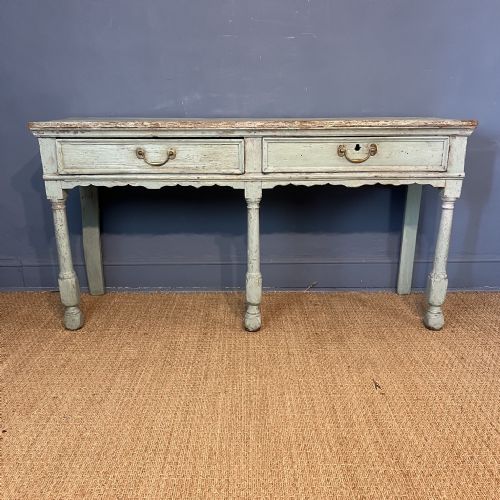
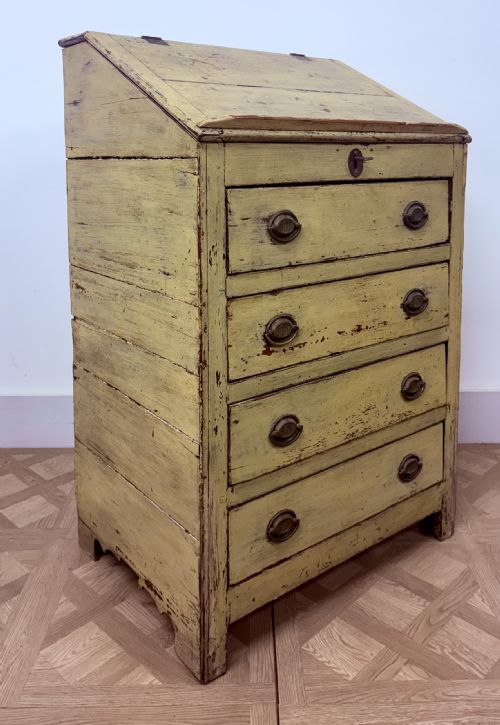


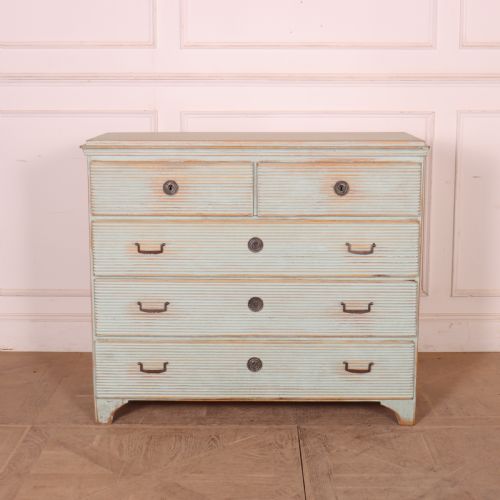
Distressed Painted Pine Dresser
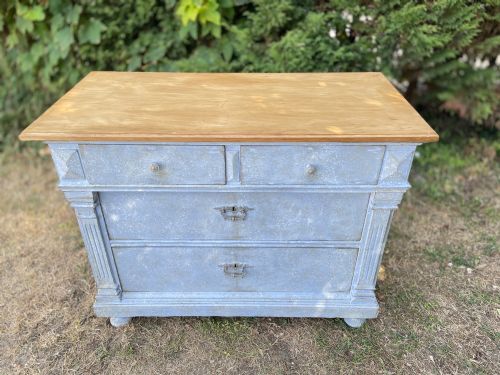
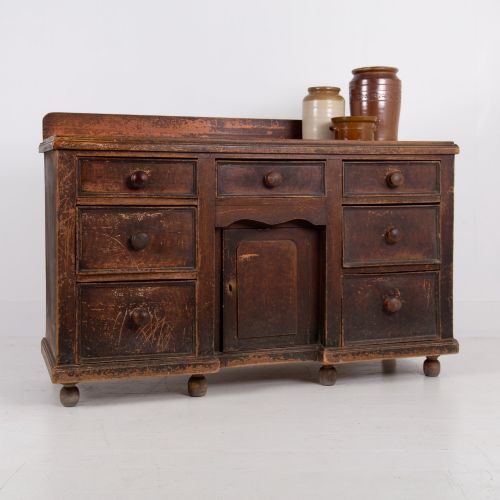
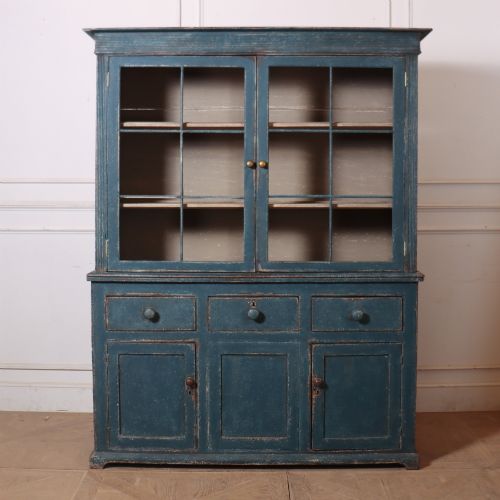
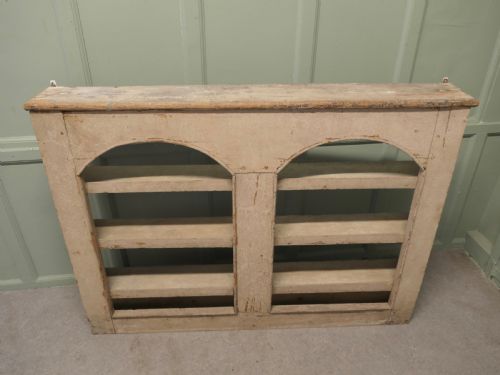
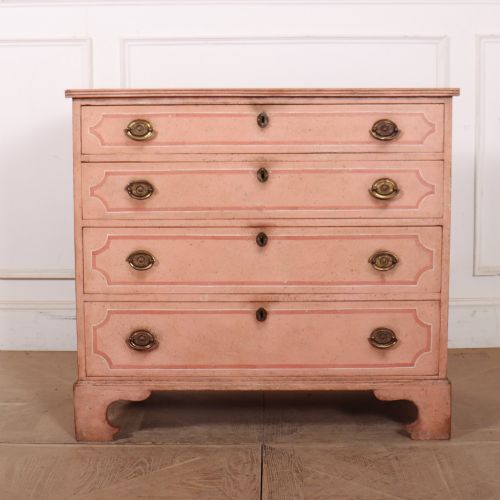
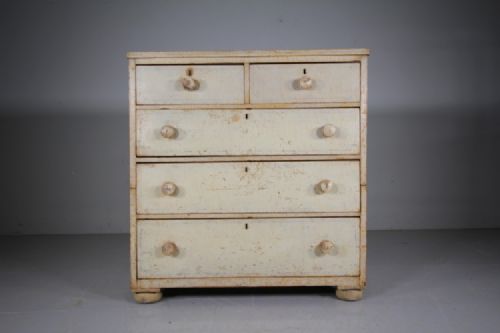
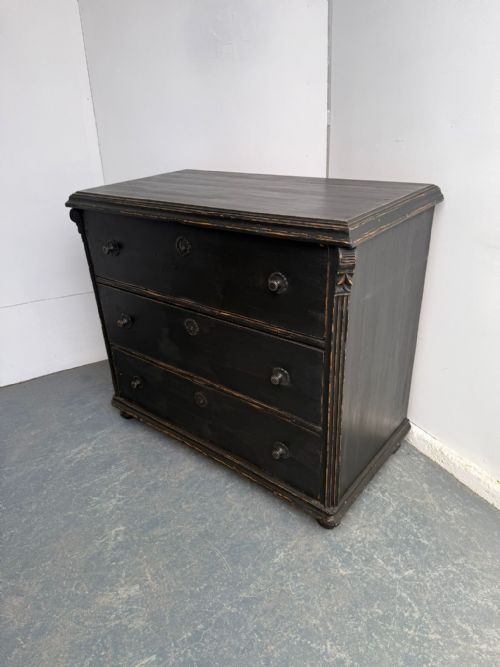
A distressed painted pine dresser brings honest utility and time-worn surface character to a room, offering practical storage with layers of historic pigment.
Distressed Painted Pine Dresser
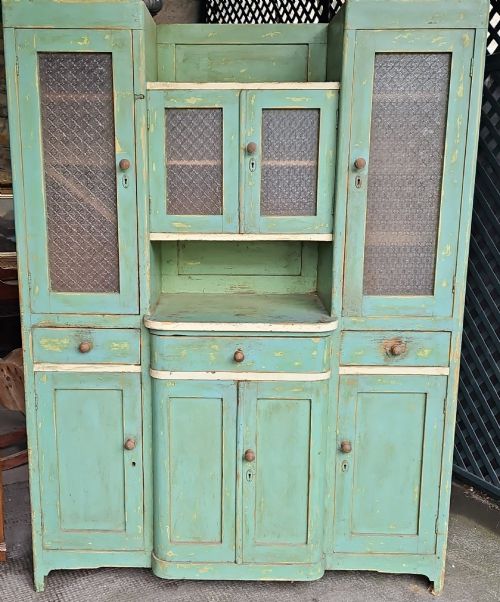
When you search for a distressed painted pine dresser, you encounter functional storage furniture built from softwood and finished with layers of historical pigment. These pieces span utility forms including kitchen dressers, dresser bases, potboard bases, and housekeeper's cupboards.
The selection here draws primarily from nineteenth-century English, Victorian, and continental workshops. You meet regional English country furniture alongside Scandinavian, French Gustavian, and Hungarian examples, showing local vernacular traditions.
Forms range from tall narrow cupboards and two-piece kitchen dressers with open shelving to low drawer chests and serving tables. Their shared identity lies in soft timber construction finished with surface paint that bears the marks of age and use.
How they were made
Carpenters constructed these items using native pine timbers, joined with dovetailed drawer boxes and pegged frames. Iron, brass, and metal hardware such as handles and hinges secure doors and drawers, while glass occasionally appears in upper cabinet doors.
Surface decoration relies on applied paint layers, often found in original or early schemes of cream, grey, black, or teal. The weathering of these pigmented finishes creates the characteristic distressed appearance through decades of domestic wear.
Listings feature pine furniture from the eighteenth and nineteenth centuries, spanning English country workshops, Victorian eras, and continental origins.
What varies in quality
Quality rests upon the integrity of the original construction and the survival of authentic surface paint. Pieces retaining their initial pigment layers without heavy modern intervention hold greater visual depth and historical coherence.
Proportion and regional carpentry distinguish standard utility items from finer provincial work. Well-balanced drawer arrangements, original brass or iron fittings, and untouched structural joinery elevate an example above basic utilitarian storage.
The Distressed Painted Pine Dresser Glossary
- Potboard dresser
- A dresser base featuring a low open shelf near the floor, originally designed for storing heavy pots and pans. This lower board sits raised on feet or integrated directly into the frame.
- Housekeeper's cupboard
- A large tall storage cabinet traditionally used for housing linens, dry goods, and household stores. These tall pieces often combine upper shelving with lower banks of drawers.
- Commode
- A European term for a low chest of drawers or cabinet, frequently encountered in continental pieces such as French Gustavian or Austrian examples. They typically stand on short legs and provide wide drawer storage.
- Breakfront
- A cabinet or dresser configuration where the central section projects forward from the flanking wings. This architectural layout adds visual depth to large kitchen dressers and sideboards.
Distressed Painted Pine Dresser: Frequently Asked Questions
How do I clean a painted pine surface?
Dust the surface regularly with a soft, dry cloth to prevent dirt accumulation in the paint texture. Avoid harsh chemical cleaners or abrasive pads that can strip historic pigment.
Apply microcrystalline wax sparingly if the dry wood needs nourishment, testing it first on a hidden area. Preserve the natural patina rather than attempting to achieve a glossy finish.
Were these dressers made in matching pairs?
Matching pairs of large dressers or cupboards are uncommon because these items were built individually for specific domestic kitchens or farmhouses. When pairs of chests or smaller cabinets do appear, they reflect uniform regional workshop production.
Check construction details and paint layers closely to confirm matching origin. Slight variations in drawer dimensions often point to hand-tooling rather than factory uniformity.
What is original paint?
Original paint refers to the earliest or primary pigment layer applied to the pine timber during the construction era. This surface shows natural craquelure, wear, and fading accumulated through decades of use.
Distinguishing original finishes from later decorative overpainting requires examining edges and hardware recesses. Traces of earlier colours often peek through worn top layers.
Can I use a kitchen dresser in a living room?
Kitchen dressers adapt easily to living rooms, dining spaces, or hallways for displaying books, ceramics, and collections. Their open shelves and deep base cupboards provide versatile storage for modern homes.
Ensure the piece is anchored securely to the wall if it is tall or top-heavy. Measure your ceiling height and floor space carefully before positioning these substantial items.