

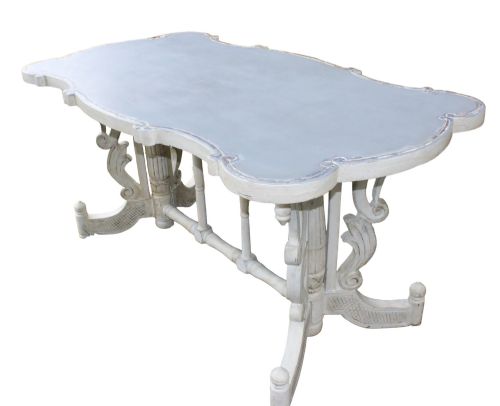
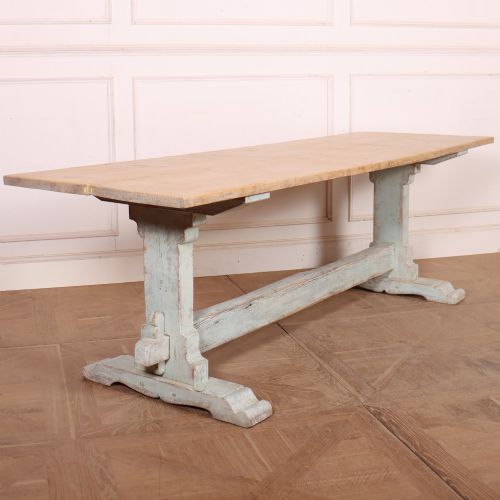
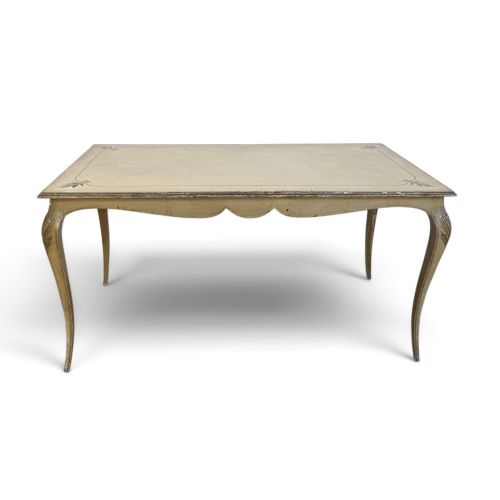
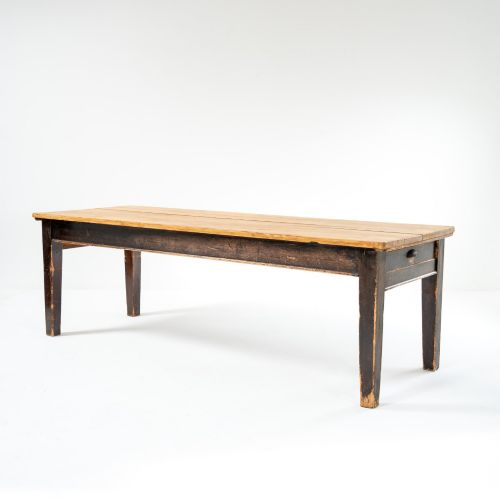
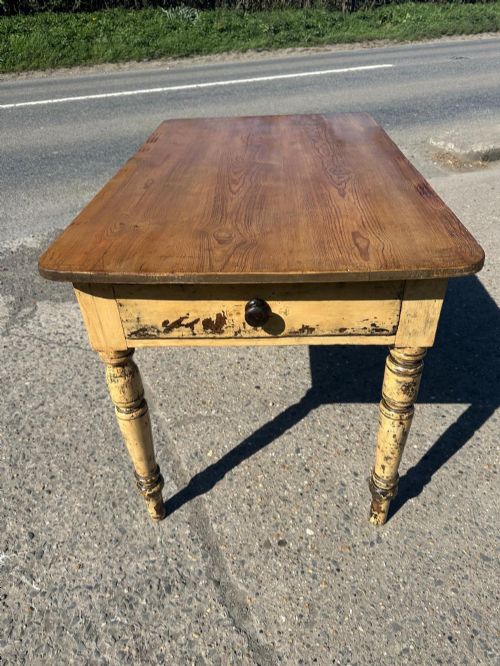


Distressed Dining Table
A distressed dining table brings instant character to a room through weathered surfaces and layers of historic paint.
Distressed Dining Table
A distressed dining table encompasses robust pine harvest tables, scrubbed kitchen furniture, and painted country styles designed for everyday gathering. These pieces emerge from 19th Century and early 20th Century traditions across England, France, Sweden, and beyond.
Buyers most frequently encounter pine and painted wood constructions showcasing decades of domestic use. The inventory spans rustic farmhouse and French country aesthetics alongside utilitarian drop leaf and gateleg forms.
The category extends beyond standard dining tables to include kitchen tables, garden sets, and centre tables bearing patinated finishes. Each surface records the marks of former workspaces, family meals, and sustained practical service.
How they were made
Makers constructed these tables primarily from solid timber such as pine, oak, and teak using traditional joinery methods suited to heavy utility. Surfaces received successive coats of paint, wash, or varnish over generations of use, creating the characteristic worn textures.
Iron, brass, and copper elements appear on specific garden and bistro variants, introducing contrasting industrial or decorative hardware. Secondary materials include wrought and cast iron supports that reinforce larger dining and garden structures.
Distressed Dining Table Retail Price Guide 2026
Typical asking prices for distressed dining table among the pieces listed under this phrase on Sellingantiques today, from the lower quarter to the upper quarter. They describe what is for sale here now, not the wider market.
What varies in quality
The distinction between ordinary and exceptional pieces lies in the authenticity of the surface patination and the integrity of the timber frame. Tables retaining genuine layers of old paint or original coloured finishes command greater interest from collectors.
Proportion and structural soundness separate simple utility tables from finer examples featuring drawers, turned legs, or balanced drop-leaf mechanisms. The harmony between the original construction and its accumulated wear defines the overall character.
The Distressed Dining Table Glossary
- Harvest table
- A long, narrow dining table traditionally used for seasonal communal meals in agricultural settings. These pieces usually feature sturdy pine tops and straightforward legs built for heavy daily use.
- Drop leaf table
- A table with hinged flaps on either side that fold down to save space when not in use. This clever mechanism allows the footprint to adjust according to the dining requirements of the room.
- Gateleg table
- A drop leaf table where the hinged legs swing out like a gate to support the raised leaves. This design provides robust structural support beneath extended surfaces.
- Patina
- The surface sheen and coloration developed through years of handling, polishing, and natural ageing. It serves as a visual record of an object's history and active life.
Distressed Dining Table: Frequently Asked Questions
How do I clean a painted wooden table?
Dust the surface regularly with a soft, dry cloth to prevent dirt accumulation on historic paint layers. Avoid harsh chemical cleaners and excessive moisture that might damage fragile or historic finishes.
For routine maintenance, a mild soap solution applied sparingly on a damp cloth works safely. Dry the wood immediately afterwards to protect the original timber and paint.
What styles fit these tables?
Rustic farmhouse, French country, and Gustavian interiors complement weathered wooden surfaces naturally. Their neutral or painted tones adapt easily to contemporary and traditional dining spaces.
Pairing a timeworn table with contrasting chairs creates a layered, collected aesthetic. The emphasis remains on texture and history rather than matching suites.
How do I date a pine table?
Examine the construction methods, tool marks, and hardware for clues to the period of manufacture. Hand-cut joints and timber dimensions often indicate 19th Century craftsmanship.
Inspect the layers of paint and surface wear for consistency with the purported age. Accretions of old paint frequently point toward extended domestic service over decades.