






Distressed Blue Console Table
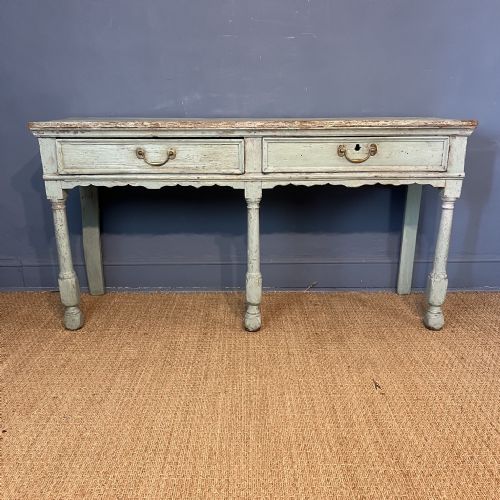
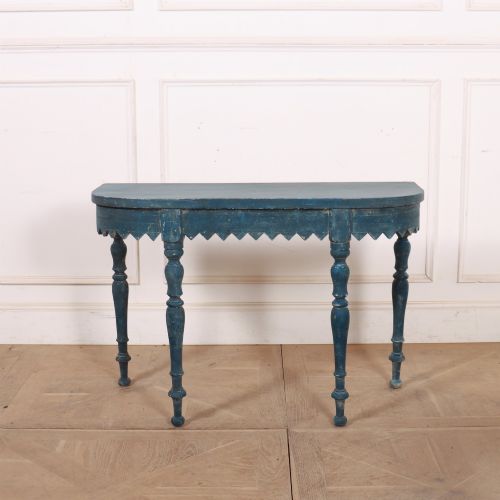
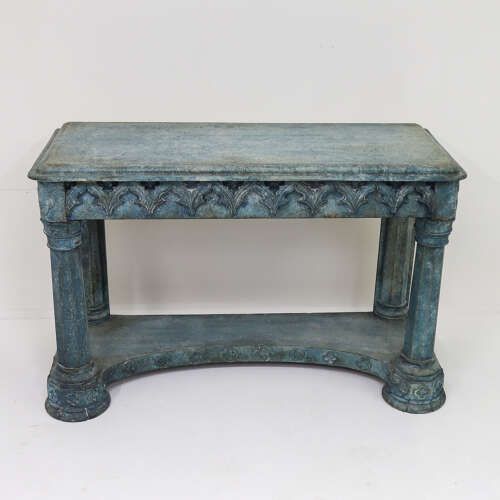
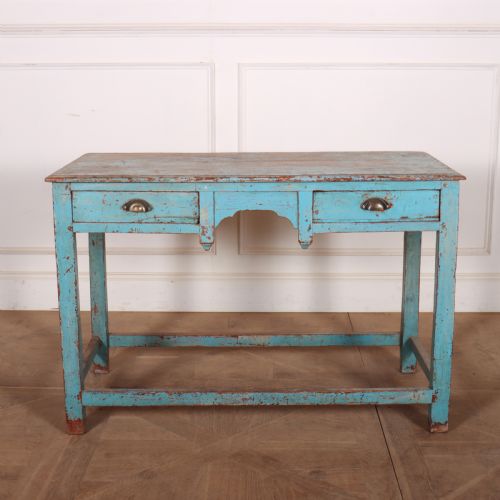
These distressed blue console table options bring together weathered painted surfaces and narrow forms from the eighteenth and nineteenth centuries.
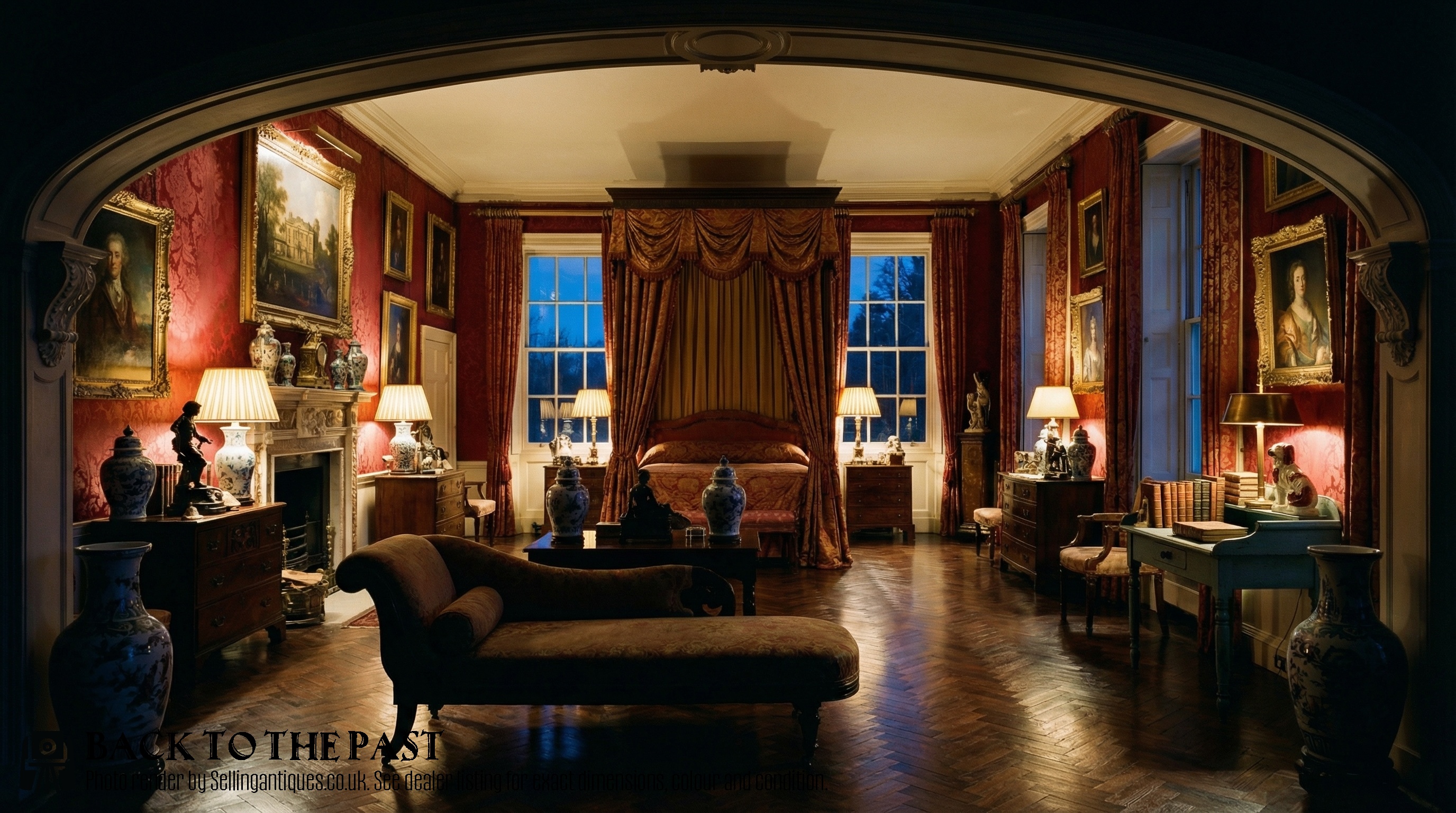
Distressed Blue Console Table
A distressed blue console table sits flat against a wall, functioning as a narrow surface in hallways and reception rooms. The selection here spans compact lamp tables, serving tables, and larger dresser bases adapted for similar display purposes.
Most examples originate from the nineteenth and eighteenth centuries, drawing on English Country, French Provincial, Gustavian, and Gothic Revival styles. You will encounter pieces featuring original paint finish layers alongside later decorative treatments.
Forms range from small bow-end and serpentine shapes to heavy pine trestle and potboard bases. The unifying characteristic across these disparate origins is the painted timber construction and narrow footprint.
Materials and construction
Makers relied primarily on pine and general timber as the structural base for these painted items. Solid wood construction allows the surface to absorb pigment and wear down naturally over generations of use.
The decorative schemes rely on layered paint applied directly to the wood, sometimes paired with marble tops on washstand variants. Brass fittings appear occasionally on drawers and supporting hardware.
Pine and painted wood dominate the material palette across these nineteenth and eighteenth-century tables.
Assessing quality and surface condition
Quality rests in the integrity of the original timber frame and the authenticity of the surface paint. Pieces retaining their early or original blue pigment hold greater interest than later repainted surfaces.
Proportional balance and the subtlety of carved details - such as those seen in Gothic or serpentine designs - separate standard utilitarian tables from finer decorative examples. Joinery stability in the pine structure remains crucial for everyday use.
The Distressed Blue Console Table Glossary
- Console table
- A narrow table designed to stand against a wall, often secured with brackets or freestanding on slender legs. They save floor space while providing a display surface.
- Potboard dresser base
- A heavy wooden base featuring an open lower shelf traditionally used for storing pots and kitchen utensils. These sturdy pieces now serve frequently as side or console tables.
- Serpentine
- A furniture design featuring a wavy, curving front edge that alternates convex and concave sweeps. This line adds fluid movement to eighteenth and twentieth-century French tables.
- Washstand
- A small piece of furniture designed to hold a basin and pitcher, often fitted with a marble top. Many survive today as decorative lamp or console tables.
- Gustavian
- The Swedish interpretation of French neoclassical style, characterised by lighter proportions and pale painted finishes. These pieces bring a restrained elegance to country interiors.
Distressed Blue Console Table: Frequently Asked Questions
Where should I place a console table?
These narrow tables suit entrance halls, narrow corridors, and living room walls where floor space is limited. Their shallow depth allows them to sit comfortably behind sofas or beneath mirrors.
They provide a convenient surface for lamps, books, and decorative objects without blocking movement through a room.
How do I care for painted wood?
Dust the surface regularly with a soft, dry cloth to prevent dirt accumulation in the textured paintwork. Avoid using chemical polishes or abrasive cleaners that might strip the aged pigment.
Keep the timber away from direct heat sources and strong sunlight to prevent the painted wood from warping or fading further.
What is a potboard base?
A potboard base is a sturdy wooden table featuring a low open shelf beneath the main work surface. Originally built for domestic utility in country houses, they offer practical lower storage.
Today, that lower shelf makes an ideal spot for stacking large books or displaying decorative ceramics.
How do I identify a Gustavian piece?
Gustavian tables typically display restrained neoclassical lines inspired by French royal furniture but adapted with Scandinavian restraint. They often feature pale or blue painted finishes over pine.
Look for simplified fluting, tapered legs, and subtle carved motifs that reflect late eighteenth-century Swedish taste.