



Display Whatnot
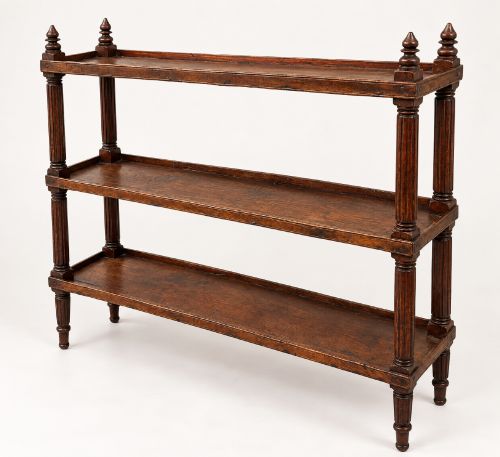
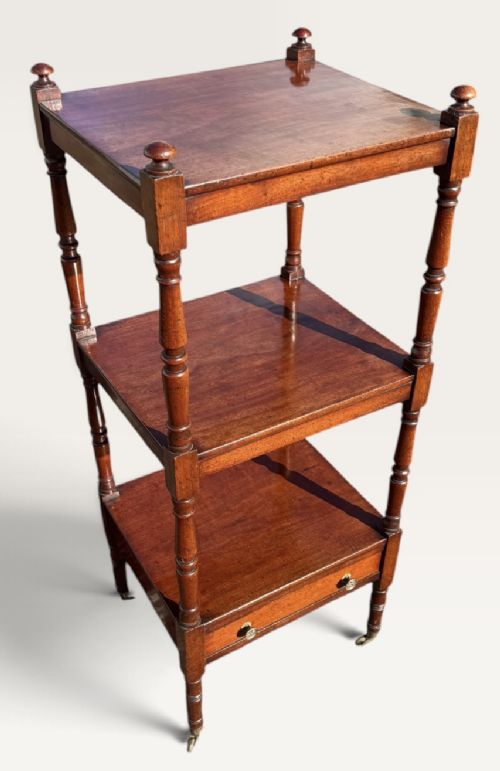
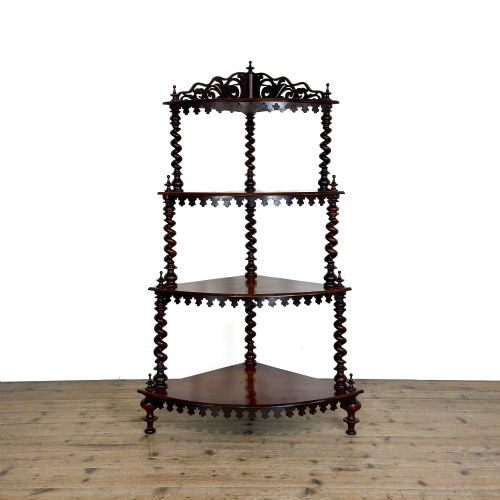
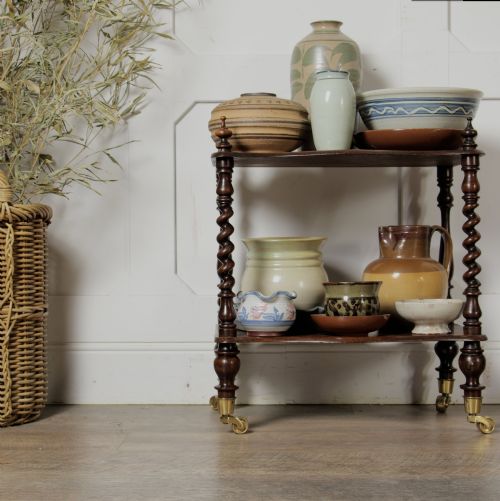
A display whatnot is a tiered open shelving unit designed to hold books, ornaments and precious objects, bringing vertical architectural interest to a room.
Display Whatnot
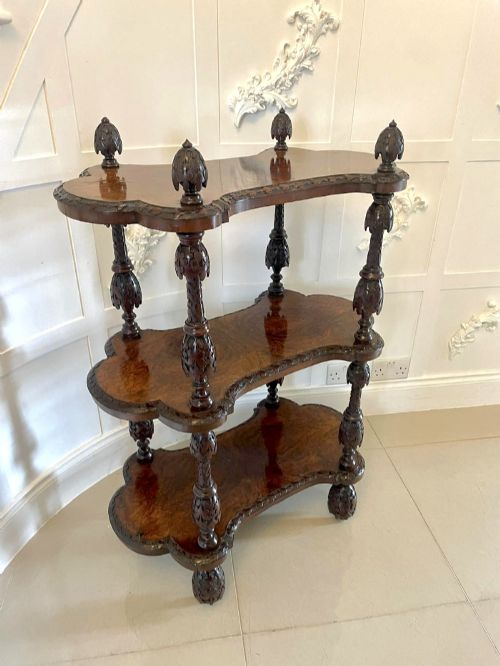
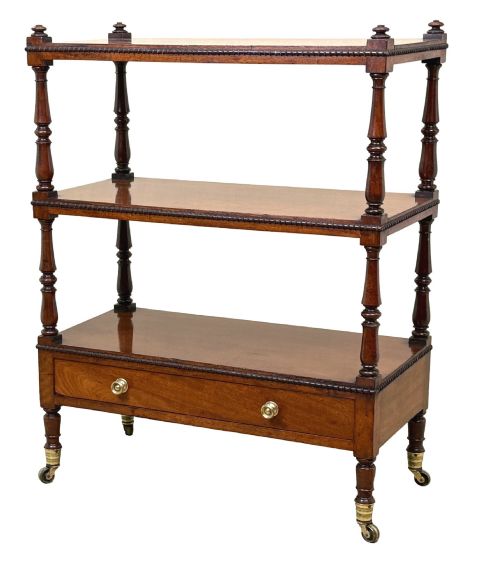
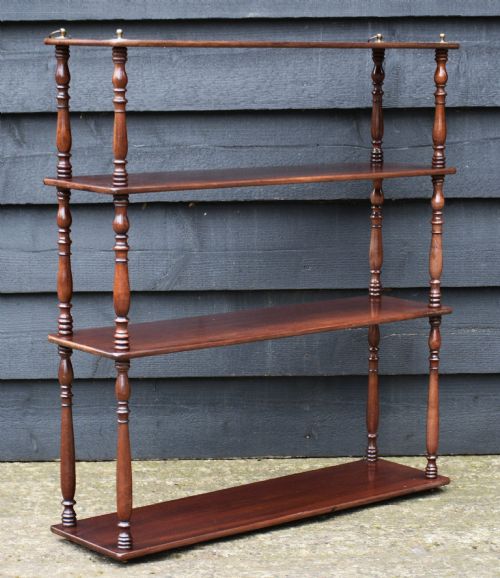
A display whatnot is a multi-tiered furniture piece designed for organising and exhibiting domestic objects. When exploring a display whatnot selection, buyers encounter multi-tier shelving units built to stand freely in a room or fit neatly into corners.
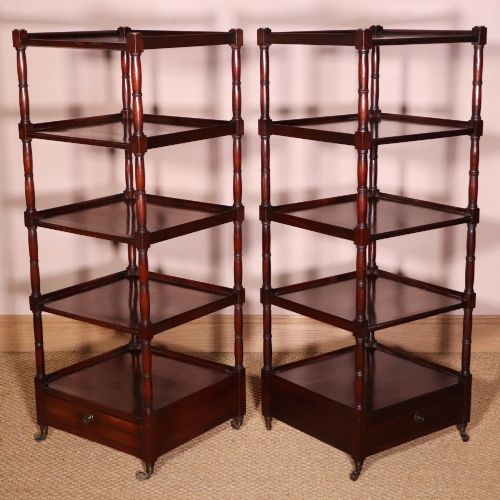
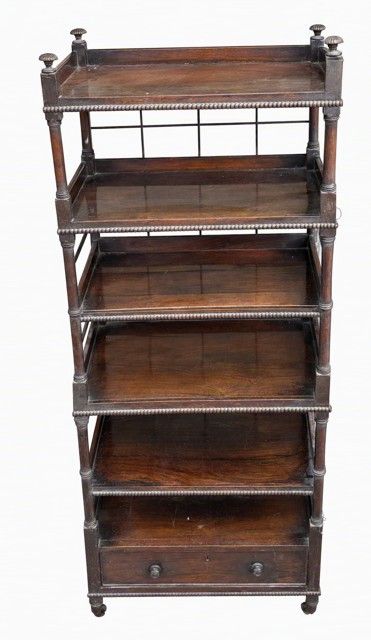
The pieces on this page span several periods, with Victorian and Regency eras heavily represented alongside Georgian designs and turn-of-the-century interpretations. Forms vary from simple three-tier open shelves to elaborate four, five, and six-tier structures incorporating music stands, drawers, and glazed elements.
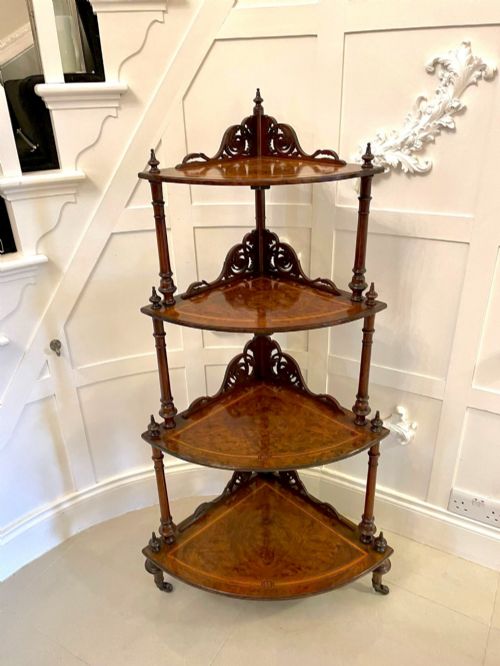
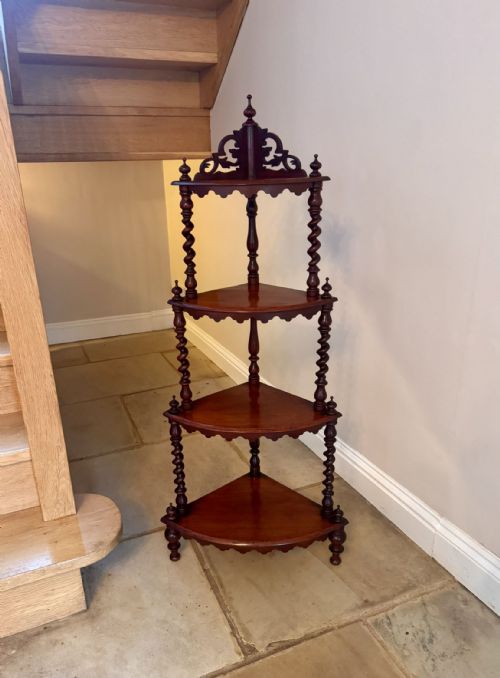
Origins include domestic English workshops as well as pieces with French Napoleon III, French Chateau, and Anglo-Indian Colonial influences. Buyers frequently find freestanding models and corner designs constructed to maximise space in reception rooms and drawing rooms.
Distinctions in craftsmanship and design
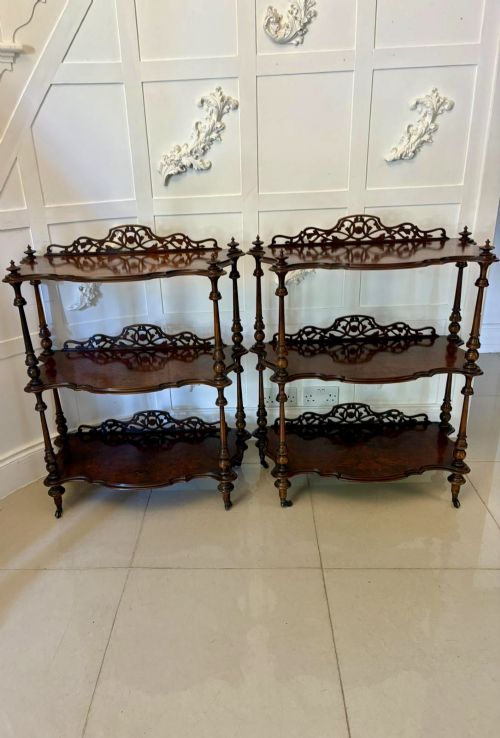
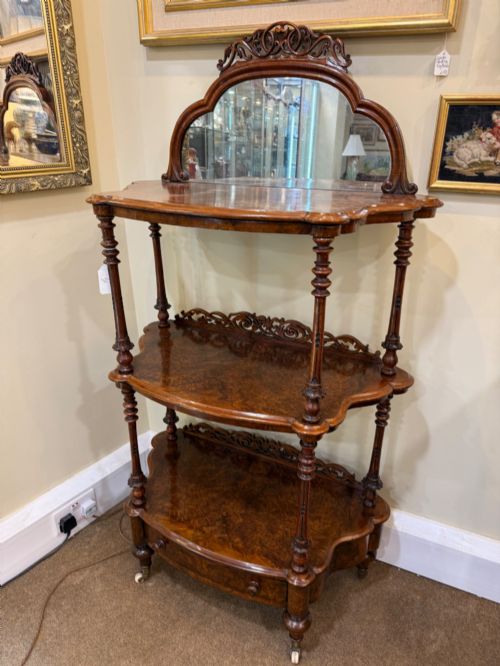
The distinction between standard examples and exhibition quality items rests in the selection of timbers, such as highly figured burr walnut or richly grained rosewood. Superior pieces demonstrate exceptional control in matching veneers across multiple tiers and serpentine shapes.
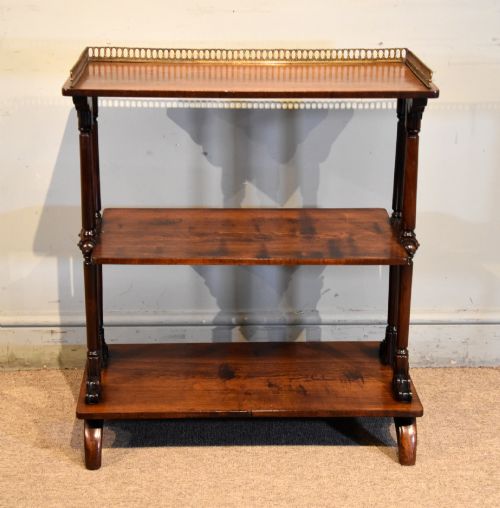
Refinement in carving and metalwork separates ordinary production from masterwork output. Pierced fretwork panels, finely cast brass galleries, and robust barley twist turnings indicate a higher degree of artisan labour and material investment.
Display Whatnot Retail Price Guide 2026
Typical asking prices for display whatnot among the pieces listed under this phrase on Sellingantiques today, from the lower quarter to the upper quarter. They describe what is for sale here now, not the wider market.
Listings feature woods spanning mahogany, walnut, burr walnut, rosewood, and ebonised wood across Victorian, Regency, and Georgian periods.
Gillows·Leonard Wyburd for Liberty and Co
The Display Whatnot Glossary
- Whatnot
- A tiered piece of furniture used for displaying or storing small objects, books, and ornaments. These units developed in the 18th century and remained popular through the Victorian era.
- Étagère
- A French term for an open piece of furniture with shelves tiered one above the other for displaying porcelain, ornaments, or small items. It functions similarly to the English whatnot.
- Burr walnut
- A prized wood grain obtained from the wart-like growths on walnut trees, yielding highly ornamental swirling patterns. Cabinet makers used veneers of this material on prominent surfaces.
- Barley twist
- A type of turning shaped like a spiral or helix, commonly used for the vertical supports or legs of tables and shelves. This decorative turning style gained wide favour during the 17th century and saw revival periods later.
- Brass gallery
- A low pierced railing of brass fitted around the edge of a shelf to keep items from sliding off. This detail frequently tops the uppermost tier of fine display furniture.
- Parquetry
- Geometric mosaic woodwork used for decorative floors and cabinet surfaces. Makers created patterns by arranging small blocks or veneer strips of different coloured timbers.
Display Whatnot: Frequently Asked Questions
What is a display whatnot used for?
These tiered shelving units were originally designed to hold books, ceramics, and ornaments in formal reception rooms. They provided an organised way to exhibit decorative possessions without cluttering main tables.
Today, they serve a similar purpose in domestic interiors, offering vertical display space for collections, plants, and everyday objects in living areas or hallways.
How do I distinguish between Regency and Victorian pieces?
Regency pieces often display restrained classical proportions, clean mahogany lines, and subtle brass details dating from the early nineteenth century. They favor architectural simplicity and architectural balance.
Victorian examples frequently introduce denser timbers like burr walnut, elaborate barley twist columns, serpentine shaping, and decorative fretwork. The overall aesthetic leans toward heavier ornamentation and varied wood tones.
Are corner whatnots sturdy enough for heavy items?
Corner units distribute weight against two intersecting walls, which naturally braces the framework. Their multiple tiers are structurally tied together by turned uprights or fixed columns.
While they securely hold books and porcelain collections, placing exceptionally heavy loads on the upper tiers should be avoided to maintain balance.
Where should I place a freestanding whatnot?
Freestanding units are finished on all sides, allowing them to sit away from walls as room dividers or accent pieces in large spaces. They work well positioned beside seating or against blank wall expanses.
Placing them out of direct sunlight preserves the polished timber surfaces and prevents the natural veneers from drying out over time.