
Dining Table Candlesticks
Dining table candlesticks bring height and soft illumination to a meal, uniting silver, brass and copper forms from the eighteenth to the twentieth centuries.
Dining Table Candlesticks
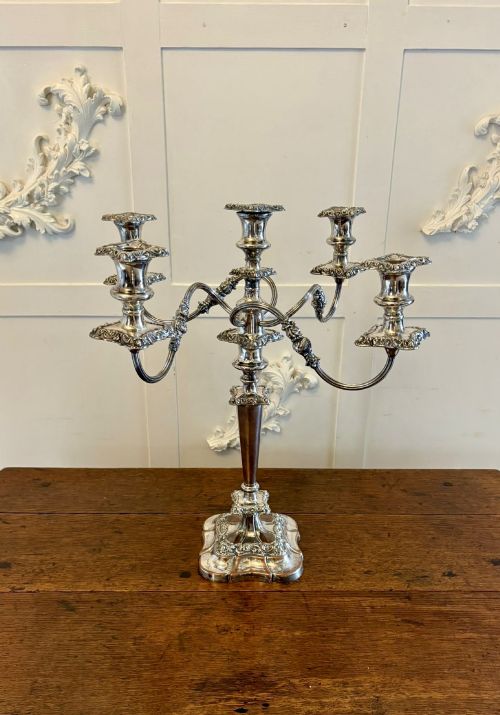
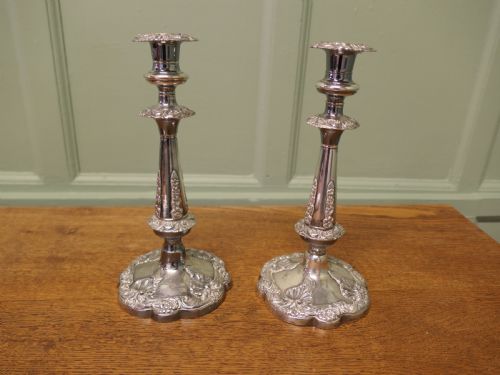
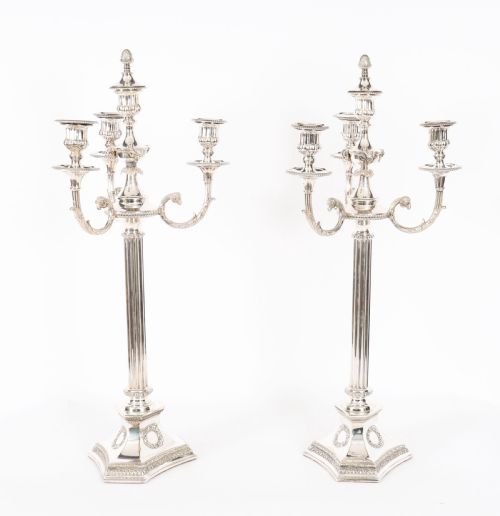
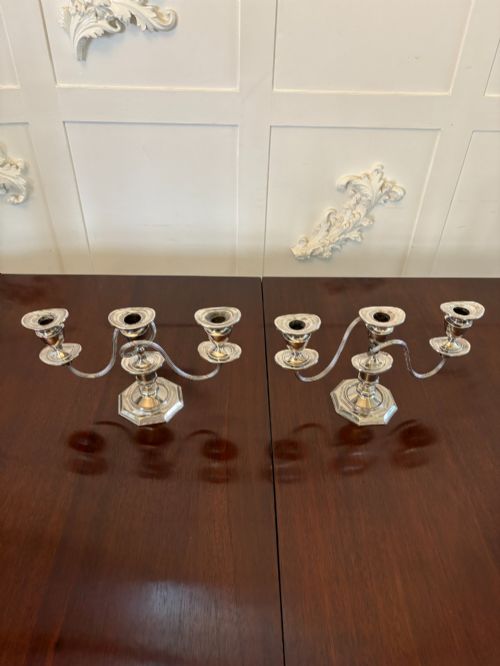
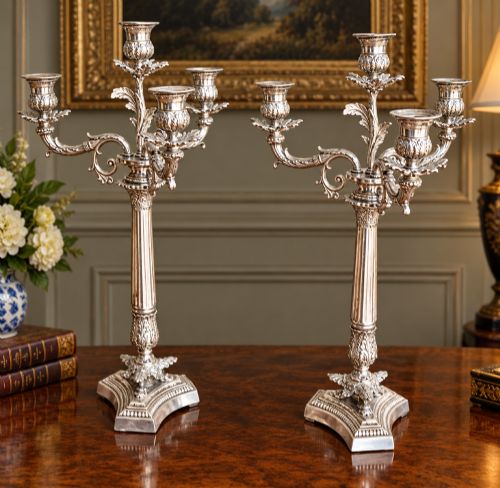
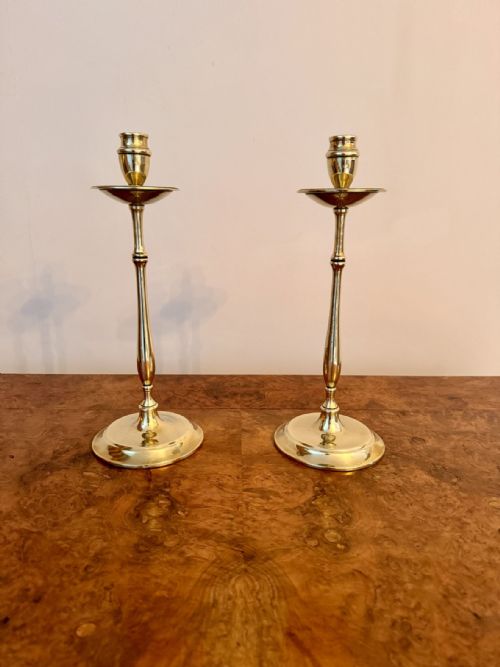
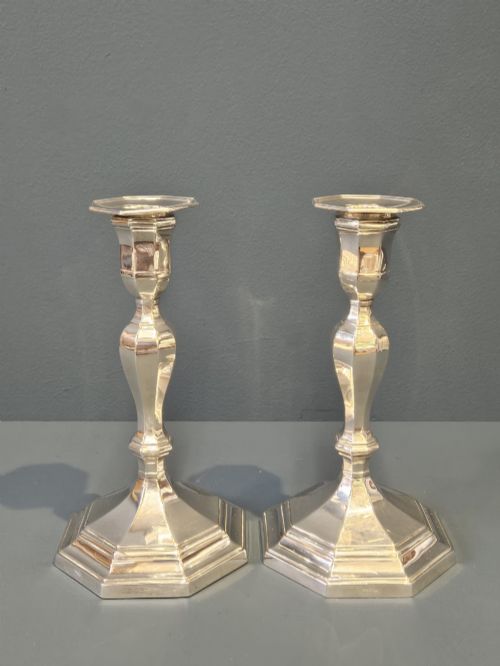
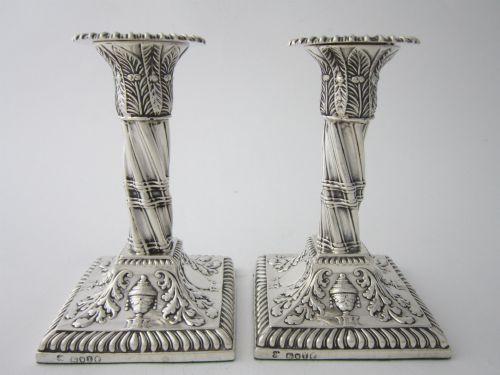
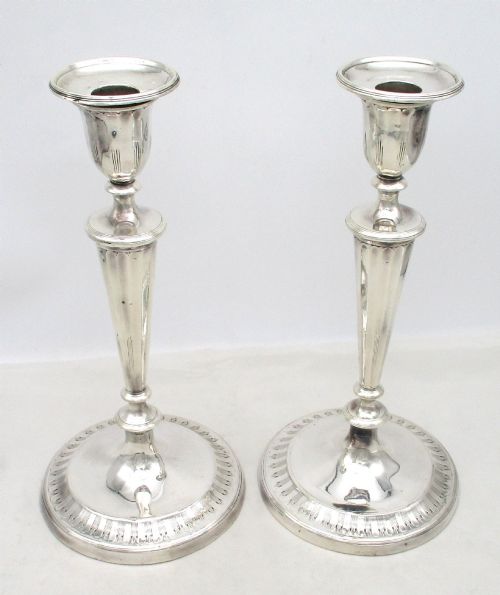
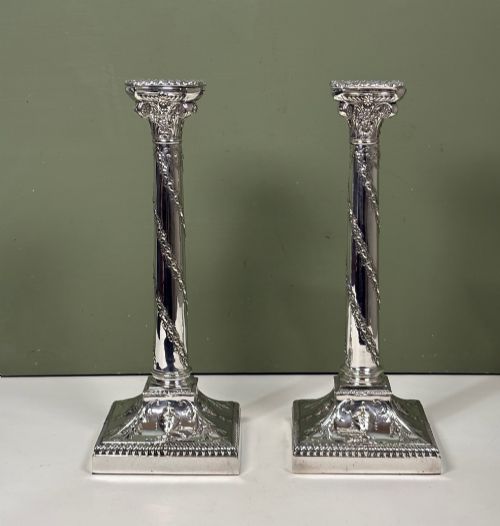
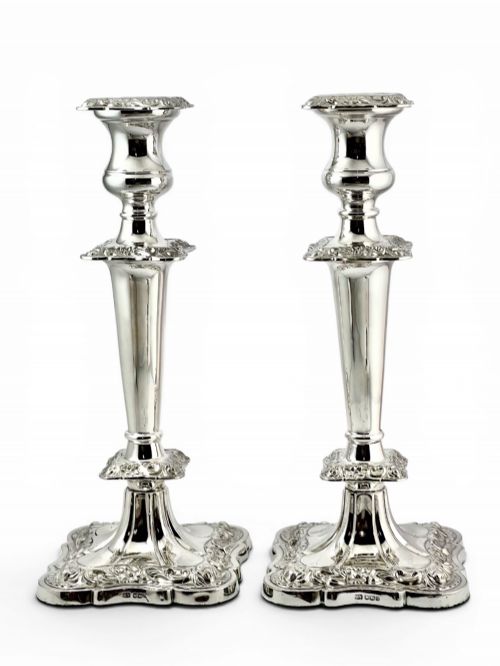
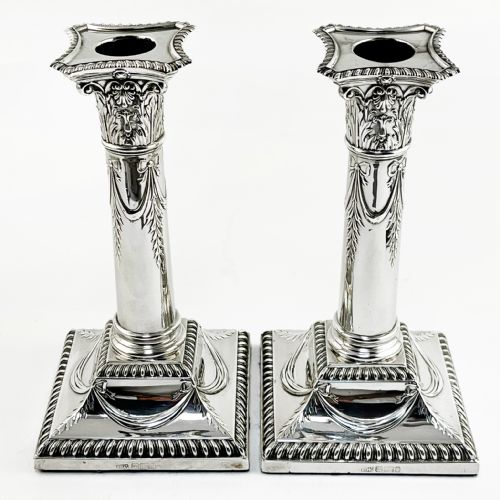
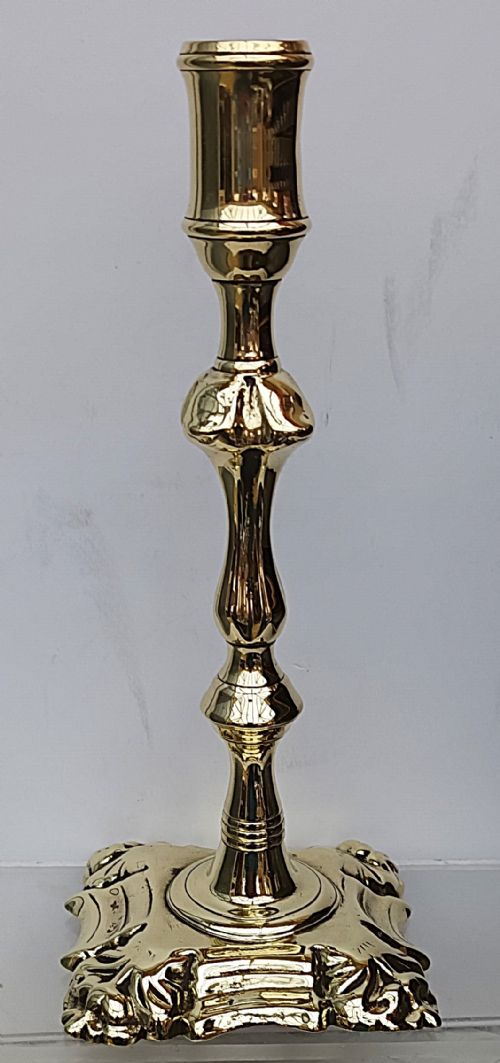
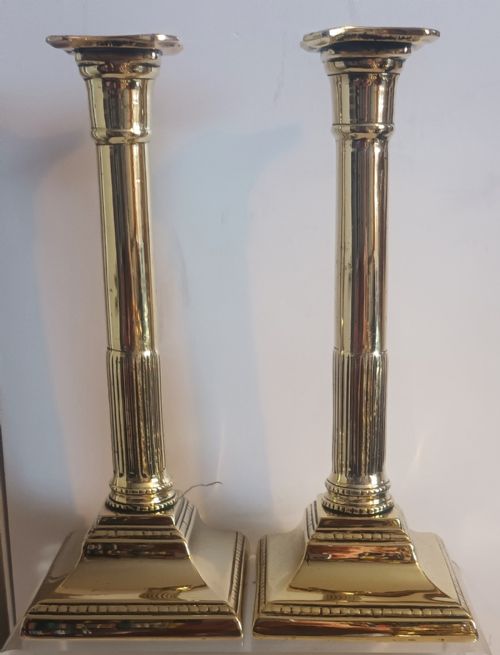
Dining table candlesticks span solitary column holders to multi-branch candelabras designed to sit centrally during formal meals. The selection here leans heavily towards Victorian and Edwardian pairs in silver plate and sterling silver, alongside Georgian brass and later twentieth-century interpretations.
Most examples appear as matched pairs, though sets of four and larger suites with detachable sconces also emerge across the nineteenth century. Forms range from dwarf heights to tall columnar designs carrying up to five branches.
Stylistically, pieces draw on Georgian, Victorian, Edwardian and Neoclassical vocabularies, reflecting the prevailing tastes of their respective periods.
Materials and Construction
Makers utilised sterling silver, silver plate, EPNS, nickel silver, brass and copper, often shaping metals through casting, spinning and soldering techniques. Heavy weighted bases frequently provide stability for taller shafts, whilst detachable drip pans or sconces simplify cleaning.
Silver-plated items typically employ a base metal foundation beneath a deposited layer of silver, whereas sterling examples bear hallmarks indicating purity and origin. Brass and copper pieces rely on solid cast or sheet construction, displaying patinas acquired over generations of use.
Several examples include removable snuffer caps, saving diners from reaching across the table with clumsy fingers to quell a stubborn flame.
Distinctions in Quality
Quality rests upon the crispness of cast ornamentation, the weight and balance of the piece in the hand, and the preservation of original plating or surface metal. Maker marks from established firms indicate higher workshop standards and careful finishing.
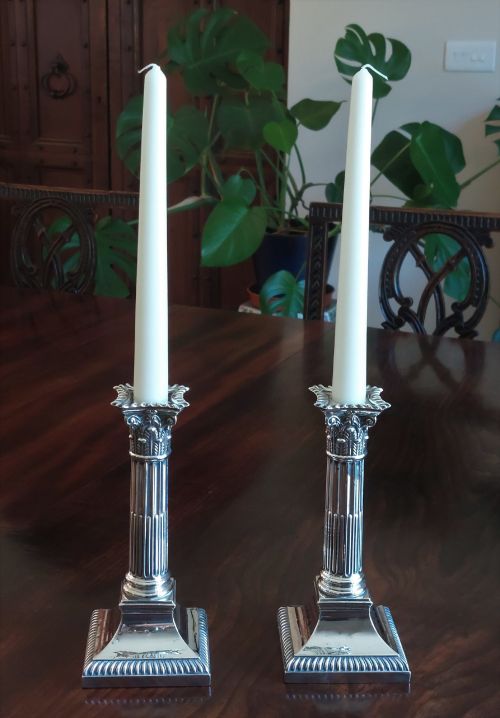
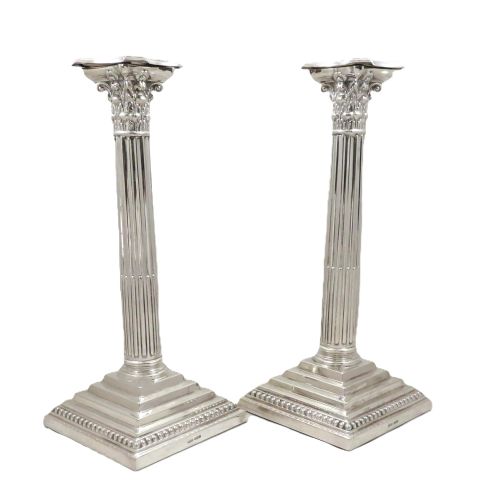
Subtlety in Neoclassical detailing or the architectural integrity of Corinthian columns separates standard production from superior examples. Proportion and proportioned weight distribution ensure the candlestick stands securely when dressed with a lighted taper.
Conrad Eduard Mappe·Garrard & Co·John Cafe·Smith & Sissons & Co·Barker Ellis
The Dining Table Candlesticks Glossary
- Sconce
- The detachable cup at the top of a candlestick that catches dripping wax. It lifts out to facilitate cleaning after use.
- Hallmark
- An official stamp applied to precious metals indicating purity, maker and assay office. British items carry these to verify sterling standards.
- Candelabra
- A branched candlestick holding multiple tapers from a single base. They frequently feature removable arms to convert into single sticks.
- EPNS
- Electroplated nickel silver, a common base material for nineteenth- and twentieth-century tableware coated in a thin layer of silver. It offers the appearance of solid silver at a different cost point.
- Corinthian column
- A classical architectural style adapted for candlestick shafts featuring ornate acanthus leaves on the capital. This motif recurs frequently in Victorian and Edwardian designs.
Dining Table Candlesticks: Frequently Asked Questions
How do I clean tarnished silver candlesticks?
Use a soft cloth and a gentle, non-abrasive silver polish formulated for plated or solid surfaces. Avoid harsh dipping solutions that strip away the residual character and fine detail.
Work carefully around hallmarks and engraved crests to preserve the integrity of the metal. Wash away remaining residue with warm soapy water and dry thoroughly with a soft lint-free cloth.
Were these always used in pairs?
Dining arrangements traditionally featured symmetrical pairings placed along the length of the table to balance illumination. Single candlesticks also served on sideboards or dressing tables.
Larger tables utilised sets of four or multi-branch candelabras as central focal points during evening meals. Surviving pairs remain the most common format encountered today.
How do I identify the period of a candlestick?
Examine the stylistic cues, such as neoclassical columns, Georgian proportions, or ornate Victorian casting. Hallmarks on silver provide exact assay dates and maker marks.
Construction methods also offer clues, including the weight distribution, base filling materials, and assembly seams. Comparing these details against documented examples confirms the era of manufacture.