

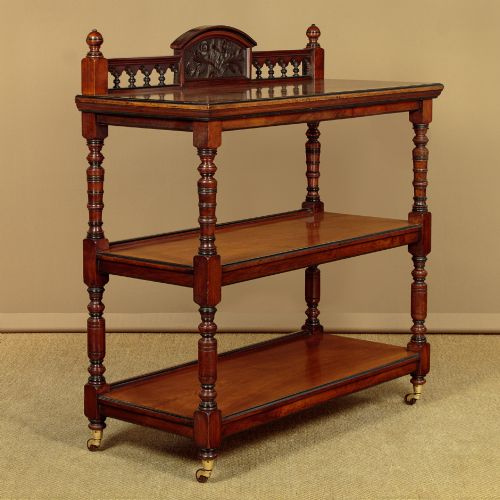
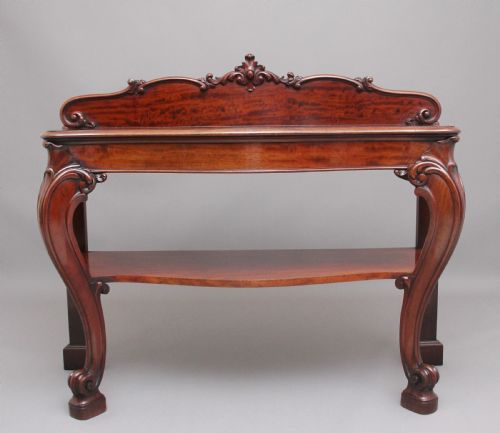


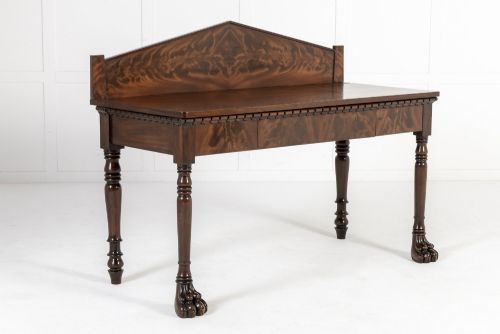


Dining Room Side Table
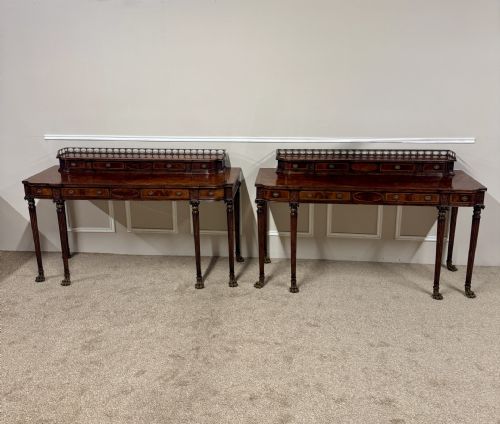
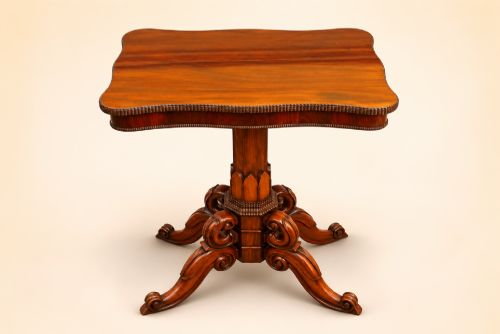
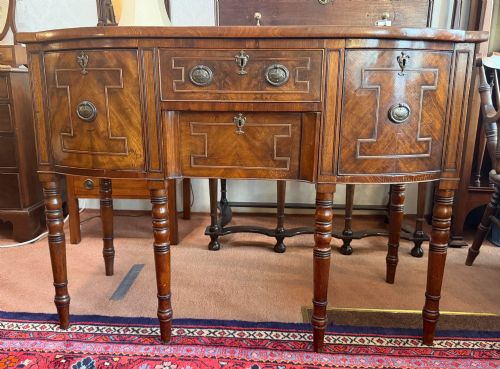
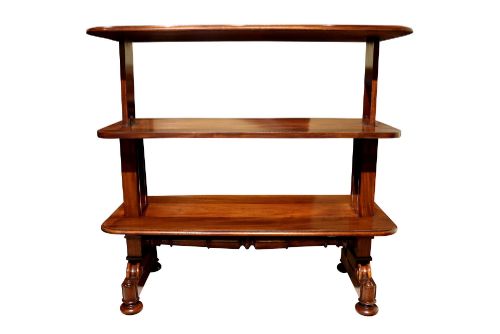
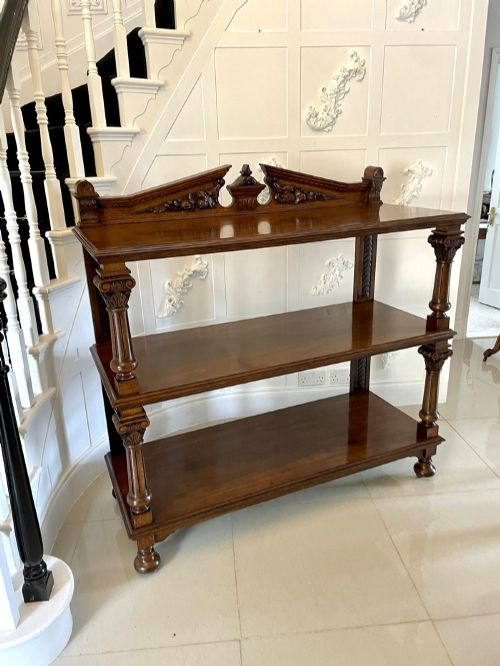
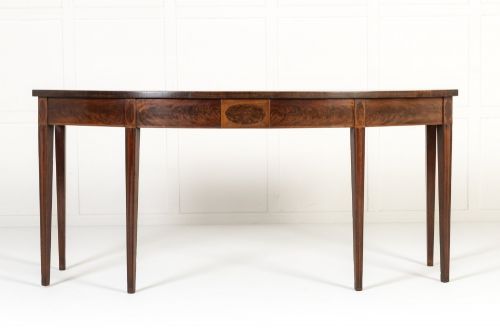
These dining room side table pieces span serving tables, sideboards, dumb waiters and buffets in mahogany, oak and walnut.
Dining Room Side Table
A dining room side table serves meals and holds dishes across periods from the eighteenth century to the twentieth century. These forms include serving tables, sideboards, dumb waiters and buffets.
Mahogany predominates alongside oak and walnut, spanning Georgian, Regency and Victorian styles. Simpler serving tables sit alongside elaborate metamorphic buffets and tiers.
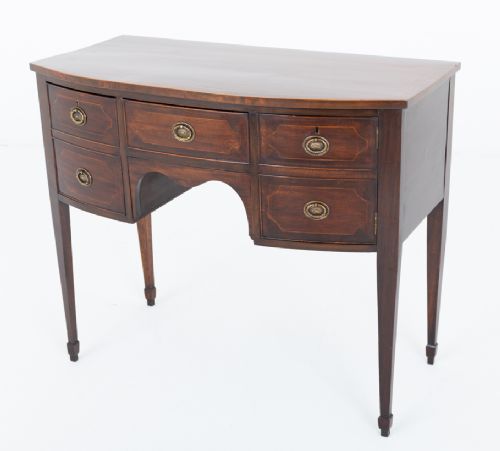
Georgian and Regency pieces share floor space with later Victorian and Edwardian examples. Forms range from bow-fronted sideboards to multi-tier dumb waiters.
How they were made
Joiners and cabinet makers utilise solid mahogany, oak and walnut, often pairing them with flame mahogany veneer or pollard oak. Inlays of satinwood and boxwood add contrast to drawer fronts and borders.
Carving defines specific oak and walnut pieces, while brass hardware appears on drawers and rise and fall mechanisms. Construction includes serpentine shaping and bow fronts.
Dining Room Side Table Retail Price Guide 2026
Typical asking prices for dining room side table among the pieces listed under this phrase on Sellingantiques today, from the lower quarter to the upper quarter. They describe what is for sale here now, not the wider market.
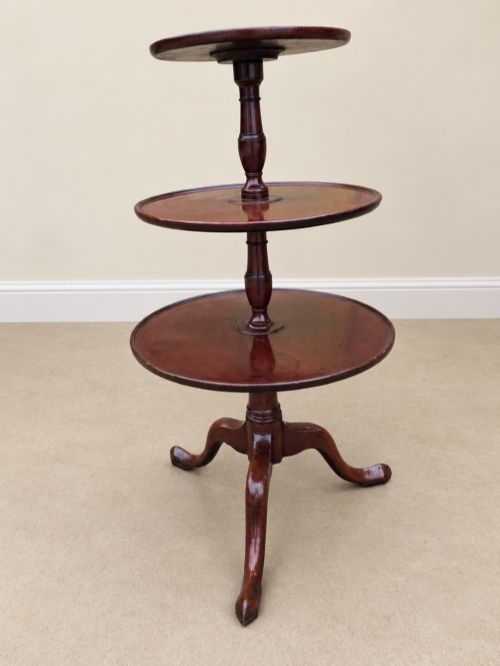
Dumb waiters allowed diners to pass the port without listening to the servants gossip.
What varies in quality
Timber selection drives variation, with figured mahogany and burr walnut marking out the finer examples. Timbers display rich grain patterns and careful book-matching across large surfaces.
Joinery detail and decorative restraint separate standard production from exceptional work. Inlay precision and the execution of carved elements distinguish individual items.
Gillow·Harry And Lou Epstein·Adam
The Dining Room Side Table Glossary
- Serpentine
- A curved line with a convex centre flanked by concave curves. This contour appears on eighteenth and nineteenth-century serving tables.
- Dumb waiter
- A piece with revolving tiers or shelves used for holding food and tableware. These items stand on central pedestals with tripod legs.
- Buffet
- A sideboard or server designed for food presentation. Versions include metamorphic and rise and fall mechanisms.
- Metamorphic
- Furniture designed to alter its form or function through mechanical parts. These pieces adjust in height or configuration.
- Satinwood
- A durable hardwood with a golden lustre used for veneers and inlay work. It contrasts with darker timbers like mahogany.
Dining Room Side Table: Frequently Asked Questions
What is a dumb waiter?
A dumb waiter is a multi-tiered stand or revolving table used during meals to hold plates and dishes without servants present. These pieces often feature graduated shelves supported by a central column.
Examples range from static oak shelves to rise and fall designs operated by mechanical adjustments.
How do I identify a Georgian serving table?
Georgian serving tables typically display solid mahogany construction with straight or serpentine fronts. Details include fine line inlay, boxwood stringing and tapered legs.
These proportions suit formal dining spaces and pair with period chairs.
Where does pollard oak appear?
Pollard oak appears on nineteenth-century dumb waiters and cabinets. The timber comes from trees pollarded to produce dense, clustered grain patterns.
This material provides a textured, decorative surface distinct from plain oak.