


Diamond Pearl Engagement Ring
A diamond pearl engagement ring combines the soft lustre of organic pearls with the sharp brilliance of old cut diamonds for an enduring symbol of devotion.
Diamond Pearl Engagement Ring
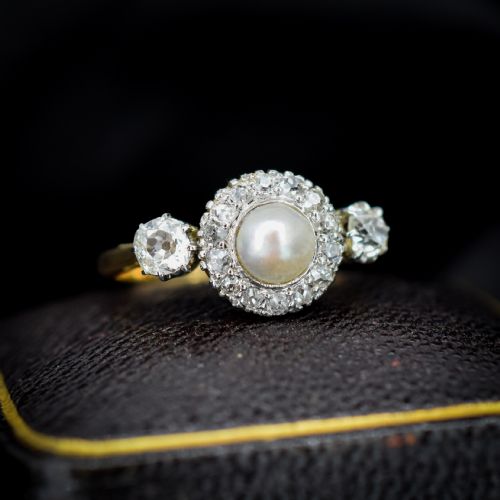
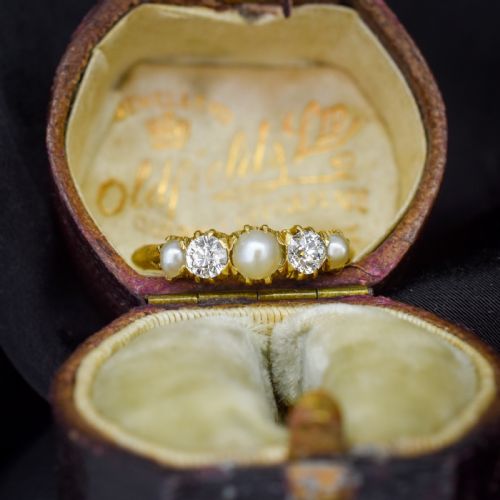
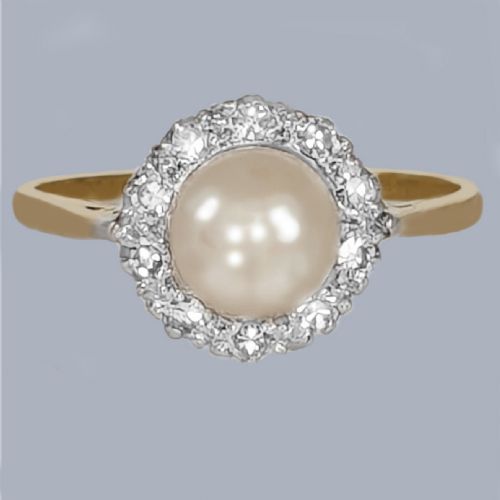
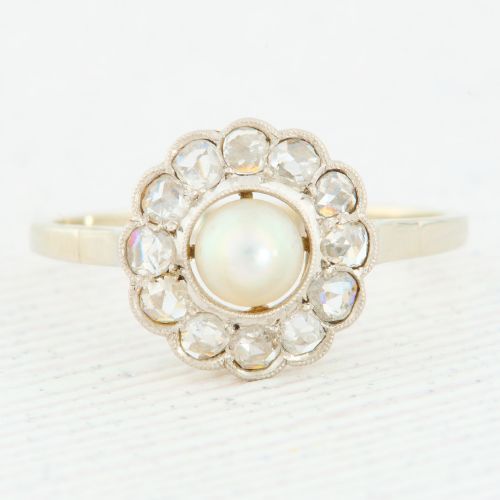
A diamond pearl engagement ring brings together two distinct gemological materials in a single band, uniting lustrous nacre with sparkling facets. These pieces emerge predominantly in cluster, crossover, and trilogy configurations spanning the Edwardian, Victorian, Art Nouveau, Art Deco, and Mid-Century periods.
The Edwardian iterations frequently pair natural pearls with old cut diamonds set in platinum-topped 18ct yellow gold, reflecting the delicate aesthetics of the early twentieth century. Cluster arrangements dominate the selection, framing a central pearl or diamond with smaller stones to create a pronounced floral or geometric silhouette.
Materials and Construction
Goldsmiths utilised 18ct yellow gold, 18ct white gold, and platinum to mount the gems, often combining white precious metals over yellow gold frames during the Edwardian era to enhance diamond brilliance. Settings rely on meticulous claw work, bezel mounts, and platinum-topped surfaces designed to secure fragile pearls without damaging their organic nacre.
Stones consist of natural pearls, saltwater pearls, and cultured pearls alongside old cut diamonds and rose cut diamonds. Master lapidaries shaped these diamonds by hand before the standardisation of modern brilliant cutting, resulting in characteristic open culets and smaller tables.
Some Edwardian designers hid tiny ventilation holes beneath pearl settings so moisture could escape without disturbing the delicate nacre.
Quality and Construction Differences
The value and distinction of a piece rest upon the origin and surface integrity of the pearl alongside the carat weight and optical liveliness of the diamond. Natural saltwater pearls command greater interest than later cultured alternatives, particularly when matching in orient, lustre, and spherical uniformity.
Superior execution shows in the integration of platinum and gold, where delicate claw settings and pierced galleries reveal expert hand craftsmanship. The harmonious proportion between the central gems and the surrounding diamond cluster dictates the visual balance of the ring.
The Diamond Pearl Engagement Ring Glossary
- Old cut diamond
- A hand-faceted diamond shape typical of the Victorian and Edwardian periods, featuring a smaller table and a prominent open culet. These stones catch candle or gas light with a softer, broader flash than modern stones.
- Natural pearl
- A pearl formed organically within a mollusc without human intervention. These stones display distinct orient and depth of nacre.
- Toi et Moi
- A French term meaning you and me, describing a ring style featuring two main gems sitting side by side or crossing over. This configuration symbolizes two souls united.
- Cluster ring
- A jewellery design where a central stone is surrounded by a ring of smaller gems. This arrangement maximises visual impact and perceived size.
- Platinum
- A dense, durable white metal utilised extensively in Edwardian and Art Deco mountings. Its strength permits exceptionally fine claw settings.
Diamond Pearl Engagement Ring: Frequently Asked Questions
How do I care for my ring?
Pearls consist of organic material that requires gentle maintenance compared to hard gemstones like diamonds. Clean them solely with a soft, damp cloth and avoid harsh chemical dips or ultrasonic cleaners.
Store the ring in a dedicated fabric-lined compartment away from harder jewellery items to prevent scratches on the delicate nacre surface.
Are these pearls natural?
The selection includes both natural pearls formed organically and cultured pearls grown with human assistance. Period pieces from the Edwardian and Victorian eras frequently feature natural saltwater pearls.
Examining the certification or consulting the specific listing details will confirm the exact origin and nature of the pearl.
What periods are represented?
The pieces span from the 19th century through the Edwardian, Art Nouveau, Art Deco, and Mid-Century eras up to the 1960s. Each era imparts distinct stylistic markers, from Edwardian platinum lacework to bold Mid-Century lines.
Design motifs and metal choices usually align closely with these specific historical decades.
Can I wear this daily?
Daily wear is possible with mindful handling, given the softer nature of pearls relative to diamonds. Removing the ring during heavy manual tasks preserves both the pearl nacre and the precious metal setting.
Routine inspection by a jeweller ensures that the claw settings remain secure and protect the stones.