



Diamond Crossover Band
A diamond crossover band wraps two or more gems around the finger in a sweeping embrace, offering an elegant alternative to the traditional solitaire.
Diamond Crossover Band
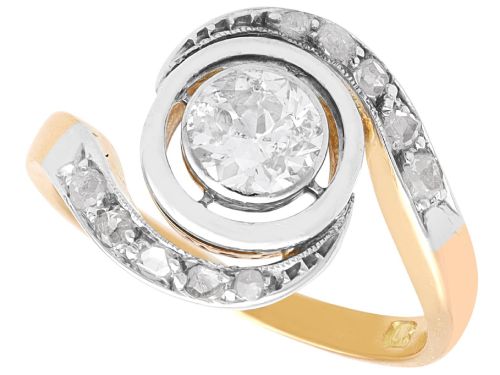
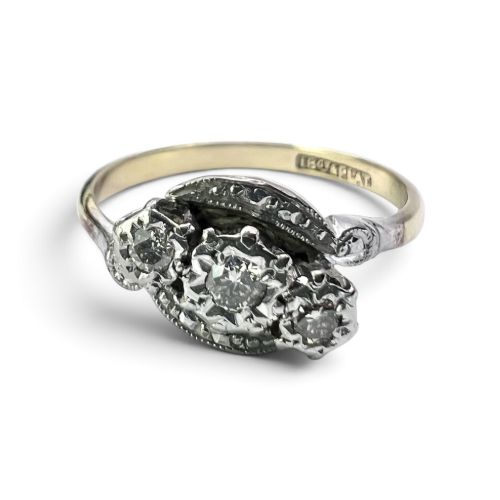
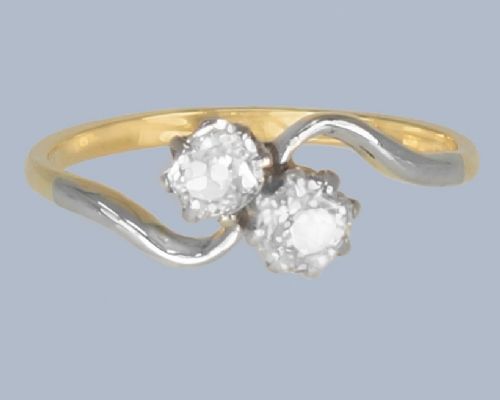
A diamond crossover band brings together scrolling forms and intertwined shanks, uniting multiple gems in a single fluid gesture on the hand. These rings emerge in several periods spanning the early twentieth century through to the mid-century decades, capturing the distinct decorative movements of their eras.
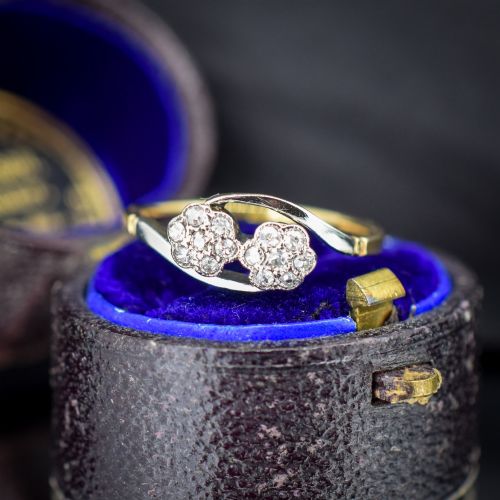
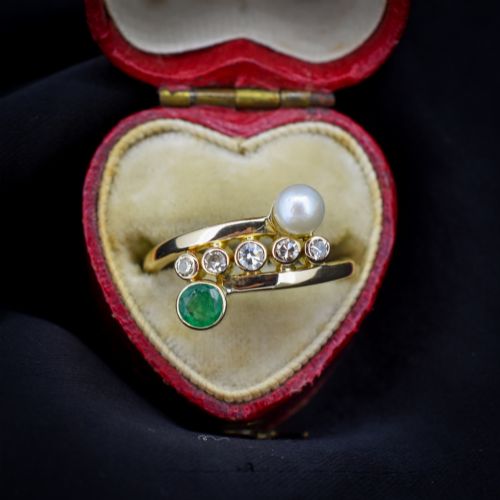
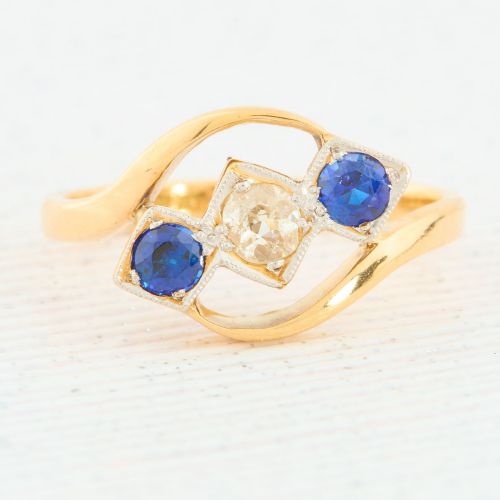
The diamond crossover band most commonly encountered on this page spans Edwardian, Art Deco, and mid-century designs, often pairing diamonds with rubies, sapphires, or pearls. Makers shape these bands from 18ct gold and platinum, frequently employing old-cut diamonds to catch the light with softer, warmer facets than modern stones.
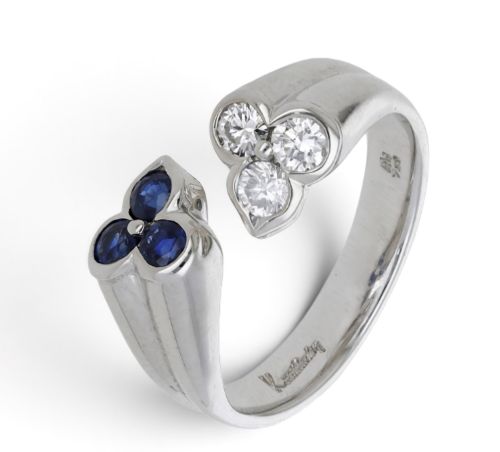
Examples range from delicate Edwardian toi et moi rings to bolder mid-century sapphire and diamond arrangements. Each piece demonstrates how jewellers twisted the metal band to let two principal stones sit side by side or overlap gracefully on the finger.
How they were made
Goldsmiths construct a diamond crossover band by working 18ct gold, yellow gold, white gold, or platinum into sweeping, curving shanks that cross over one another. Platinum provides the strength needed for delicate claw settings, while gold forms the warmer foundations of the ring body.
Craftsmen set old-cut, rose-cut, and square-cut diamonds directly into the intertwined shoulders, often combining them with rubies, sapphires, turquoise, or pearls. Hand-working the precious metals allows the shoulders to curve seamlessly around the central gems without losing structural integrity.
Diamond Crossover Band Retail Price Guide 2026
Typical asking prices for diamond crossover band among the pieces listed under this phrase on Sellingantiques today, from the lower quarter to the upper quarter. They describe what is for sale here now, not the wider market.
Listings feature pieces spanning the Edwardian era through to the 1960s, executed in 18ct gold, 9ct gold, and platinum.
What varies in quality
The finesse of the metalwork defines the superior diamond crossover band, where the curves of the shank flow naturally without rigidity or awkward angles. A finer piece displays precise stone setting that holds old-cut diamonds securely while keeping the surrounding platinum or gold work minimal and refined.
Proportion and balance dictate the distinction between standard and exceptional examples, particularly in multi-stone clusters and toi et moi formations. The harmonious pairing of coloured stones, such as sapphires or rubies, with complementary diamonds elevates the overall artistry of the band.
The Diamond Crossover Band Glossary
- Toi et Moi
- A ring style featuring two main stones placed side by side or crossing over, translating from French as you and me. This romantic configuration gained particular popularity during the Edwardian period.
- Old Cut
- A diamond faceting style predating the modern brilliant cut, characterised by a smaller table, higher crown, and open culet. These stones project a softer, more candlelit sparkle.
- Rose-Cut
- A vintage diamond cut featuring a flat base and a domed crown faceted with triangular patterns. This style resembles an unopened rosebud.
- Platinum
- A dense, durable precious metal prized for its silvery-white lustre and strength in fine jewellery settings. It permits delicate claw work that secures small diamonds safely.
- Crossover
- A ring design where the band splits or twists into intersecting lines that embrace the finger. It creates a dynamic silhouette compared to straight bands.
Diamond Crossover Band: Frequently Asked Questions
How do I care for an antique diamond crossover band?
Clean your ring gently using warm soapy water and a soft brush, avoiding harsh chemical dips that might harm softer gems like pearls or turquoise.
Take the ring off before heavy lifting or gardening to protect the delicate platinum or gold crossover shanks from unnecessary wear.
Can a diamond crossover ring be resized?
Most gold and platinum bands can be altered by a skilled jeweller, though the twisted shank design requires careful handling to preserve the crossover symmetry.
Consult a specialist who understands antique settings so the structural integrity of the shoulders and stone placements remains undisturbed.
What is the difference between Edwardian and mid-century styles?
Edwardian rings lean towards lacy platinum work, delicate filigree, and romantic pairings like pearls and old-cut diamonds.
Mid-century examples often introduce bolder colour contrasts, heavier gold weights, and cleaner geometric lines in their sapphire and diamond arrangements.
Are these rings suitable for daily wear?
Platinum and 18ct gold provide robust foundations for everyday use, provided the settings are checked regularly by a professional jeweller.
Pieces incorporating softer gems like pearls or turquoise require extra mindfulness to avoid accidental knocks during routine daily activities.