




Diamond and Amethyst
Diamond and amethyst jewellery pairs rich violet quartz with brilliant stones across Edwardian, Art Deco and mid-century designs.
Diamond and Amethyst
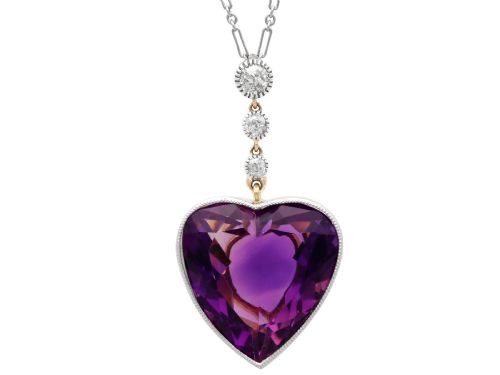
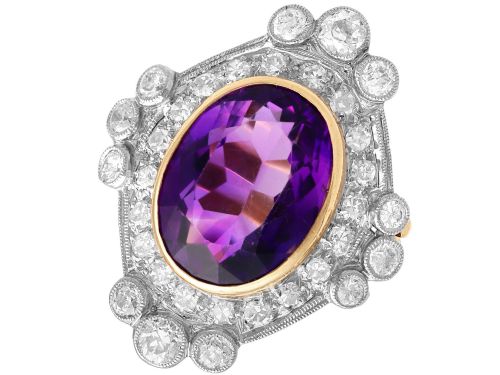
When you search for diamond and amethyst, you encounter rings, pendants, lavalier necklaces and brooches spanning from the Victorian era through the 1960s. The selection relies heavily on Edwardian and Art Nouveau aesthetics alongside 1930s dress rings featuring substantial cushion or oval cut central stones.
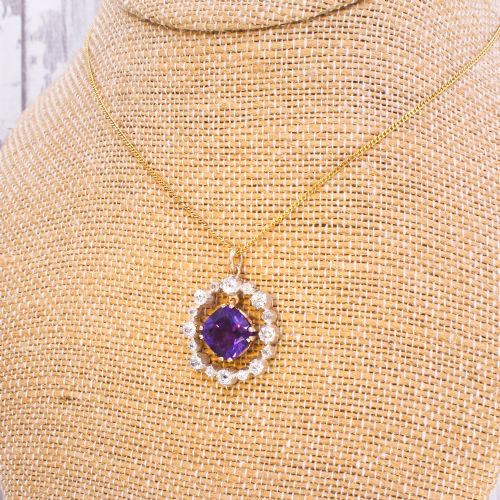
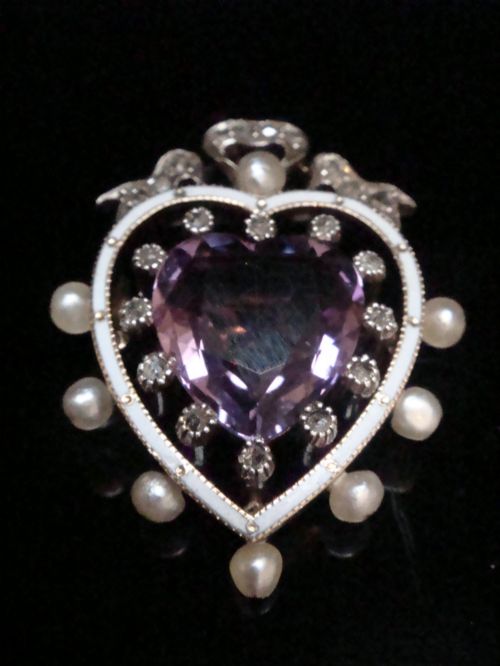
The most common version met on this page is the gold or platinum ring or pendant, where a large, deep purple amethyst anchors smaller accent diamonds. These range from delicate seed pearl and enamel cluster drops to heavy cocktail rings carrying multi-carat amethysts.
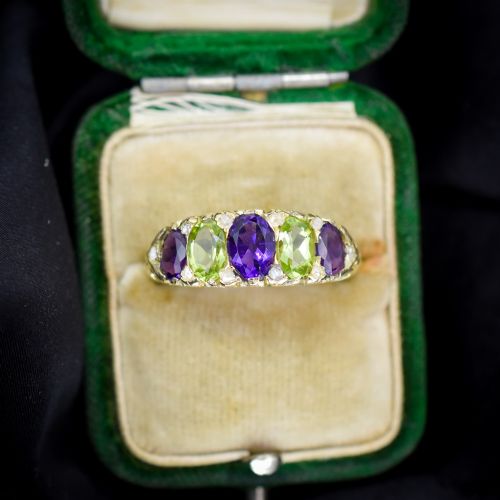
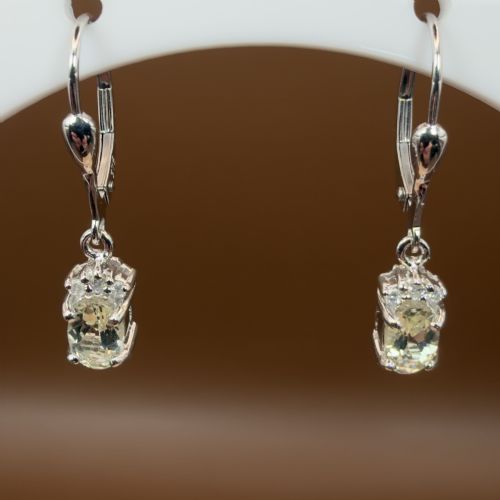
Earrings and multi-stone dress pieces also appear, often utilising yellow gold, white gold or platinum settings to frame the contrasting violet and clear sparkle. Origins stretch across early twentieth-century workshops into mid-century variations.
How they were made
Goldsmiths utilised 9ct gold, 18ct yellow and white gold, and platinum to fabricate settings that securely held prominent amethysts alongside old cut or modern brilliant diamonds. Metalwork frequently incorporated delicate claw settings, bezel mounts or hinged components to support large stones.
Craftsmen applied techniques such as guilloche enamel, detailed wirework and cluster arrangements to enhance the interplay between the purple quartz and the diamond accents. Stone cuts varied from step cut and cushion cut amethysts to traditional old cut diamonds.
Diamond and Amethyst Retail Price Guide 2026
Typical asking prices for diamond and amethyst among the pieces listed under this phrase on Sellingantiques today, from the lower quarter to the upper quarter. They describe what is for sale here now, not the wider market.
Listings span from the Victorian era through the 1960s, utilising amethysts, diamonds, yellow gold, white gold, and platinum.
What varies in quality
Quality rests upon the saturation and clarity of the central amethyst and the proportion of the surrounding diamonds. Superior examples display deeply saturated purple tones with minimal internal inclusions and well-matched diamond sparkle.
The precision of the metalwork defines the tier of the piece, distinguishing mass-produced mid-century items from hand-finished Edwardian and Art Nouveau creations. Heavier gold or platinum mounts and intact original settings elevate the standard of the jewellery.
The Diamond and Amethyst Glossary
- Amethyst
- A purple variety of quartz prized for its violet hue, frequently utilised as the primary centre stone in antique cluster rings and pendants. These stones range from pale lilac to deep plum.
- Old cut
- A diamond cutting style prevalent in Victorian and Edwardian jewellery, characterised by a high crown, small table and open culet. This cut produces a softer, candlelight shimmer compared to modern brilliant cuts.
- Lavalier
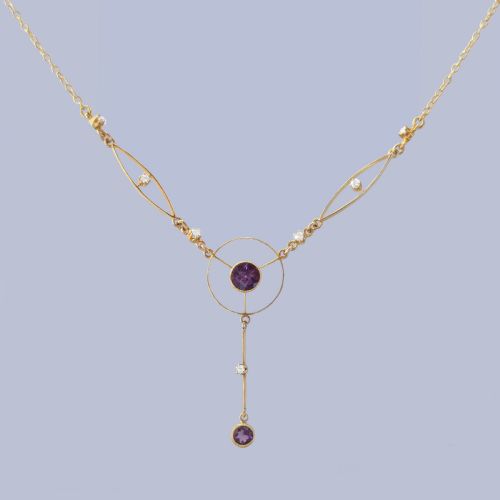
- A necklace featuring a pendant drop that hangs below the main chain, often articulated with multiple dangling elements. This style gained immense popularity during the Edwardian and Art Nouveau periods.
- Guilloche
- A decorative technique where a precise, intricate pattern is mechanically engraved into a metal surface beneath a translucent layer of enamel. It adds depth and texture to early twentieth-century pieces.
- Cluster
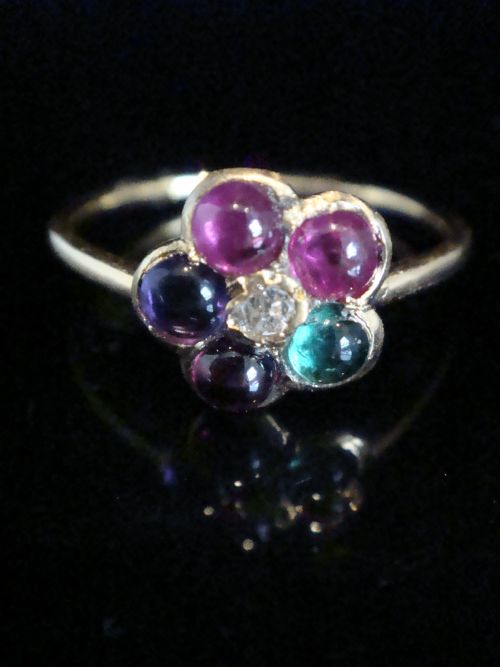
- An arrangement of smaller stones clustered tightly around a larger central gem, maximising overall visual impact and light reflection. This layout is standard for rings and brooches.
Diamond and Amethyst: Frequently Asked Questions
What periods do these pieces come from?
The selection spans the Victorian, Edwardian, and Art Nouveau eras, moving through the 1930s Art Deco period up to mid-century 1950s and 1960s designs.
Earlier pieces often feature intricate yellow gold work and old cut diamonds, while later mid-century examples lean towards white gold and structured cluster forms.
How should I wear an amethyst ring?
Amethyst rings make striking statement pieces due to the substantial size of the central stones often found in antique designs.
Because quartz has a moderate hardness, wearing them with care during daily activities protects the facets from heavy impact or deep scratching.
What is a lavalier necklace?
A lavalier is a specific drop necklace design featuring a pendant suspended from a fine chain, frequently accented with pearls or smaller diamonds.
Originating around the turn of the twentieth century, they are defined by their graceful, dangling movement against the neckline.