


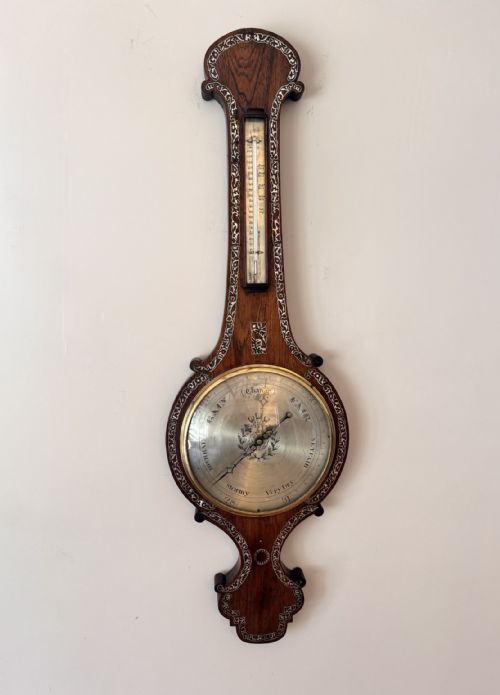
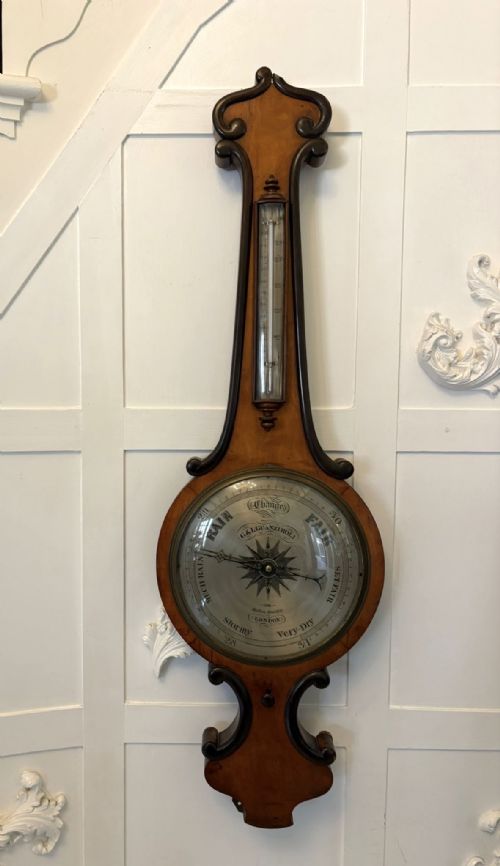

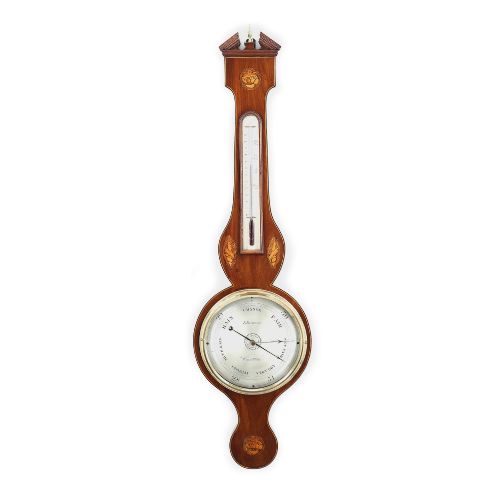


Dial Weather Glass
A dial weather glass records atmospheric pressure shifts with a silvered scale, offering both domestic utility and precision woodworking.
Dial Weather Glass
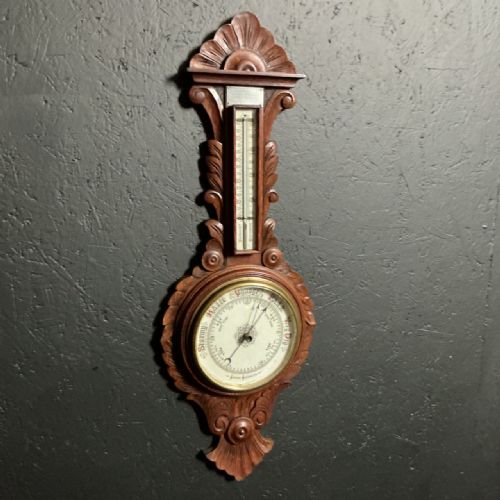
A dial weather glass functions as a domestic instrument for measuring atmospheric pressure changes. When buyers search for a dial weather glass, they encounter wheel barometers, banjo barometers, and aneroid wall barometers spanning the Georgian, Regency, and Victorian periods.
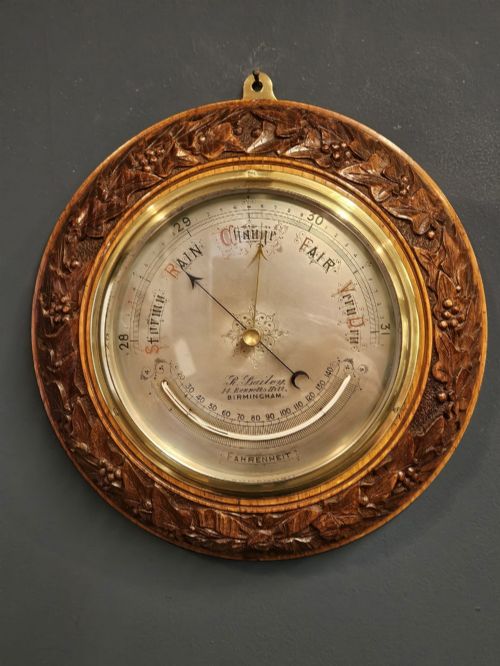
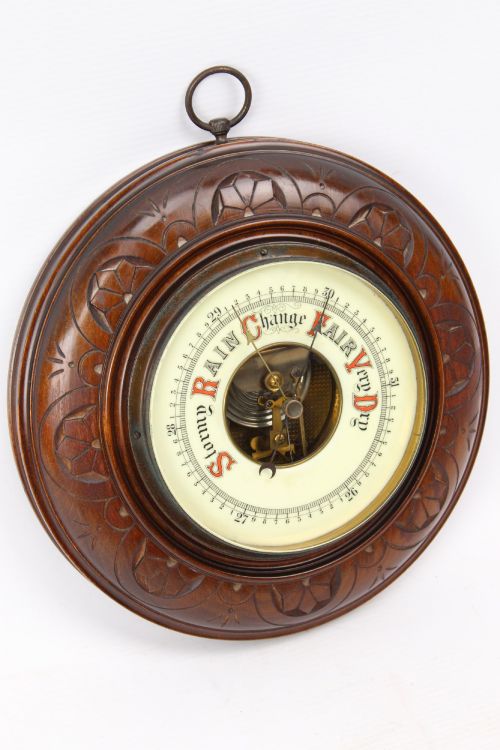
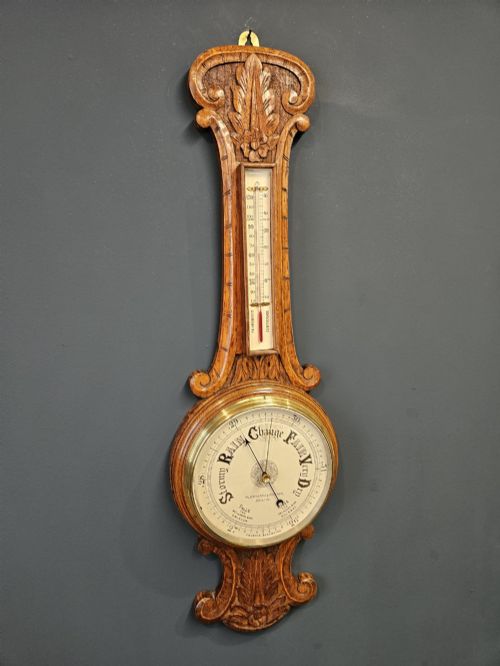
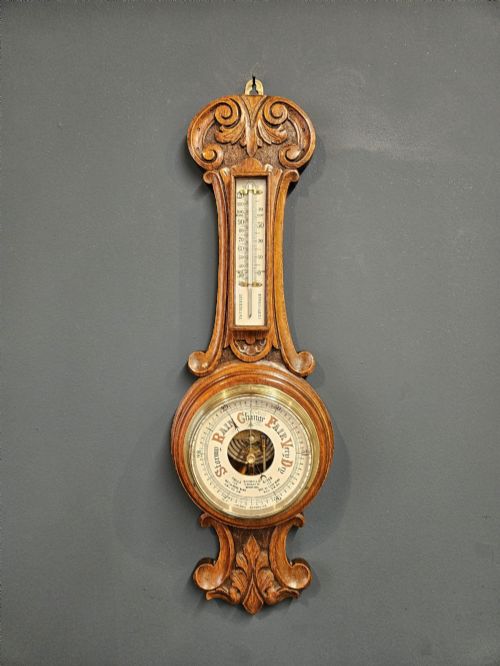
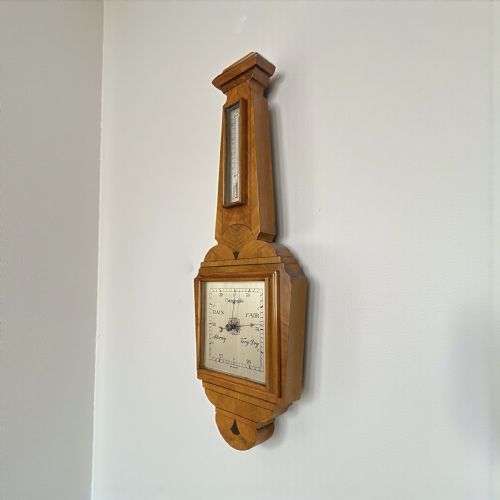
The pieces on this page appear in various timber housings, most commonly mahogany, oak, and rosewood. These enclosures range from simple domestic mountings to elaborate carved oak and inlaid banjo formats.
Originating from 18th-century workshops and continuing through the 19th century, these instruments combine scientific utility with period cabinet-making. Examples incorporate carved decoration, porcelain dials, and thermometer attachments within the primary housing.
Materials and construction methods
Cabinet-makers constructed the housings using dense timbers such as mahogany, walnut, oak, and rosewood, often applying geometric inlay or mother-of-pearl embellishment. Carved oak versions utilise deep relief work, particularly visible in Victorian Black Forest and British carved iterations.
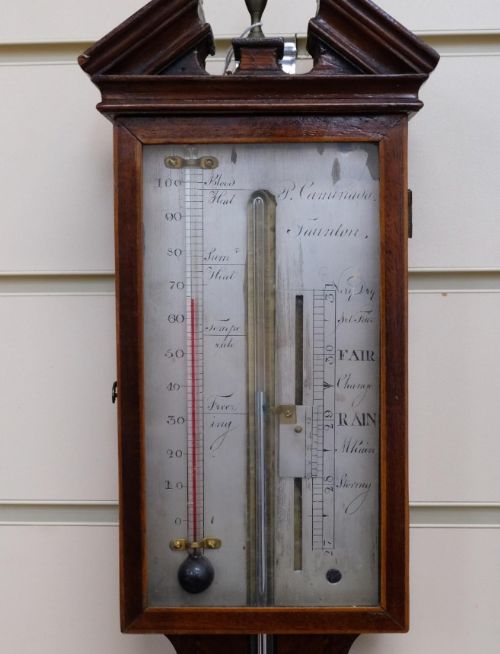
Dial faces utilise silvered brass or metal alongside ceramic and porcelain variants for readability. Bevelled glass protects the dial face, while internal mercurial or aneroid movements translate atmospheric shifts to the indicator needle.
Dial Weather Glass Retail Price Guide 2026
Typical asking prices for dial weather glass among the pieces listed under this phrase on Sellingantiques today, from the lower quarter to the upper quarter. They describe what is for sale here now, not the wider market.
Listings span the 18th, 19th, and early 20th centuries, covering Georgian, Regency, Victorian, and Edwardian periods.
What separates standard pieces from the finest examples
Quality rests in the precision of the cabinet-making and the crispness of the engraved silvered metal scale. Finer examples display balanced proportions, select timber grain like figured rosewood or flame mahogany, and refined architectural pediments.
Maker signatures inscribed upon the dial or scale elevate an instrument, especially when attributed to recorded Georgian and Victorian makers. The integration of auxiliary instruments, such as a thermometer or clock movement, distinguishes more ambitious commissions from basic domestic barometers.
P Caminada Taunton·George Adams London·B Besozzi of Weymouth·G and L Guanziroli·Blunt·Ganthony of London·JB Bergna Newcastle·Prada of High Wycombe·Baines Harrogate·Molton of Norwich·Fagioli of Clerkenwell London·Jenkins of Old Swindon·Watkins·Sandrino of Liverpool·Hayward of Ashford·Dollond of London·Pillischer London
The Dial Weather Glass Glossary
- Banjo barometer
- A domestic weather glass housed in a case shaped similarly to a banjo, featuring a small round dial at the top and a larger dial below. This form became prevalent during the Georgian and Victorian eras.
- Wheel barometer
- An instrument utilising a mechanical linkage to turn a pointer around a circular dial in response to pressure changes. These often include a hygrometer or spirit thermometer on the main board.
- Stick barometer
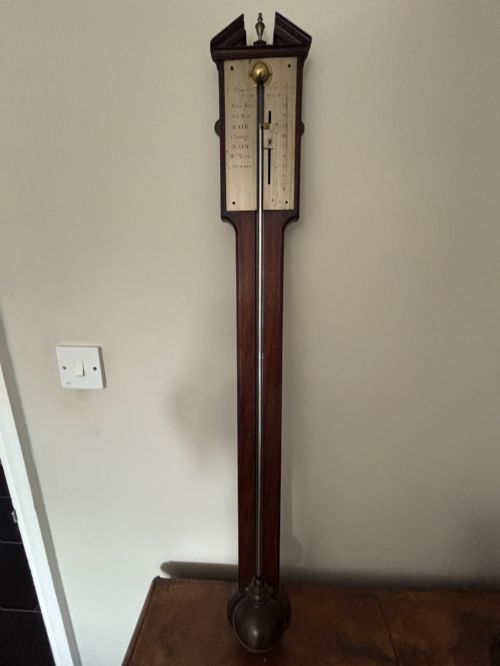
- A tall, slender weather glass where the mercurial column remains exposed against a long vertical scale. These typically date from the 18th and 19th centuries.
- Silvered brass
- A metal dial plate treated with a silver compound to produce a matte white surface for engraved markings. Maker names and graduations appear clearly upon this finish.
- Aneroid barometer
- A barometer measuring pressure through the contraction and expansion of a sealed corrugated metal box rather than liquid mercury. This mechanism allowed for smaller desk models and wall instruments without fluid spillage risks.
Dial Weather Glass: Frequently Asked Questions
How do I read a dial weather glass?
The pointer moves clockwise as atmospheric pressure rises, indicating fair weather, and anti-clockwise as pressure falls, suggesting rain or stormy conditions.
Many dials feature engraved words alongside numerical pressure measurements to guide interpretation.
Where should I hang a dial weather glass?
Select an interior wall away from direct sunlight, central heating radiators, and damp draughts to protect the wooden housing and internal mechanics.
Stable ambient temperatures ensure the instrument responds accurately to genuine barometric shifts rather than room heat.
How do I tell a Georgian barometer from a Victorian one?
Georgian instruments often feature restrained mahogany or walnut cases with architectural pediments and fine brass scales. Victorian versions frequently showcase heavier carved oak, rosewood veneers, or more elaborate banjo and wall formats.
Maker signatures and style cues within the dial engraving also help assign a period.
Do antique barometers still work?
Many survive in working order, though mercurial stick and wheel barometers require careful handling and professional setup if relocated. Aneroid movements can sometimes be adjusted via a calibration screw on the back.
Even when uncalibrated, they remain decorative examples of 18th and 19th-century craftsmanship.