




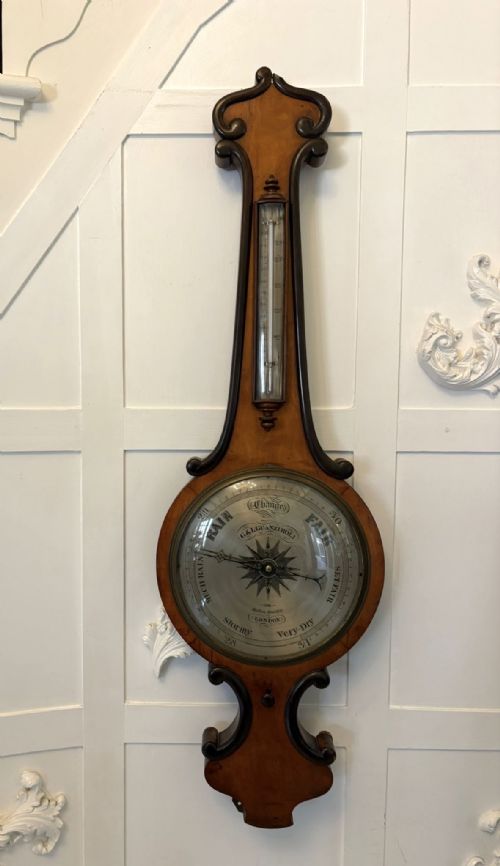
Dial Wall Barometer
A dial wall barometer brings mechanical weather-tracking into a room, combining brass dials and timber cases to measure atmospheric pressure.
Dial Wall Barometer
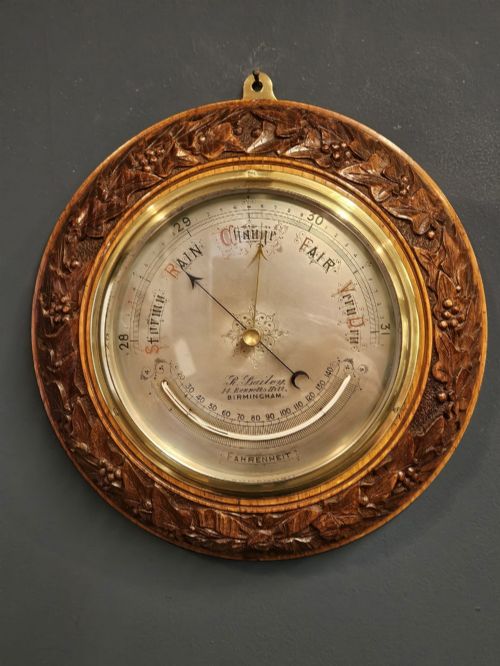
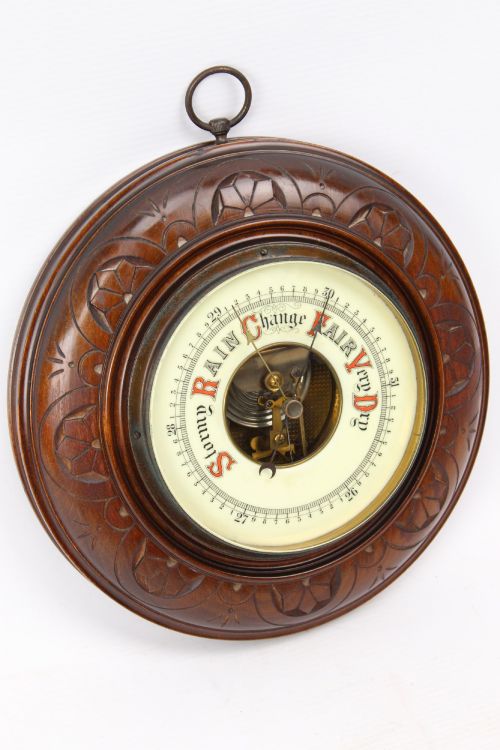
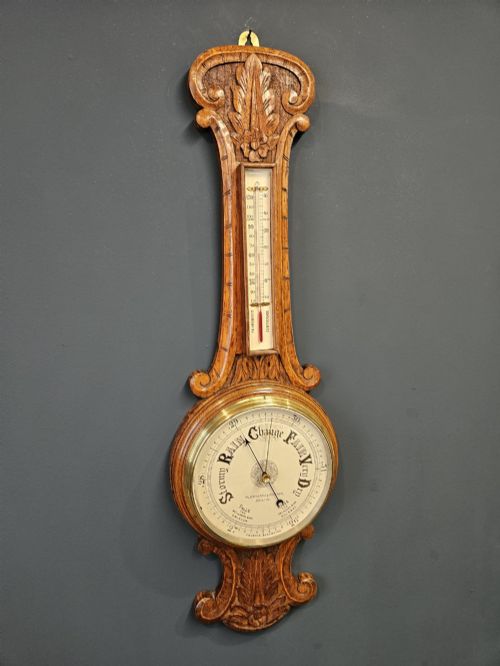
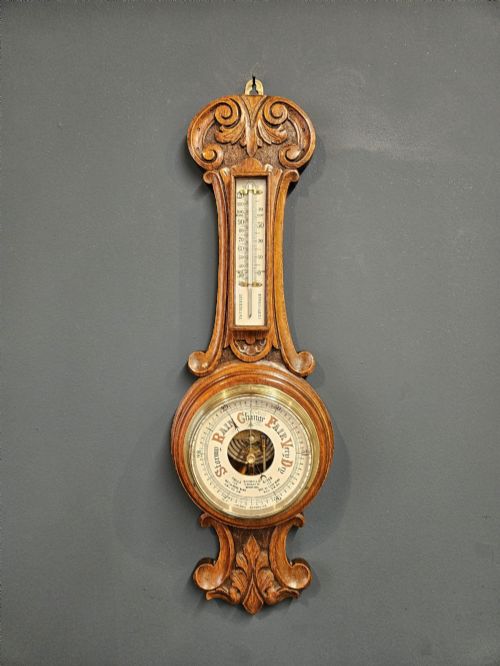
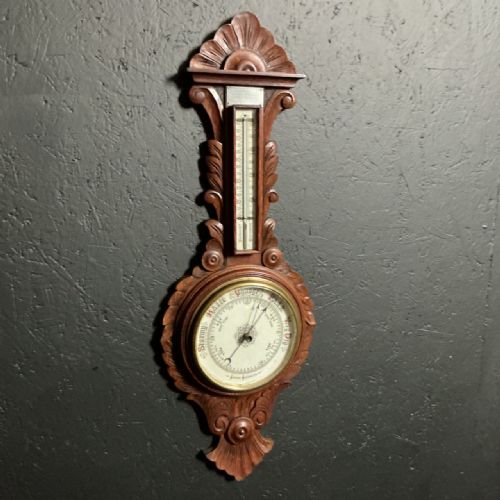
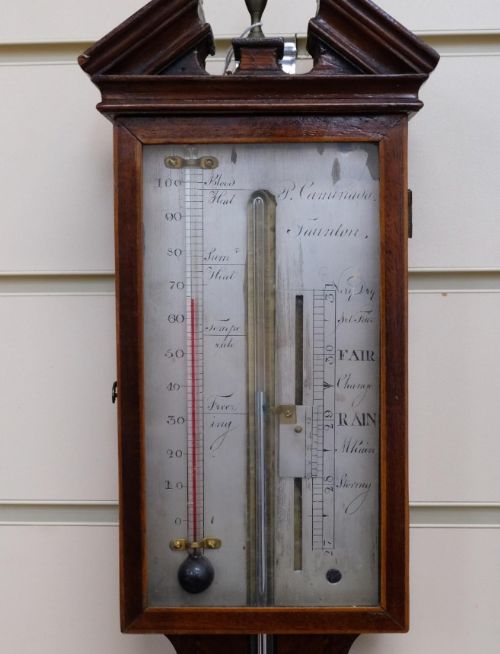
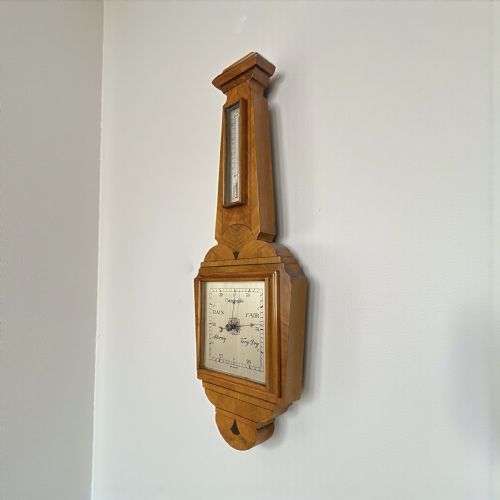
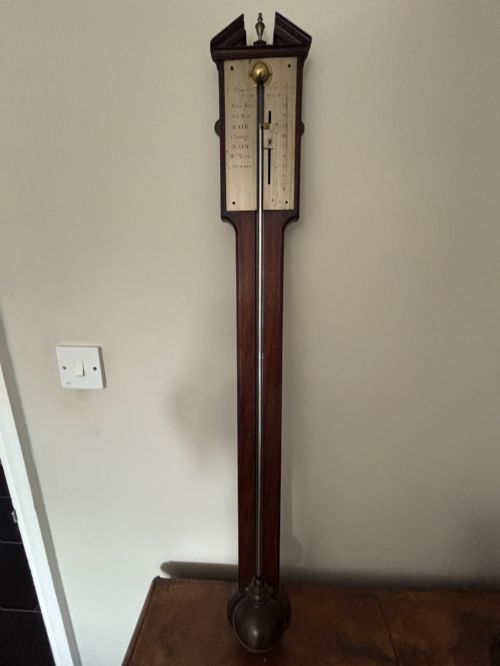
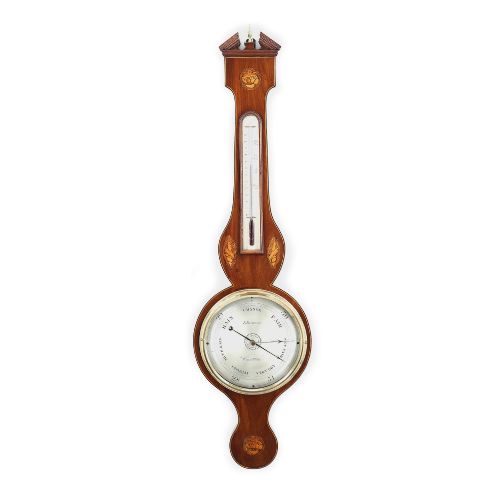
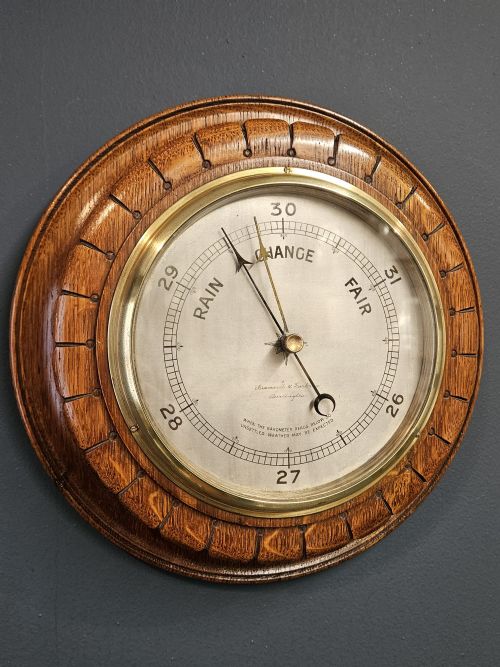
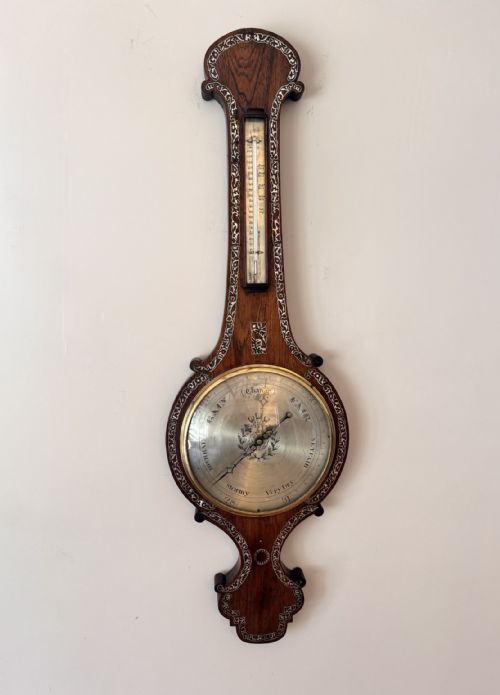
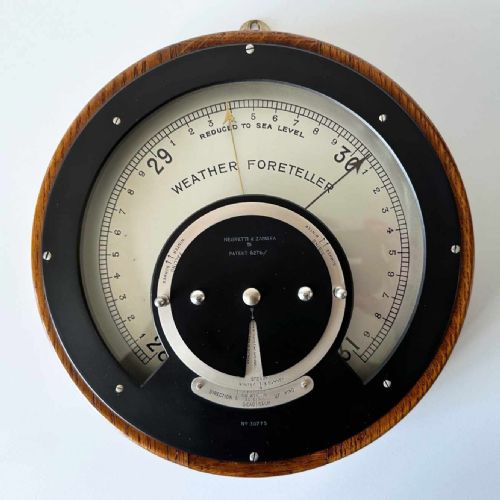
A dial wall barometer mounts directly onto vertical surfaces, providing a clear visual read of changing barometric pressure for domestic forecasting. You will encounter various forms here, ranging from traditional wheel barometers to aneroid dials and stick instruments.
The selections span multiple centuries, heavily representing Victorian and Georgian periods alongside later Regency, Edwardian, and Art Deco designs. Common wooden housings include mahogany, oak, rosewood, and walnut, frequently paired with silvered metal scales or porcelain dials.
Materials and construction methods
Cabinetmakers constructed the wall housings using dense hardwoods like mahogany, walnut, and rosewood, often applying detailed carvings or mother-of-pearl inlay. Oak appears frequently in substantial Victorian carvings and regional pieces.
Instrument makers integrated sensitive internal mechanisms, utilising glass tubes for mercury-based stick barometers or sealed metal capsules for aneroid systems. Dials were meticulously engraved on silvered brass or painted on ceramic and porcelain surfaces.
Dial Wall Barometer Retail Price Guide 2026
Typical asking prices for dial wall barometer among the pieces listed under this phrase on Sellingantiques today, from the lower quarter to the upper quarter. They describe what is for sale here now, not the wider market.
Some Victorian oak barometers feature hand-carved birds keeping watch over the weather.
Factors influencing quality
Quality rests significantly on the precision of the maker's movement and the clarity of the engraved or silvered metal scale. Signed instruments by known makers demonstrate superior craftsmanship in both internal mechanics and exterior woodwork.
The choice of cabinet timber and the crispness of carved details dictate visual standing. Well-proportioned mahogany and rosewood cases with intact glass bezels and original mercury or aneroid components command greater interest.
Short and Mason·Negretti and Zambra·Dollond of London·George Adams London·Maple and Co
The Dial Wall Barometer Glossary
- Banjo barometer
- A household barometer featuring a teardrop or banjo-shaped wooden case that houses a dial at the base and a thermometer or hygrometer along the stem.
- Aneroid barometer
- A barometer that measures atmospheric pressure through the expansion and contraction of a sealed metal capsule, removing the need for liquid mercury.
- Silvered metal
- A brass or copper dial plate treated with a silver solution to create a bright, matte finish that highlights engraved measurement markings.
- Stick barometer
- A tall, vertical barometer that uses a visible column of mercury in a glass tube to indicate pressure changes.
- Wheel barometer
- A mercurial barometer connected to a pulley and pointer system that translates liquid movement into a circular dial reading.
Dial Wall Barometer: Frequently Asked Questions
How do I read a dial wall barometer?
You observe the position of the pointer relative to weather legends such as rain, change, or fair, often tracked using a secondary manual marker needle.
Tapping the glass gently before reading helps settle the internal mechanism to show the true current pressure.
Where should I hang a wall barometer?
Select an interior wall away from direct sunlight, central heating radiators, and draughty doors to ensure stable ambient temperatures.
Consistent conditions allow the internal metal capsule or mercurial tube to respond accurately to atmospheric changes rather than room heat.
Are these barometers still accurate?
Many vintage and antique instruments continue to track weather patterns reliably once adjusted to local barometric pressure using a reference point.
Adjustment screw mechanisms located on the back or through the dial face permit calibration against modern readings.
How do I distinguish between mercurial and aneroid types?
Mercurial barometers utilise vertical glass tubes or circular dial faces connected to liquid mercury reservoirs, whereas aneroid models rely entirely on mechanical metal bellows.
Aneroid instruments generally lack the open liquid cisterns found at the base of traditional stick barometers.