


Desktop Jewellery Chest
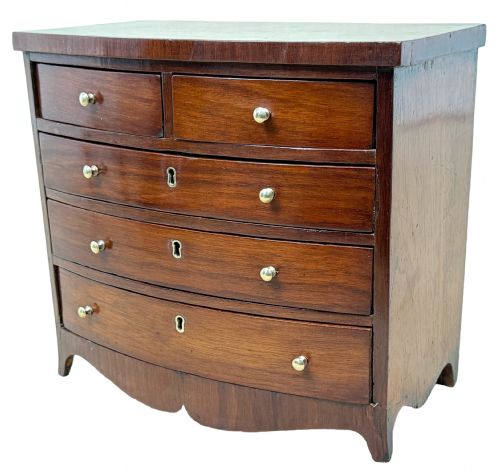
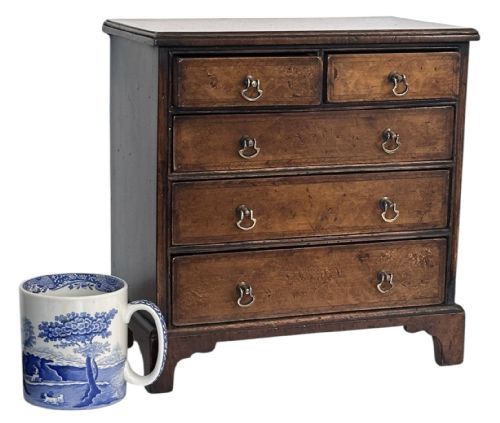
A desktop jewellery chest offers neat containment for precious items while bringing miniature cabinet-making into daily view.
Desktop Jewellery Chest
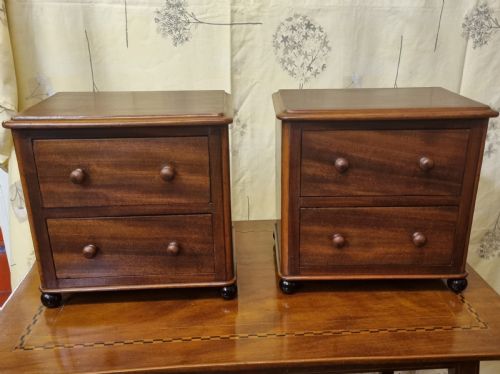
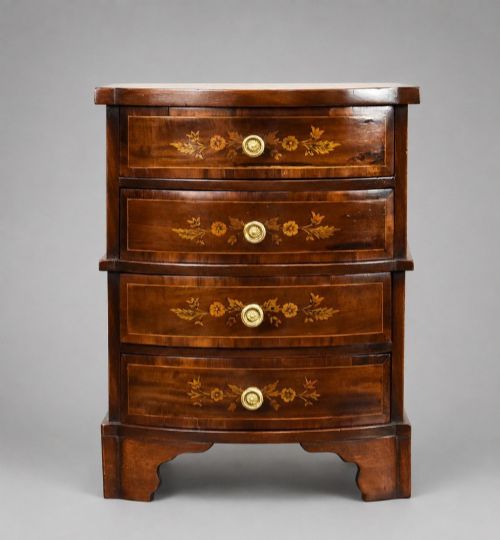
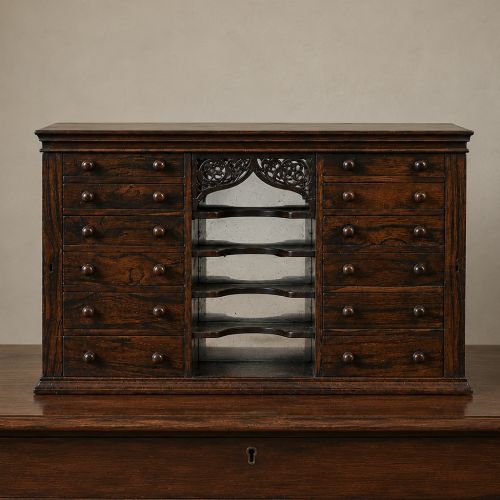
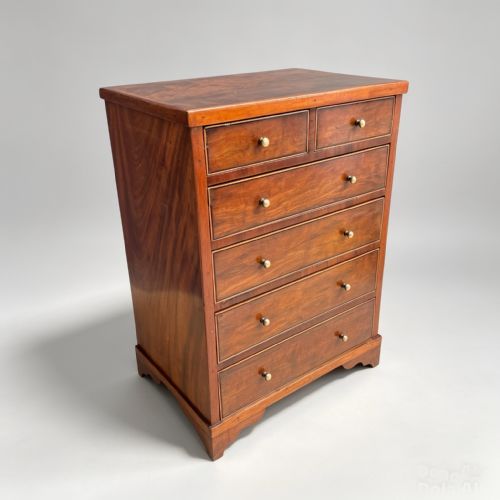
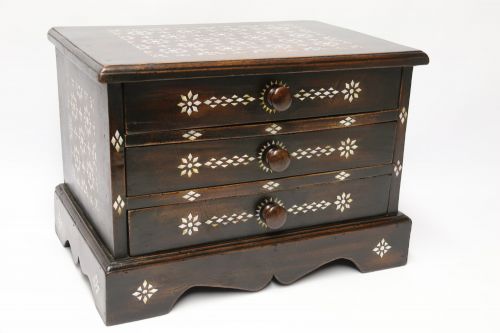
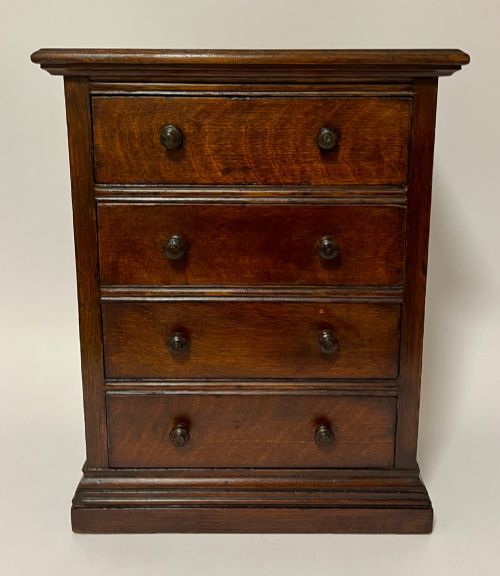
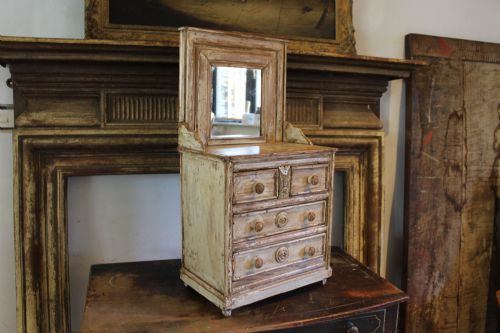
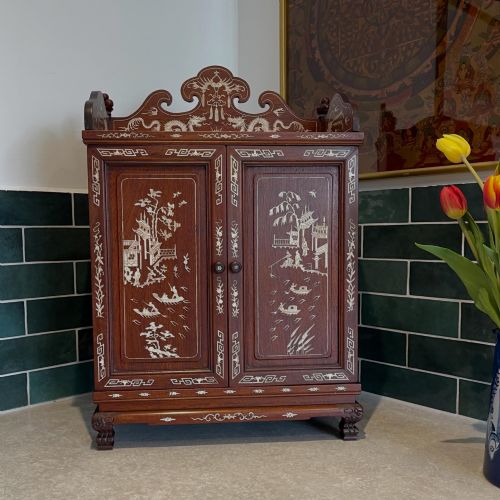
A desktop jewellery chest brings portable, small-scale storage into domestic spaces, functioning as both a practical keeper of valuables and a demonstration of fine cabinet-making. When searching for a desktop jewellery chest, buyers encounter items that range from miniature chests of drawers and apprentice pieces to specialised collector cabinets and table cabinets.
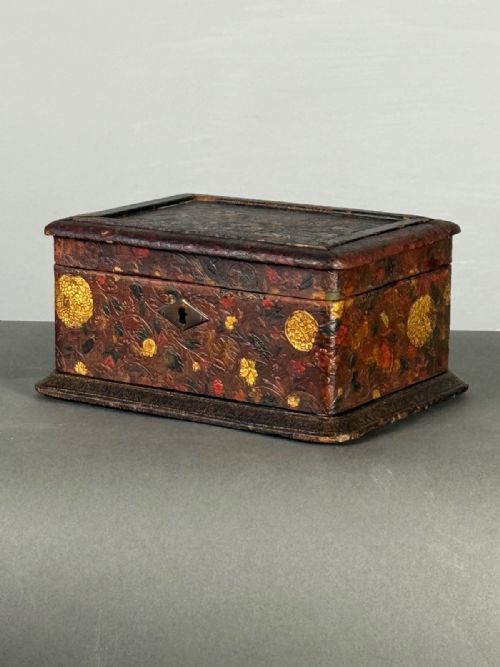
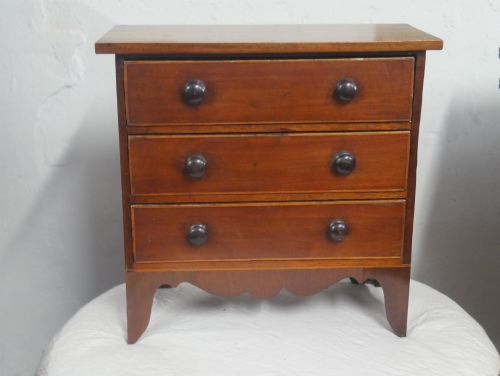
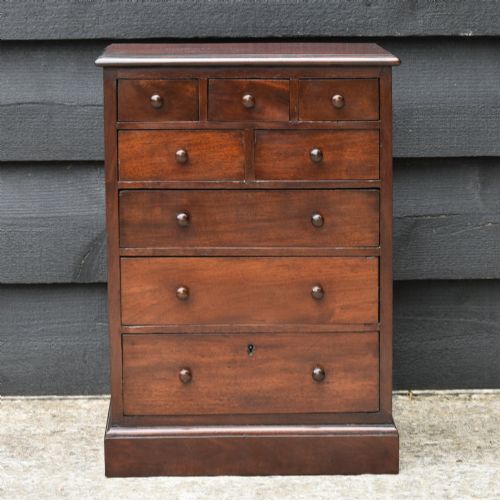
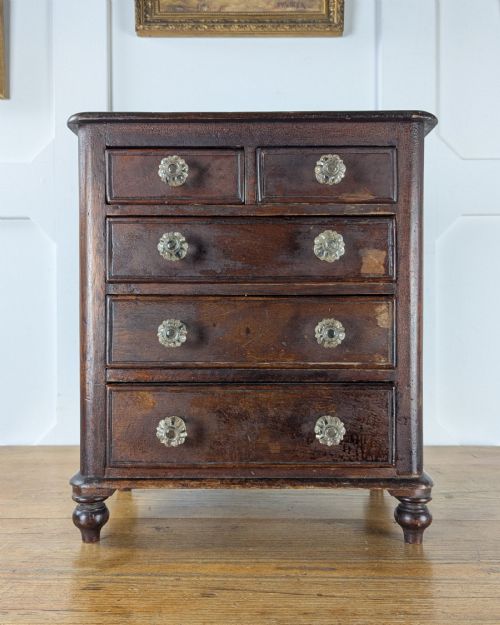
The pieces appearing on this page span several centuries, with a strong representation of Victorian and Georgian examples alongside Regency, Edwardian, and earlier designs. Forms vary from simple mahogany bow-front chests to elaborately fitted specimen cases, leather-covered boxes, and Anglo-Indian or Chinese table cabinets.
Makers historically produced these smaller chests for travelling use, as apprentice masterpieces, or for storing modest collections of trinkets and keepsakes close at hand. Today, these objects sit comfortably on desks or dressers, serving their original purpose of holding rings, brooches, and other small personal items.
Materials and construction methods
Cabinet-makers relied heavily on dense hardwoods such as mahogany, rosewood, walnut, and oak to construct the carcase and drawers of a desktop jewellery chest. These durable timbers provided stable foundations for intricate dovetail joints, miniature turned feet, and delicate cockbeading around drawer edges.
Decorative surface treatments distinguished finer chests, incorporating veneers of burr walnut, satinwood, kingwood, or marquetry patterns alongside brass fittings, inlaid stringing, and glazed doors. Specialised pieces utilised ebonised wood, palmwood, leather, or lacquer work to achieve distinct regional and period styles.
Listings for this phrase span the 17th, 18th, 19th, and early 20th centuries, covering Georgian, Regency, Victorian, and Edwardian periods.
Assessing quality in miniature cabinetry
Quality rests upon the precision of the scaling and the integrity of the joinery, since building furniture at a fraction of standard size leaves no room for structural shortcuts. Finer examples display cleanly cut dovetails, smoothly sliding miniature drawers that retain their original fit, and harmonious proportions that mimic full-scale furniture accurately.
The choice of primary timber and secondary veneers also dictates the calibre of the piece, with well-figured mahogany, burr oak, or rosewood elevating the visual weight of a small chest. Original hardware, intact locks with working keys, and preserved surface patination further separate standard workshop output from exceptional examples.
Susse Freres Paris
The Desktop Jewellery Chest Glossary
- Apprentice piece
- A specimen item created by a trainee craftsman to demonstrate mastery of woodworking techniques before joining a guild. These typically take the form of miniature chests of drawers.
- Wellington chest
- A tall, narrow chest of drawers featuring a locking stile hinged on one side that secures all the drawers simultaneously. This form appears frequently in miniature and desktop formats.
- Bow-front
- A cabinet front that curves outward in a convex arc, popular during the Georgian and Regency periods. This shaping required advanced skill to fit miniature drawers correctly.
- Marquetry
- Decorative patterns formed by fitting contrasting veneers into a prepared wooden surface. Craftsmen used this technique to adorn the tabletops and drawer fronts of luxury cabinets.
- Specimen case
- A specialised small cabinet fitted with shallow drawers designed to hold natural history samples or precious items. These share construction traits with jewellery chests.
- Patina
- The surface sheen and softening of colour developed by wood and leather over decades of handling and ageing. A desirable patina signals genuine age and regular care.
Desktop Jewellery Chest: Frequently Asked Questions
What were apprentice chests used for?
Apprentice chests served as practical examinations where young woodworkers proved their skill in miniature. Craftsmen built them to showcase mastery over complex joints, drawer fitting, and fine timber selection.
Over time, these scaled-down furnishings transitioned from testing pieces into domestic decorative objects. Households adopted them to store letters, trinkets, and small valuables on tabletops.
How do I care for antique wood?
Antique wood requires stable environmental conditions away from direct heat sources and strong sunlight. Sudden temperature shifts can cause timber to split and veneers to lift from the carcase.
Applying microcrystalline wax occasionally helps nourish the surface and preserve the historic patina. Avoid modern silicone sprays or harsh chemical cleaners that strip the original finish.
Can these chests hold modern jewellery?
These chests accommodate modern rings, earrings, and delicate chains within their shallow drawers and compartmentalised trays. The smaller drawer depths suit personal adornments rather than bulky accessories.
Some interiors feature lined velvet or leather surfaces that protect precious metals from scratching. Owners should check that interior clearances match the dimensions of contemporary jewellery boxes.
How do I tell a Georgian chest from a Victorian one?
Georgian examples generally display restrained classical proportions, understated bracket feet, and solid mahogany construction with hand-cut dovetails. The hardware tends to be simpler and timber patination deeper.
Victorian chests frequently introduce bolder decorative elements such as applied ebonised mouldings, turned bun feet, and exotic veneers like figured walnut. Makers in this later era also produced more varied regional styles and specialised cabinet interiors.