


Desktop Book Stand Holder
A desktop book stand holder keeps desk volumes orderly, bringing timber and brass to a working surface with period craftsmanship.
Desktop Book Stand Holder
A desktop book stand holder encompasses extending book slides, static troughs, and revolving desk bookcases designed to keep working volumes close at hand. The evidence shows these pieces appearing in forms such as book carriers, folding stands, and two-tier troughs made during the nineteenth and early twentieth centuries.
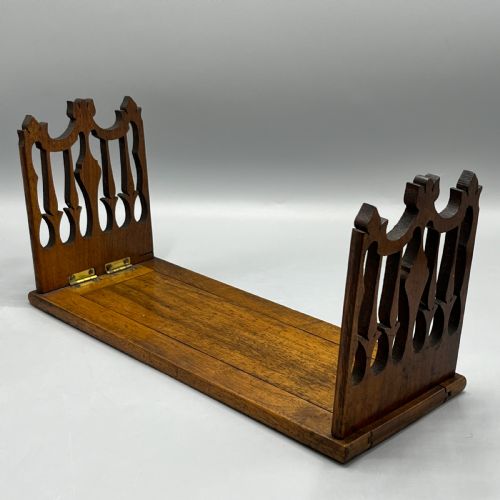
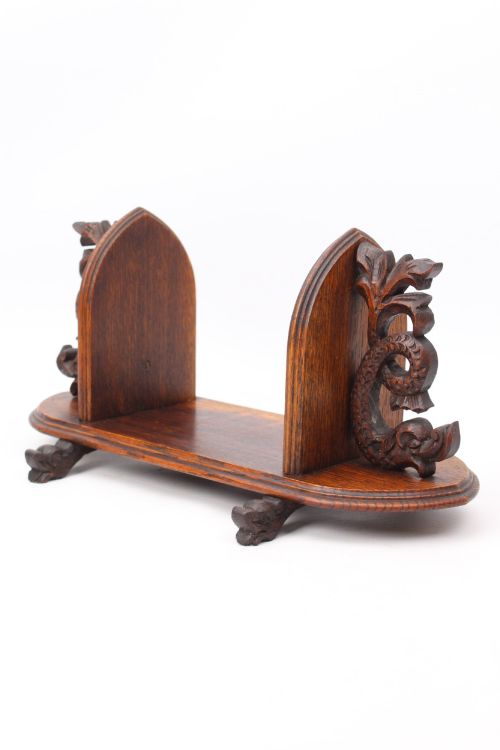
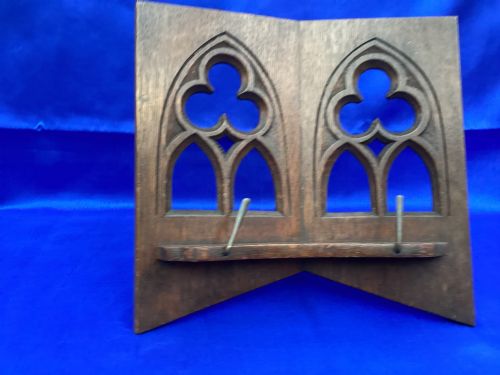
Buyers will most frequently meet oak and walnut extending book slides on this page, often reinforced with brass mounts or hinged ends. Pieces span Victorian, Edwardian, and Art Deco periods, ranging from plain domestic items to carved Gothic Revival examples.
Makers utilised dense timbers like mahogany and rosewood alongside olive wood and teak for overseas markets, while revolving bookcases provided table-top access to heavier reference sets. Each desktop book stand holder reflects the writing habits and library needs of its original period.
Materials and Construction
Makers built the desktop book stand holder from hardwoods including oak, walnut, mahogany, and rosewood, selecting timber for figure and stability on a desk. Sections were joined using traditional cabinet-making methods, allowing extending slides to move smoothly via internal mechanisms or folding hinges.
Brass featured heavily for hinges, extending ratchets, mounts, and gallery rails, often contrasting against dark polished woods. Decorative touches included painted ceramic plaques, inlaid marquetry, carved motifs, and applied velvet liners to protect book bindings.
Listings feature oak, walnut, mahogany, rosewood, and olive wood materials spanning Victorian, Edwardian, Art Deco, and Regency periods.
Judging Quality and Execution
Quality in a desktop book stand holder rests on the selection of timber and the precision of mechanical elements like extending actions or revolving pivots. Superior pieces display crisp carving, well-fitted brass mounts, and solid timber construction rather than veneered deal.
The integration of patented mechanisms, such as Betjemanns fittings, or labelled maker details elevates a piece above standard domestic production. Finer examples maintain original patination on the wood and retain all functional components without replacement hardware.
Arthur Simpson·Betjemanns
The Desktop Book Stand Holder Glossary
- Book slide
- An extending desktop stand designed to hold a variable number of upright volumes between two bookends. The base typically expands via a central mechanism or sliding wooden channels.
- Book trough
- A static desk accessory with sloping sides that holds books in a V-shape profile for easy title reading. These often sit directly on a library table or desk top.
- Revolving bookcase
- A compact rotating shelving unit designed to sit on a table top or desk surface. It allows multiple reference books to be accessed from a single seated position.
- Brass mounted
- Furniture or desk accessories featuring decorative or structural fittings made of brass. These mounts often protect corners or secure extending slide arms.
- Gothic Revival
- A nineteenth-century design style drawing on medieval architectural motifs including pointed arches, heavy chamfering, and geometric tracery. This style appears frequently on Victorian oak desk pieces.
Desktop Book Stand Holder: Frequently Asked Questions
How do extending book slides work?
Extending book slides operate through an internal sliding mechanism or hinged framework that allows the wooden ends to move outward. This adjusts the holding capacity to fit a growing or shrinking row of desk volumes.
Most mechanisms use brass tracks or scissor actions hidden beneath the baseboard. Users simply pull the ends apart to accommodate more books on the stand.
What is a revolving book stand?
A revolving book stand is a small tabletop bookcase built on a concealed pivot mechanism. It allows a reader to spin the entire unit to reach different volumes without standing up.
These pieces were popular in Victorian and Edwardian libraries for dictionaries, atlases, and frequently used reference books. They combine compact desk footprints with high storage capacity.
Where were olive wood book slides made?
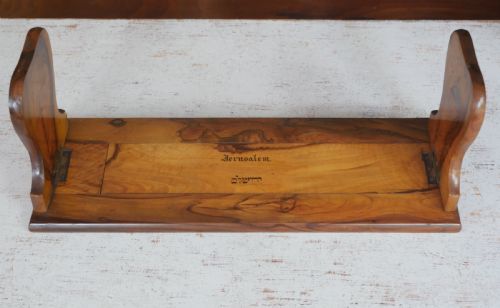
Olive wood book slides often originated from workshops in Jerusalem during the late nineteenth century. Travellers purchased these items as souvenirs during tours of the Holy Land.
They are typically decorated with local carving work and inlaid details, distinguishing them from standard British domestic walnut and oak desk accessories.
How should I clean a wooden book stand?
Wooden desk stands require gentle maintenance using microfibre cloths to remove dust from carved areas and brass mounts. Avoid modern aerosol polishes that leave silicones on historic timber surfaces.
Applying a traditional beeswax feed periodically helps nourish dry walnut, oak, and mahogany without harming the underlying patina built up over decades of use.