

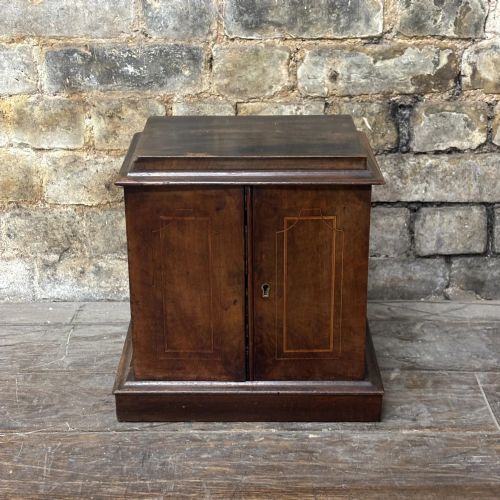
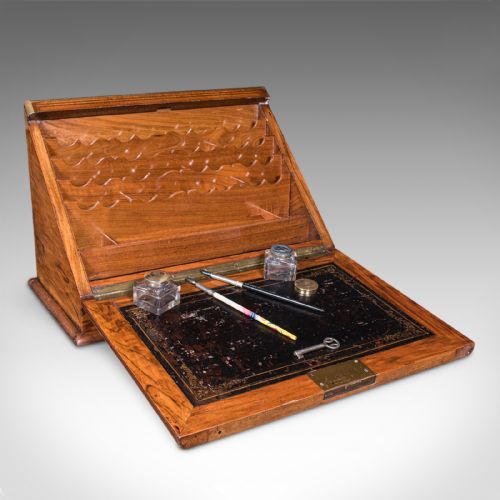
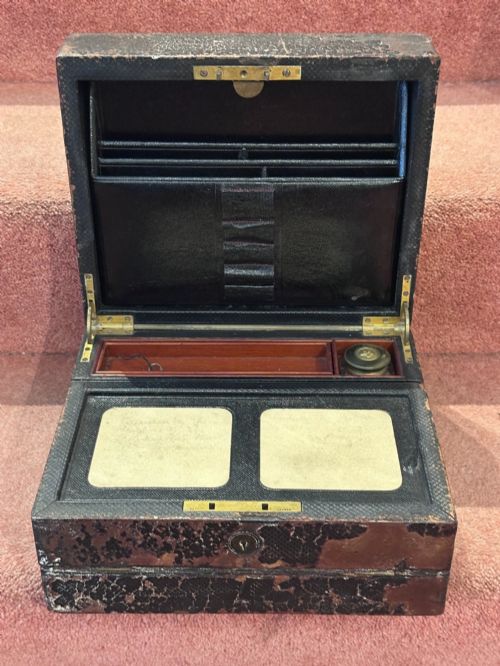
Desk Stationery Box
A desk stationery box keeps correspondence organised on a writing surface, bringing order to papers with period craftsmanship.
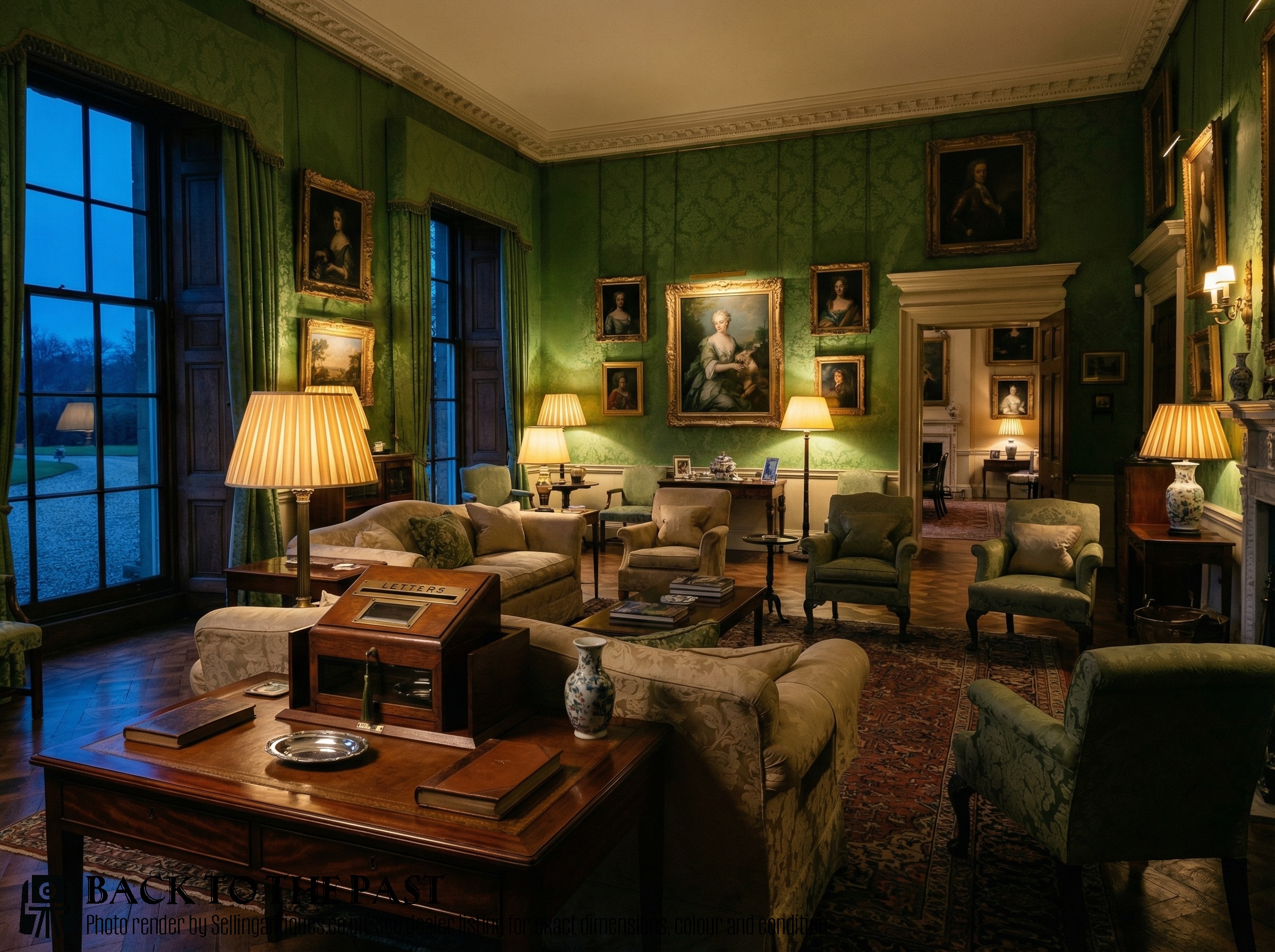
Desk Stationery Box
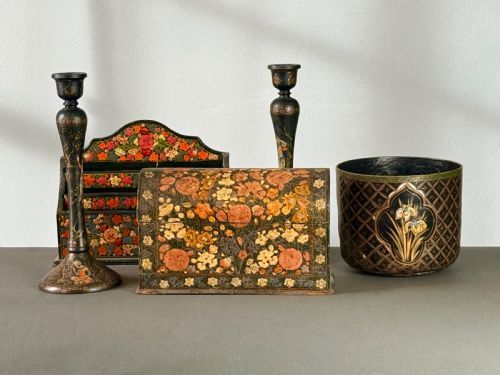
A desk stationery box encompasses desktop containers, correspondence cabinets, and letter racks designed to hold paper, envelopes, and writing implements. The examples found here span the Georgian, Victorian, and Edwardian periods, reflecting changing domestic and office habits.
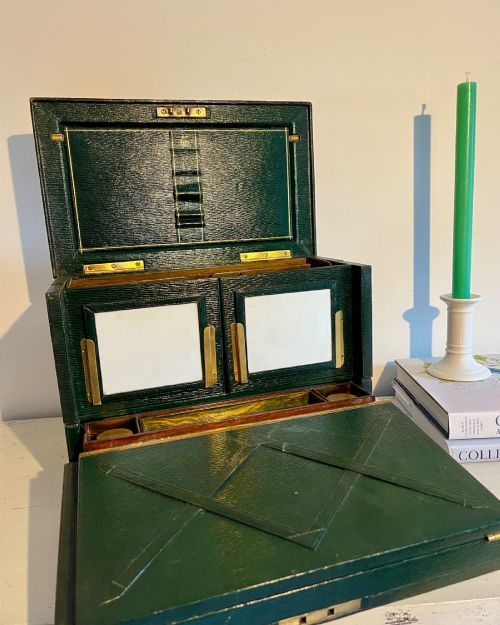
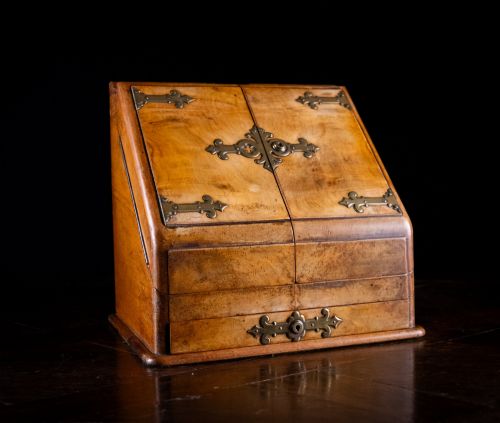
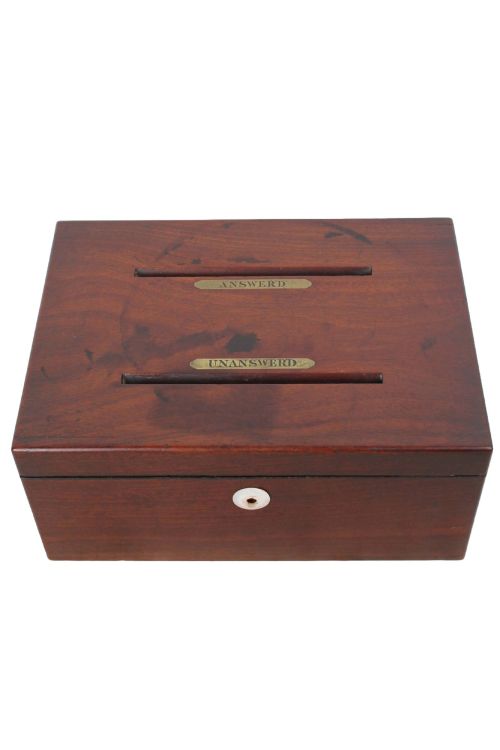
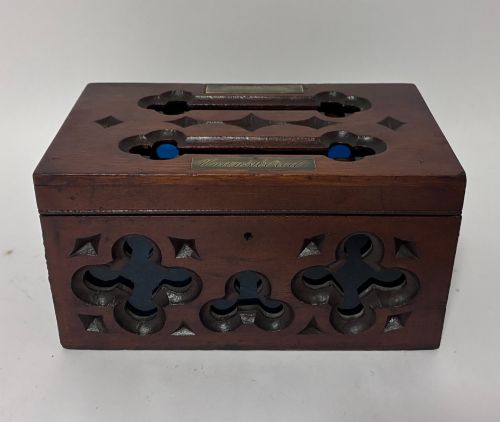
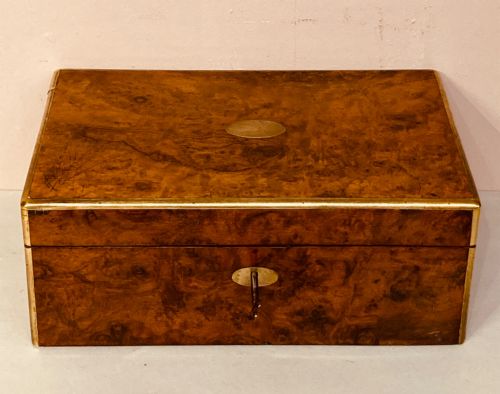
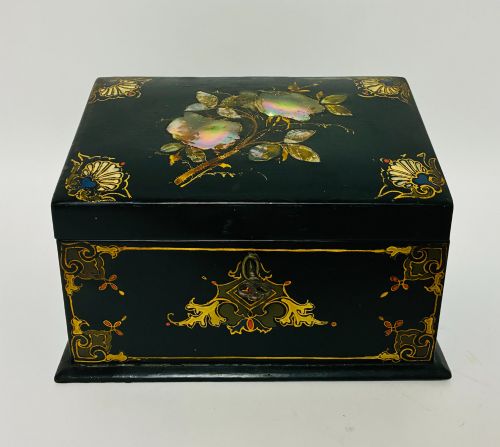
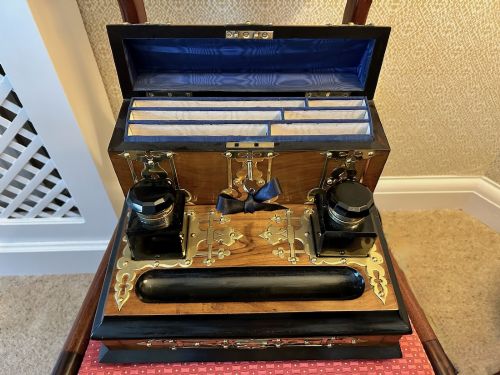
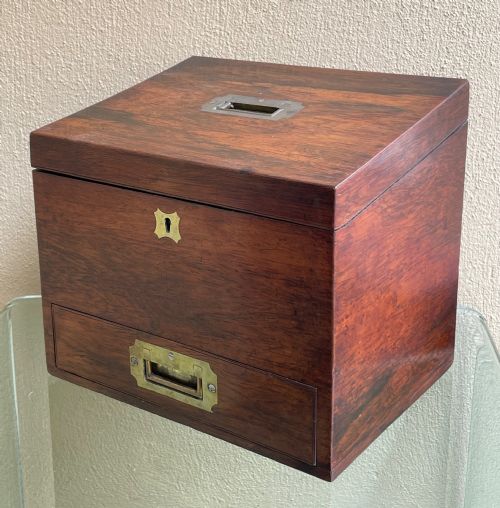
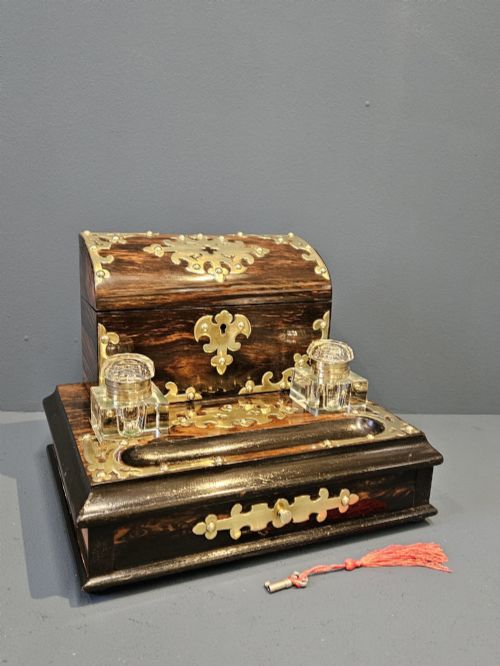
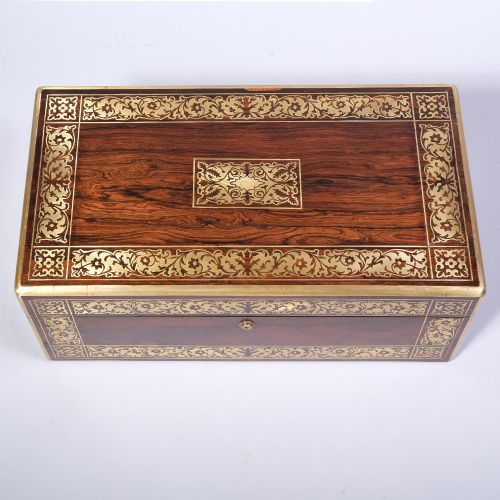
The most common versions met on this page are Victorian walnut and mahogany cabinets alongside brass-bound writing slopes that double as storage. These objects range from simple oak desks tidies to elaborate coromandel and papier-mâché caskets fitted with inkwells and compartments.
Makers produced these containers for country houses, offices, and campaign use, meaning structural formats vary between portable folding boxes and substantial stationary cabinets. Walnut and burr walnut appear frequently alongside rosewood, oak, and leather.
How they were made
Cabinet makers utilised dense hardwoods such as mahogany, walnut, rosewood, and oak for carcass construction, often applying decorative veneers like burr walnut or satinwood. Brass banding, corner reinforcement, and flush carrying handles appear regularly, particularly on pieces intended for travel or campaign use.
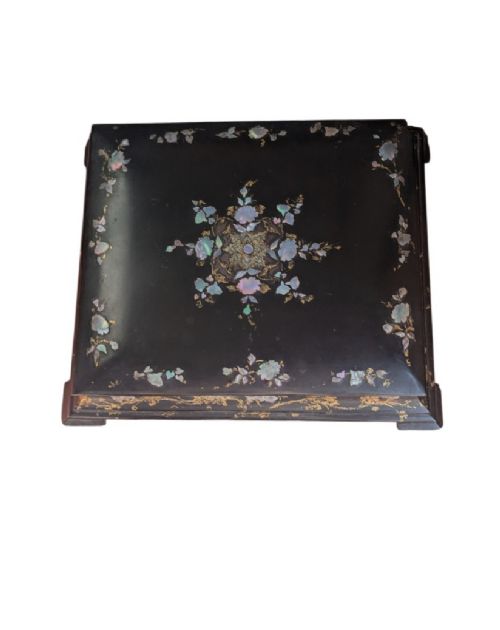
Surface decoration involved diverse techniques including papier-mâché lacquer work, Tunbridge ware mosaic detailing, bone inlay, and tooled leather panels. Glass inkwells, silver mounts, and porcelain plaques were integrated into the fitted interiors to create functional desktop stations.
Secret spring-loaded drawers occasionally hide behind dummy partitions within nineteenth-century writing slopes.
What varies in quality
The distinction between standard containers and finer specimens lies in the choice of timber and the precision of the interior fittings. Solid construction with figured veneers and original brass hardware indicates higher workshop standards than simpler nailed or softwood-lined boxes.
Complexity of internal arrangement also dictates grade. Superior examples feature secret drawers, matching glass inkwells with silver or brass collars, spring-loaded letter compartments, and intact tooled leather writing surfaces.
Cartier·Edmund Nye·William Comyns·Asprey
The Desk Stationery Box Glossary
- Stationery box
- A desktop cabinet featuring tiered slots or partitions designed specifically to hold writing paper and envelopes upright. These containers became particularly popular during the Victorian era for home studies.
- Writing slope
- A portable box with a hinged sloping lid that opens to reveal a velvet or leather-lined writing surface and internal storage for pens and ink. Many examples incorporate compartments for stationery alongside the writing board.
- Campaign box
- A sturdy wooden box constructed for travel, typically reinforced with brass corners, strapwork, and recessed carrying handles. These pieces were built to withstand the rigours of military or colonial movement.
- Tunbridge ware
- Small decorative woodwork characterised by intricate mosaic patterns assembled from thousands of tiny tinted wood blocks. This technique frequently embellished the lids of Victorian boxes and desk accessories.
- Papier-mâché
- A composite material made from paper pulp or layers of paper bound with glue, then moulded and lacquered. It provided a smooth dark surface suitable for painting and mother-of-pearl inlay on nineteenth-century desk sets.
Desk Stationery Box: Frequently Asked Questions
What fits inside a stationery box?
These boxes accommodate folded letters, writing paper, envelopes, and small writing accessories within dedicated vertical slots or compartments.
Larger cabinets often incorporate drawers beneath the main tier for stamps, sealing wax, and pens.
How do I date a wooden box?
Dating relies on timber choice, construction methods, and hardware styles associated with Georgian, Victorian, or Edwardian periods.
Walnut and mahogany dominate mid-nineteenth-century pieces, while brass banding and campaign mounts point towards travel utility.
Are writing slopes and stationery boxes different?
Writing slopes include an angled board designed for writing upon directly, whereas stationery boxes function primarily as desktop storage cabinets for paper.
Some hybrid pieces combine both functions by pairing a stationery rack with a folding writing surface.
Where were these boxes used?
Desk accessories were placed upon library tables, Davenport desks, and writing tables in country houses, studies, and offices.
Portable variations travelled with owners during the nineteenth century to temporary residences and campaign outposts.