


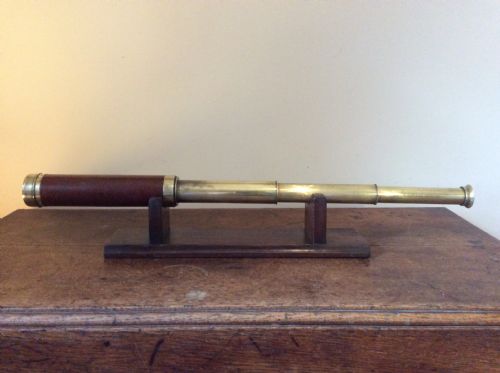


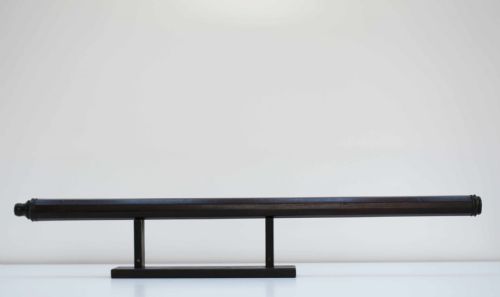

Desk Spyglass
A desk spyglass is a practical scientific instrument for a study or library, valued for clear magnification and traditional optics.
Desk Spyglass
When you search for a desk spyglass, you are looking at scientific instruments designed for tabletop use or close terrestrial observation in a library setting. These pieces span periods from the mid eighteenth century through the Victorian era, offering a tangible connection to historical optical engineering.
You are most likely to meet single draw, three draw, or multi-draw configurations housed in wood or wrapped in leather. The forms range from standard cylindrical barrels to unusual faceted designs like hexagonal, nine sided, and decagonal shapes.
Originating largely from English workshops, these tabletop telescopes include library models, marine spyglasses, and pocket telescopes adapted for desk use. The styles reflect their working origins, drawing on Georgian and Victorian maritime traditions.
Materials and construction
Maker workshops constructed these instruments using polished brass for the main draw tubes and optical housings, often combining metal with glass lenses to achieve magnification. Wooden barrels fashioned from oak, mahogany, or fruitwood provided durability and a steady grip.
Many examples feature stitched leather body coverings to protect the metal tubes and offer a tactile finish. Nickel plating appears on later iterations, while specific pieces incorporate specialised non achromatic lens arrangements.
Desk Spyglass Retail Price Guide 2026
Typical asking prices for desk spyglass among the pieces listed under this phrase on Sellingantiques today, from the lower quarter to the upper quarter. They describe what is for sale here now, not the wider market.
Listings feature instruments from the Georgian and Victorian periods, utilising brass, glass, leather, oak, mahogany, and fruitwood.
Assessing craftsmanship and finish
Quality in these instruments rests on the precision of the draw tubes and the clarity of the glass optics. Finer examples maintain smooth alignment across multiple draws without lateral play when fully extended.
The sophistication of the barrel geometry and the quality of the timber selection elevate certain pieces above standard production. Signed maker details on the brass tubes distinguish workshop pieces from unsigned alternatives.
Ross of London·Cary London·Dollond·John Gilbert
The Desk Spyglass Glossary
- Draw
- A sliding tube section that extends from the main body to alter the focal length. Telescopes may feature a single draw or multiple draws.
- Terrestrial
- An optical setup designed for viewing objects on land rather than astronomical observation. It produces an upright image for the user.
- Non achromatic
- An early optical configuration that does not fully correct for chromatic aberration. It is characteristic of mid eighteenth century instruments.
- Decagonal
- Having ten sides. This geometric form appears on specific faceted telescope barrels from the eighteenth century.
Desk Spyglass: Frequently Asked Questions
What is a desk spyglass used for?
These instruments were utilised for terrestrial viewing from a stationary indoor position, such as a desk or library table. They allowed users to observe distant objects through a window or across a room with magnified clarity.
Beyond functional observation, they served as decorative and intellectual accessories for gentlemen and scholars in studies and libraries.
How do I date a desk spyglass?
Dating relies on observing the materials, construction methods, and any maker inscriptions stamped onto the brass draw tubes. Earlier pieces from the mid eighteenth century often feature decagonal barrels and non achromatic lenses.
Victorian and later examples incorporate nickel plating, specific wood types like oak or mahogany, and distinct maker signatures from firms like Ross of London.
Are these telescopes meant for travel?
While pocket telescopes and single draw marine spyglasses were portable by design, library models were intended for stationary tabletop use. Many variants bridge this gap by collapsing into compact forms for easy storage.
Owners historically kept them on desks for immediate access rather than carrying them on long journeys.
How should I clean the brass and wood?
Maintenance requires gentle dusting of the wooden and leather surfaces with a dry cloth to preserve the finish. The brass tubes benefit from minimal intervention to maintain their aged patina.
Glass lenses should be cleaned cautiously using appropriate optical cloths to avoid scratching the historical glass.