


Desk Match Holder
A desk match holder keeps vestas and tapers ready for lighting, combining utility with the fine detail of Victorian and Edwardian desk accessories.
Desk Match Holder
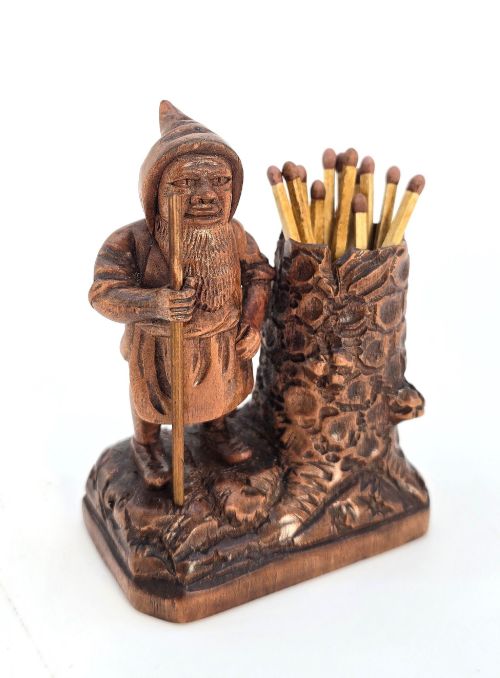
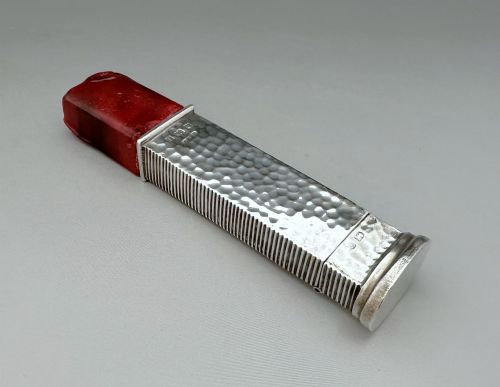
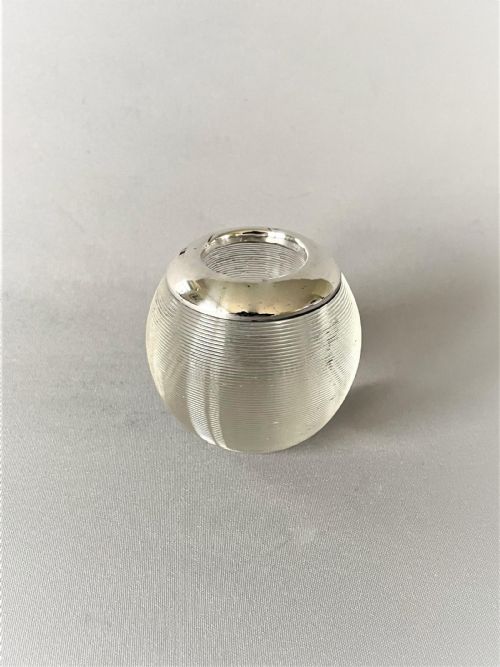
A desk match holder spans functional desk accessories designed to hold matches, vestas, and tapers within easy reach. The pieces on this page appear in various forms, from silver-mounted strikers and glass jars to carved wood animal figures.
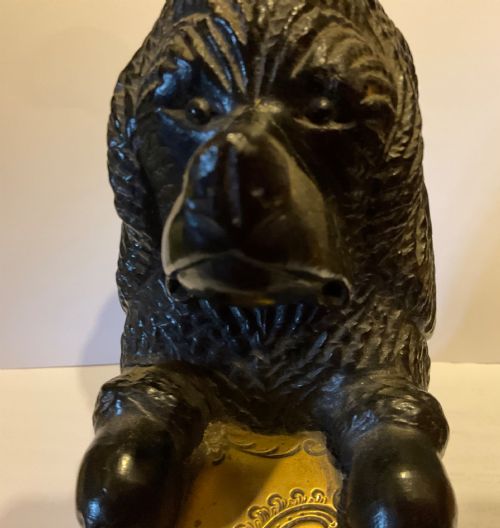
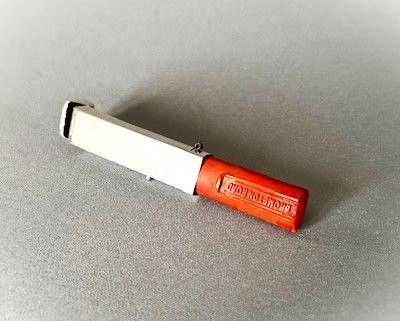
Victorian and Edwardian pieces dominate the selection, alongside earlier nineteenth-century examples and items from the early twentieth century. Buyers encounter combinations like vesta cases with sealing wax holders, alongside novelty carved wood and bronze pieces.
Materials and construction
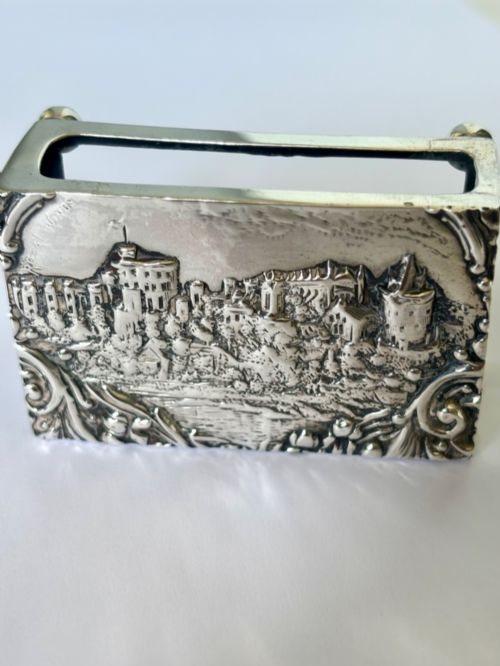
Silversmiths utilised sterling silver and silver gilt for mounted glass strikers and matchbox covers, frequently incorporating cast details such as castle tops. Carvers worked with limewood and laburnum to shape novelty animal figures and folk art dispensers.
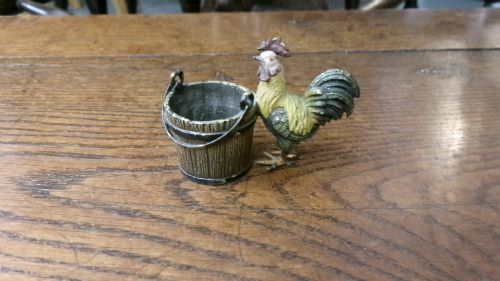
Foundries cast brass, spelter, and bronze into figures and inkstands, occasionally applying cold painted finishes. Glassmakers produced threaded and heavy vessels designed to withstand the friction of striking matches on roughened surfaces.
Listings feature sterling silver, glass, wood, sealing wax, and brass across Victorian and Edwardian periods.
Judging quality in desk match holders
Quality rests in the crispness of the carving on wooden pieces and the clarity of hallmarks on silver components. Superior examples show careful finishing in cast bronzes and tight assembly where glass meets metal mounts.
Makers who incorporated multiple functions, such as integrated wax tapers, combination seals, or articulated novelty forms, demonstrated a higher degree of craftsmanship than standard utilitarian containers.
George Betjemann
The Desk Match Holder Glossary
- Vesta case
- A small pocket or desk box designed to hold short matches known as vestas. These containers often feature an integrated striking surface on the base.
- Taper
- A slender wax-coated wick used to transfer a flame from a match to a candle or fireplace. Desk combinations frequently held these alongside matches.
- Cast bronze
- Metal poured into a mould to create sculptural forms, sometimes enhanced with cold painted polychrome decoration. Vienna examples often utilise this technique.
- Black Forest carving
- Intricately carved wooden decorative items, typically featuring bears, dogs, or woodland motifs. This style flourished in Switzerland and Germany during the nineteenth century.
- Castle top
- A decorative silver motif depicting a specific historic building or royal residence in high relief. These appear on matchbox covers and vesta cases.
Desk Match Holder: Frequently Asked Questions
What is a desk match holder?
A desk match holder is a small decorative vessel or stand kept on a writing table to hold matches and striking surfaces. They were essential desk accessories before the widespread availability of safety matches.
Today, collectors prize them for their variety of materials, including carved wood, silver, and bronze, as well as their inventive novelty designs.
How do you use a match striker?
A match striker provides a textured surface designed to ignite strike-anywhere matches. These surfaces appear as roughened glass, scored metal, or textured ceramic panels.
Users draw the match head across the abrasive patch while holding the holder steady on the desk surface.
What is a go to bed match holder?
A go to bed is a combination desk or bedside accessory that holds both vestas and a small wax taper. It was designed to provide a portable flame for lighting bedroom candles at night.
These combination pieces often incorporate match storage and a holder for a short taper in a single silver or brass object.
How do I date an antique match holder?
Dating relies on silver hallmarks, manufacturer marks, and stylistic indicators such as Edwardian or Victorian design traits. Hallmarks provide exact assay years for silver components.
Carved wooden pieces and bronzes are judged by material patination, subject matter, and construction methods characteristic of nineteenth-century workshops.
Are these pieces safe to use daily?
Many antique match holders remain robust enough for holding modern matches and decorating a desk. However, striking modern matches on historic striated surfaces can cause wear.
Collectors generally preserve fragile carved elements and delicate cold-painted finishes rather than subjecting them to heavy everyday friction.