




Desk Barograph
These desk barograph examples combine precision weather recording with handsome cabinet work, offering a tangible link to Victorian and Edwardian scientific domesticity.
Desk Barograph
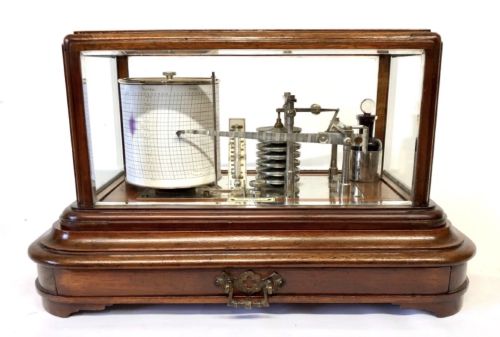
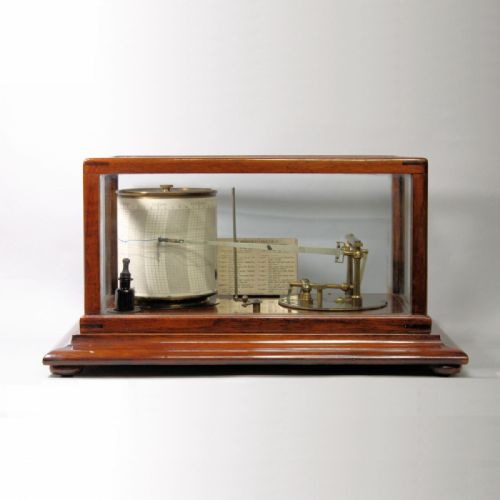
A desk barograph is a mechanical weather recording instrument housed in a glazed wooden case, designed to chart atmospheric pressure continuously onto paper charts. When you search for a desk barograph, you encounter pieces spanning the late nineteenth century through to the early twentieth century, including Edwardian and Victorian specimens.
The versions most commonly met on this page feature fitted wooden boxes in mahogany or oak, often incorporating a thermometer alongside the drum mechanism. Some examples arrive in five-glass cases that afford an unobstructed view of the brass movement inside.
Originating from British and continental workshops, these instruments range from standard table models to miniature editions and combined weather stations with barometer dials and storage drawers. Their primary appeal lies in the visible mechanical action of the arm tracing the weather onto paper.
How they were made
The construction relies on cabinetry using dense hardwoods such as mahogany, oak, and walnut, often shaped with bevelled glass panels held in brass frames. These woods provided a stable environment to protect the delicate barometer mechanism from draughts and dust.
Inside the case, the mechanism employs brass and steel components, paired with paper charts driven by a clockwork drum. Certain pieces incorporate inlaid details or specialised thermometer scales mounted on metal plates beside the main recording drum.
Desk Barograph Retail Price Guide 2026
Typical asking prices for desk barograph among the pieces listed under this phrase on Sellingantiques today, from the lower quarter to the upper quarter. They describe what is for sale here now, not the wider market.
Listings feature mahogany, oak, and walnut cases housing brass and steel movements dating from the nineteenth and early twentieth centuries.
What varies in quality
Quality in these instruments is determined by the refinement of the cabinet work and the reputation of the maker supplying the movement. Finer specimens display superior timber selection, clean joinery, and heavy cast brass framing rather than lighter sheet metal.
The distinction between standard production and top tier work rests on the complexity of the mechanism, such as the inclusion of multiple stacked vacuum chambers, integrated recording thermometers, and signed movements from recognised scientific instrument makers.
GAUPP & CO HONGKONG & SINGAPORE·Short & Mason·R Fuess·Robson of Newcastle·RICHARD FRERES
The Desk Barograph Glossary
- Barograph
- A self-recording barometer that graphs atmospheric pressure over time onto a paper chart. It uses an aneroid mechanism connected to an inked arm.
- Aneroid
- Operating without liquid. The term describes barometers and barographs that use expanding and contracting metal bellows to measure pressure.
- Five-glass case
- A glazed wooden enclosure allowing observation of the instrument from the top and all four sides. This design maximises visibility of the internal brass work.
- Thermometer
- An instrument for measuring temperature, frequently mounted alongside the barograph drum in combined weather stations. It provides an immediate reading of ambient room conditions.
Desk Barograph: Frequently Asked Questions
How do I read a desk barograph?
The instrument traces a continuous ink line on a rotating paper chart wrapped around a clockwork drum. Rising lines indicate increasing atmospheric pressure and generally improving weather.
Falling lines point to dropping pressure, which often signals approaching rain or wind. By observing the slope of the line, you can anticipate changes over the course of the week.
Where should I place a desk barograph?
Position the instrument on a stable desk, table, or sideboard away from direct sunlight, radiators, and heavy foot traffic. Sudden temperature shifts or vibrations can interfere with the delicate aneroid mechanism.
Ensure the room has a reasonably stable climate so the recording reflects actual weather shifts rather than indoor heating patterns.
How do I change the paper chart?
Lift the inked arm gently off the drum using its small lever to prevent damage to the delicate nib. Release the drum mechanism, slide off the old paper chart, and wrap a fresh chart around the cylinder.
Secure the new chart carefully along the overlap, re-ink the nib if necessary, and lower the arm back onto the paper surface.
How do I date a desk barograph?
Examine the style of the wood cabinetry, hardware, and any maker signatures or retailer stamps on the paper scale or brass bedplate. Victorian models often feature heavier mouldings and rich mahogany, while Edwardian pieces may show lighter oak or inlaid Art Nouveau motifs.
Patents or exhibition medals stamped onto the metalwork can also provide a reliable terminus post quem for the date of manufacture.