



Derby Porcelain Bocage
Derby porcelain bocage figures are ornate 18th and 19th-century ceramic sculptures framed by intricate foliage backgrounds, prized by collectors for their lively figures and detailed floral work.
Derby Porcelain Bocage
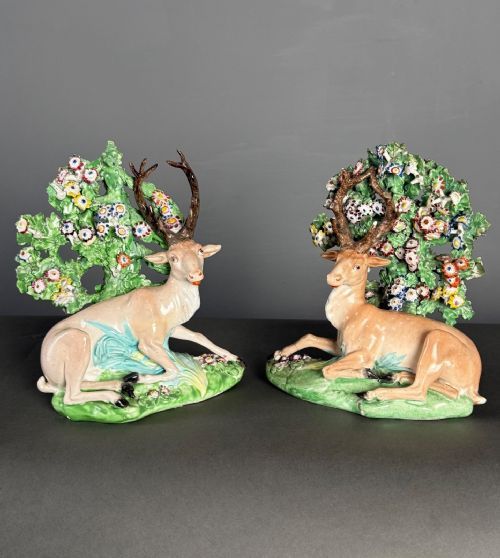
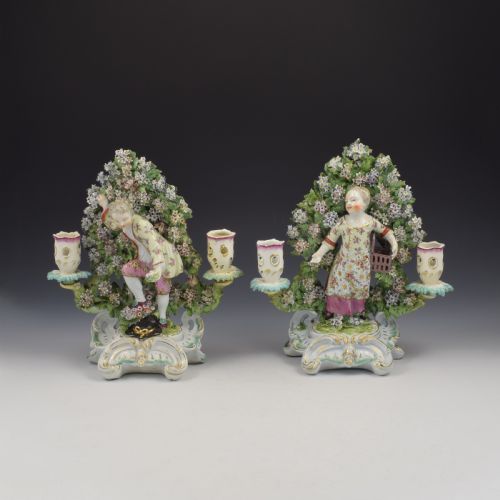
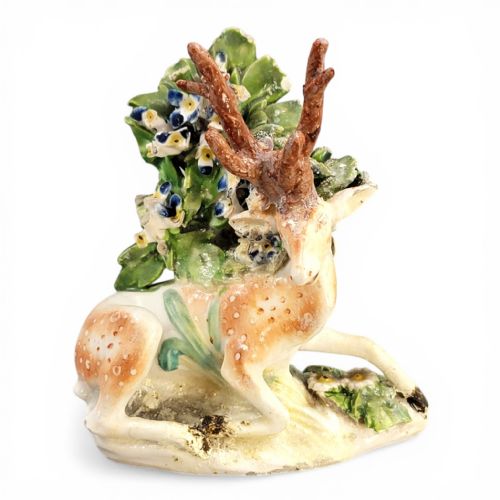
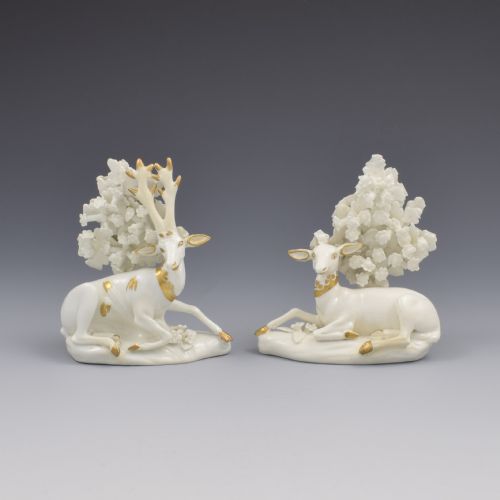
When you search for derby porcelain bocage, you find decorative figures and candlesticks framed by applied ceramic foliage. These pieces often depict pastoral scenes, musicians, children, and animals such as stags and does. The style ranges from early Georgian rococo examples to later 19th-century interpretations.
The most common pieces on this page are figures with leafy backgrounds, including pairs of musicians, recumbent stags, and figural candlesticks. Many date from the Georgian period, specifically the patch-mark period of the 1760s and 1770s. Alongside authentic Derby works, you may also encounter later reproductions made in Paris and Germany.
Subjects vary from allegorical representations like Liberty and Matrimony to everyday pastoral characters such as bagpipers and shepherds. These sculptures served as decorative mantel ornaments and functional candleholders in fashionable Georgian interiors. Their elaborate floral backdrops distinguish them from standard portrait figures of the era.
Factors of quality
The vibrancy and completeness of the polychrome enamel and gilding also dictate the value of the object. Losses to the fragile bocage leaves are common, so surviving examples with intact foliage represent the higher tier of craftsmanship.
Derby Porcelain Bocage Retail Price Guide 2026
Typical asking prices for derby porcelain bocage among the pieces listed under this phrase on Sellingantiques today, from the lower quarter to the upper quarter. They describe what is for sale here now, not the wider market.
Even mid-Georgian shepherds needed elaborate hairdressers.
The Derby Porcelain Bocage Glossary
- Bocage
- An ornamental background of applied ceramic foliage and flowers framing a figure. It became popular in English porcelain during the rococo period.
- Soft-paste porcelain
- A glassy porcelain composition fired at lower temperatures than hard-paste, common in 18th-century English factories like Derby. It has a warm, slightly creamy appearance under the glaze.
- Patch mark
- A small unglazed scar on the base of Derby porcelain caused by support props used in the kiln during firing. This is a key indicator of 18th-century production.
- Polychrome enamel
- Decorated using multiple enamel colours painted over the fired glaze. This technique allowed for vivid hues on garments and naturalistic details on foliage.
- Rococo Revival
- A 19th-century design style that revived the asymmetric scrolls, curves, and natural motifs of the mid-18th century. It heavily influenced later versions of figural porcelain.
Derby Porcelain Bocage: Frequently Asked Questions
What is a bocage figure?
A bocage figure is a porcelain sculpture backed by an intricate arbor of leaves and flowers. These pieces were designed to bring naturalistic charm into Georgian drawing rooms.
They often incorporate candle sockets, combining decorative art with functional lighting for the dining table or mantelpiece.
How do I date early Derby porcelain?
Dating relies on identifying paste types, factory marks, and stylistic traits like rococo scrollwork. The presence of patch marks on the base typically points to the mid-18th-century Georgian period.
Later 19th-century pieces often display crisper, whiter hard-paste porcelain or bear attribution to continental copyists.
Are these figures fragile?
Yes, the intricate foliage and projecting limbs make these porcelain sculptures vulnerable to chipping and breakage. Careful handling and stable placement away from high-traffic areas are essential for their preservation.
Most surviving examples exhibit minor, professional restorations to the delicate leaves of the background.
Who made these besides Derby?
Other factories and studios replicated the Derby style, particularly during the 19th century. Samson of Paris and various German factories in Dresden produced similar porcelain figures after Derby models.
These later continental pieces often reflect the taste for 18th-century revival aesthetics popular among Victorian collectors.