

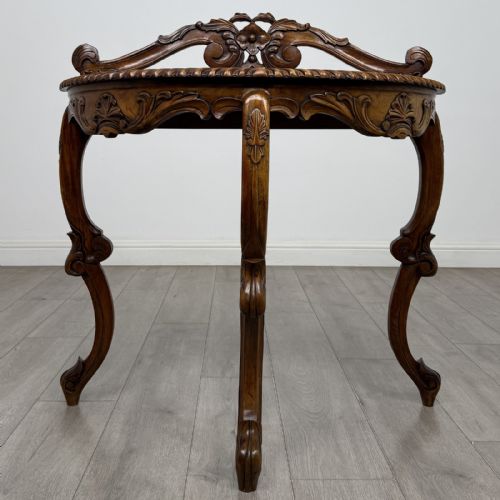
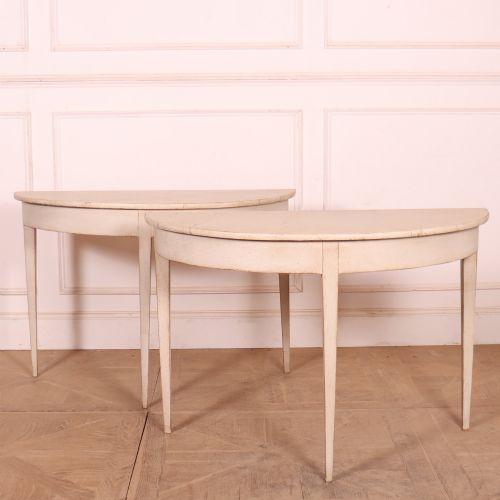
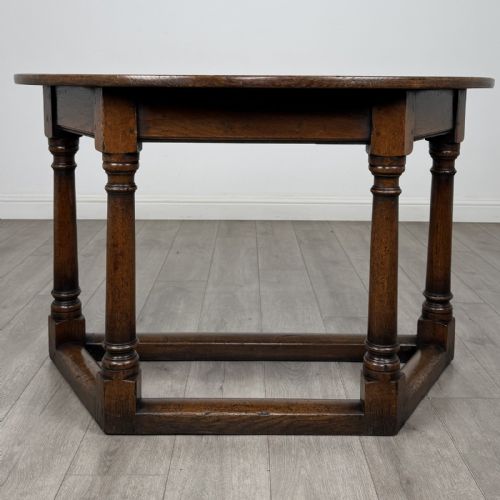
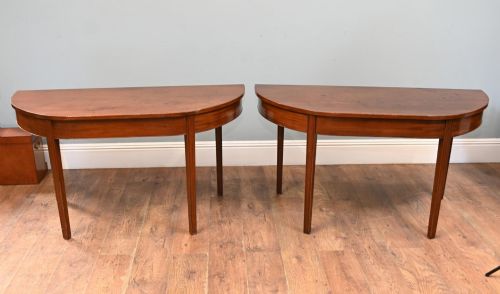
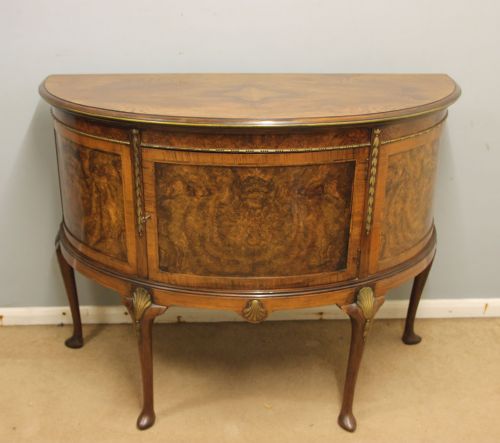

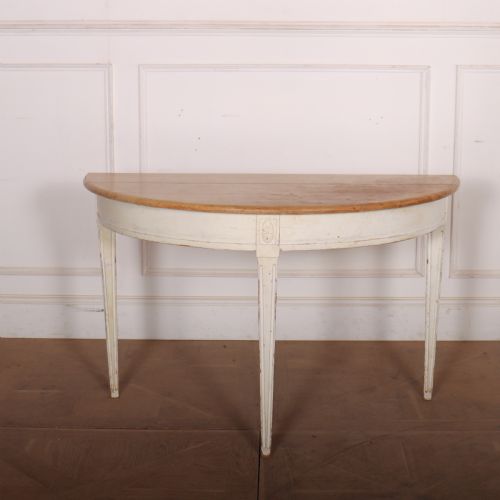
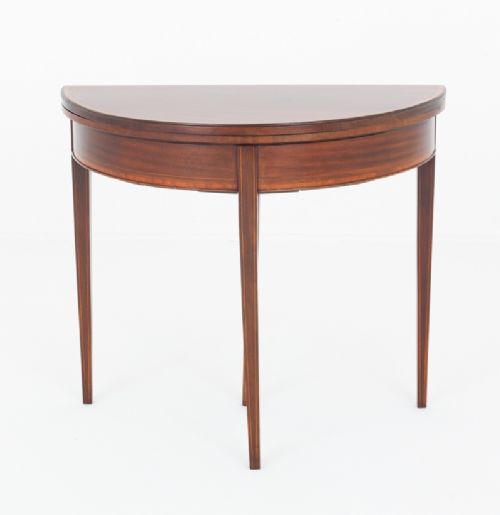
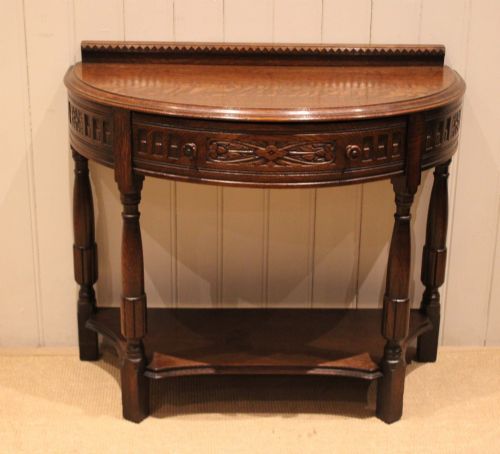

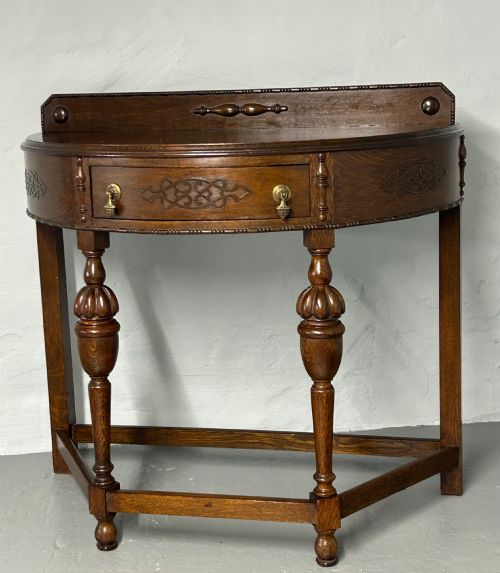

Demi Lune Hallway Console
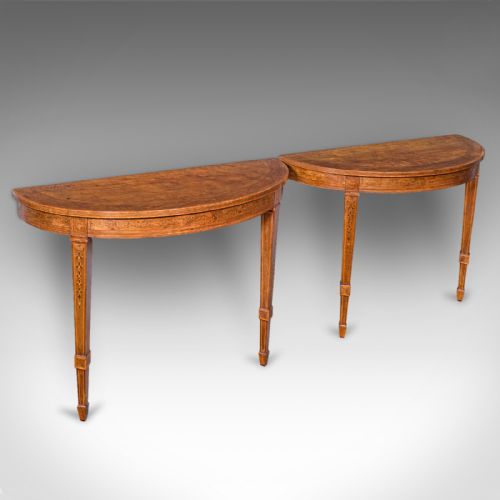
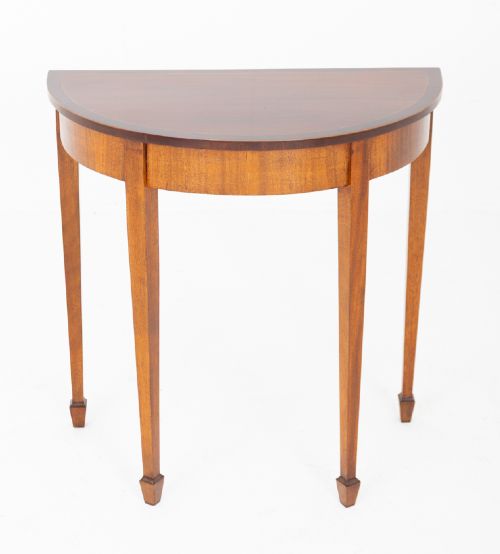
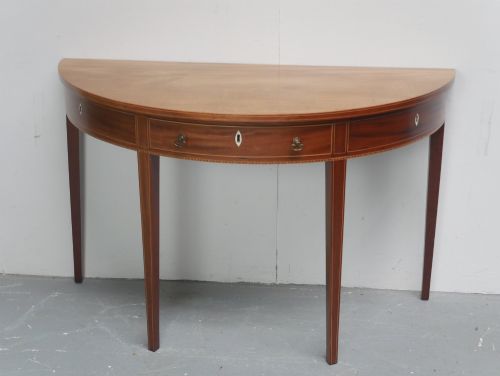
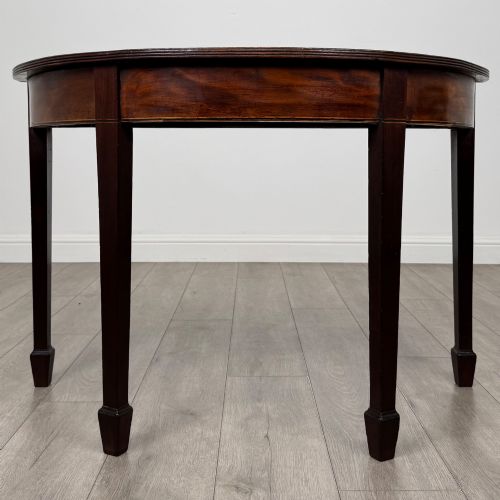
A demi lune hallway console hugs the wall with a half-moon shape, offering a neat surface for a narrow passage.
Demi Lune Hallway Console
A demi lune hallway console is a semicircular table designed to sit flat against a wall, making it suited to narrow entryways and corridors where floor space is limited. The form appears across several periods, most notably in 18th century, Georgian, and 19th century furniture production.
The pieces listed here include console tables, side tables, card tables, and sideboards, alongside occasional tables. Many are standalone items, though pairs also feature in the selection.
Makers and designers drew on stylistic traditions such as George III, Regency, Louis XVI, and Gustavian designs. These tables serve primarily as decorative display surfaces or functional ledges in hallways.
How they were made
Makers utilised timber substrates including mahogany, oak, pine, and satinwood, often shaping the curved top from solid boards or veneered panels. Boxwood inlay frequently provides linear detail and contrast around the borders of the timber tops.
Surface finishes range from polished mahogany to painted wood surfaces in French and Swedish traditions. Brass feet, mounts, and hardware add metallic punctuation to the timber and painted structures.
Demi Lune Hallway Console Retail Price Guide 2026
Typical asking prices for demi lune hallway console among the pieces listed under this phrase on Sellingantiques today, from the lower quarter to the upper quarter. They describe what is for sale here now, not the wider market.
Listings feature mahogany, oak, pine, and satinwood, spanning Georgian, Regency, and 1920 periods.
What varies in quality
The standard of a demi lune hallway console rests on the crispness of its cabinetwork and the selection of its timbers. Figured mahogany or finely grained satinwood denote thoughtful material choice by the maker.
Execution of decorative elements such as boxwood inlay and carved wooden details dictates the refinement of the piece. Proportional balance across the semicircular frame separates standard workshop output from exceptional examples.
Maple and Co
The Demi Lune Hallway Console Glossary
- Demi-lune
- A half-moon shape used for table tops and furniture footprints designed to stand flush against a wall.
- Console table
- A table supported by wall brackets or legs, intended for placement against a vertical surface.
- Inlay
- A technique where pieces of contrasting wood, such as boxwood, are inserted into depressions in the base material to form a pattern.
- Fold over tea table
- A table with a hinged top that doubles in surface area when opened out.
- Satinwood
- A durable timber with a characteristic golden sheen, often utilised for fine cabinetwork.
Demi Lune Hallway Console: Frequently Asked Questions
Where do you put a demi lune table?
These tables find their natural home in hallways, corridors, and entrance foyers where a shallow footprint is essential. Their curved front allows people to pass easily in confined spaces.
They also work well in living rooms or dining spaces against blank wall sections beneath a mirror or painting.
How do I spot a Georgian console?
Georgian pieces typically display proportion and timber selection characteristic of the 18th century and early 19th century. Look for straight or tapering legs and restrained mahogany or satinwood grain.
Construction methods on the underside, such as hand-cut joints and timber shrinkage patterns, help confirm the period.
Are painted consoles French or Swedish?
Painted finishes appear in both French and Swedish pieces from the 19th century and 1920 styles. Swedish examples often favour lighter tones and Gustavian influences.
French pieces frequently incorporate carved wooden details and decorative top surfaces reflecting Louis XVI traditions.
Can these tables hold heavy lamps?
Most demi lune consoles provide stable support for table lamps, bowls, and decorative objects. Their wall-adjacent placement aids stability, though weight distribution depends on leg construction.
Heavier items should be placed centrally rather than near the unsupported outer edges.