




Defence Walking Cane
A defence walking cane is a gentleman's accessory concealing a steel blade, offering discreet protection during Victorian and Edwardian outings.
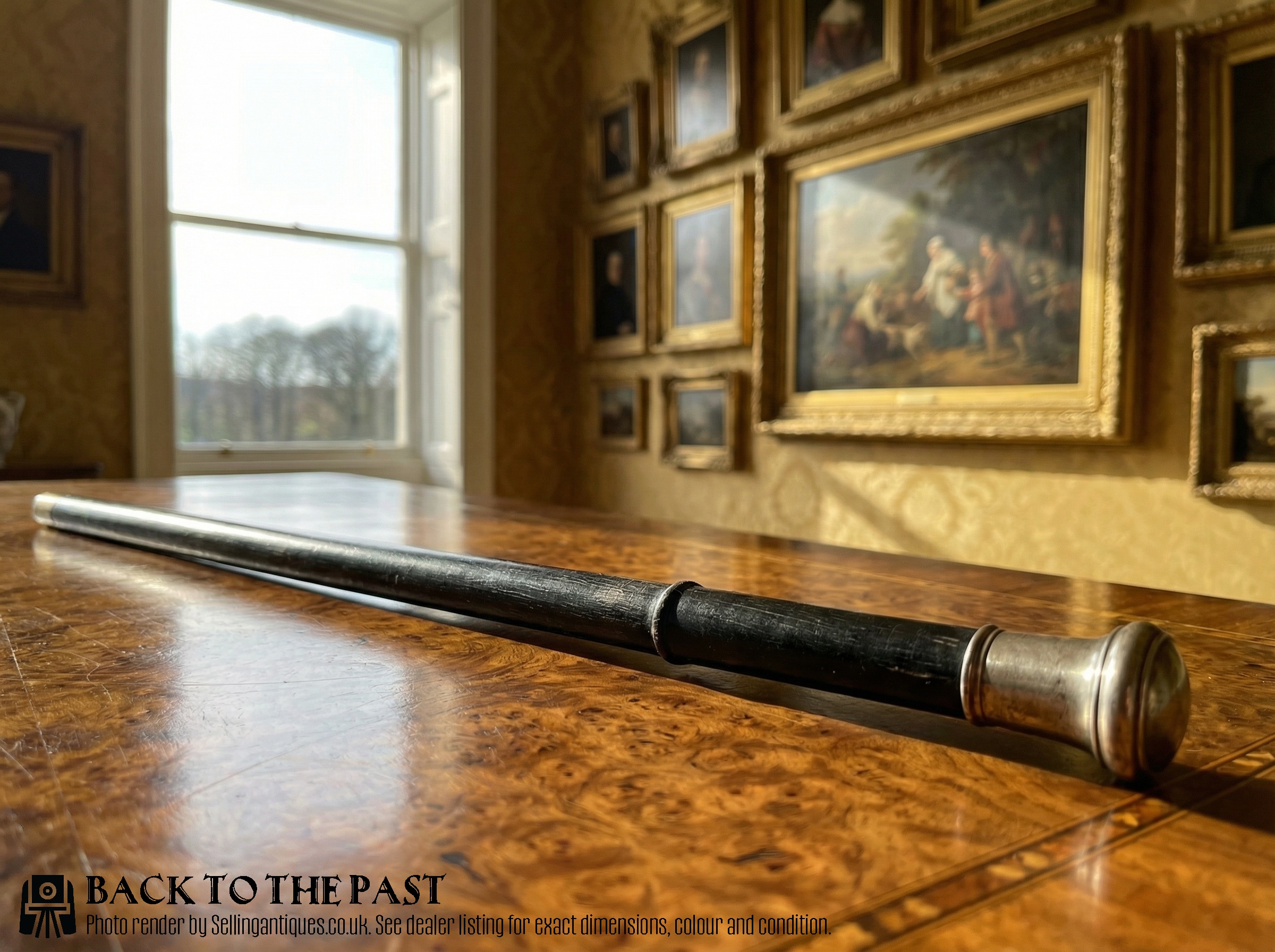
Defence Walking Cane
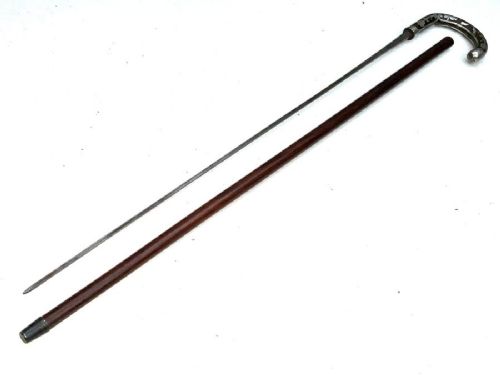
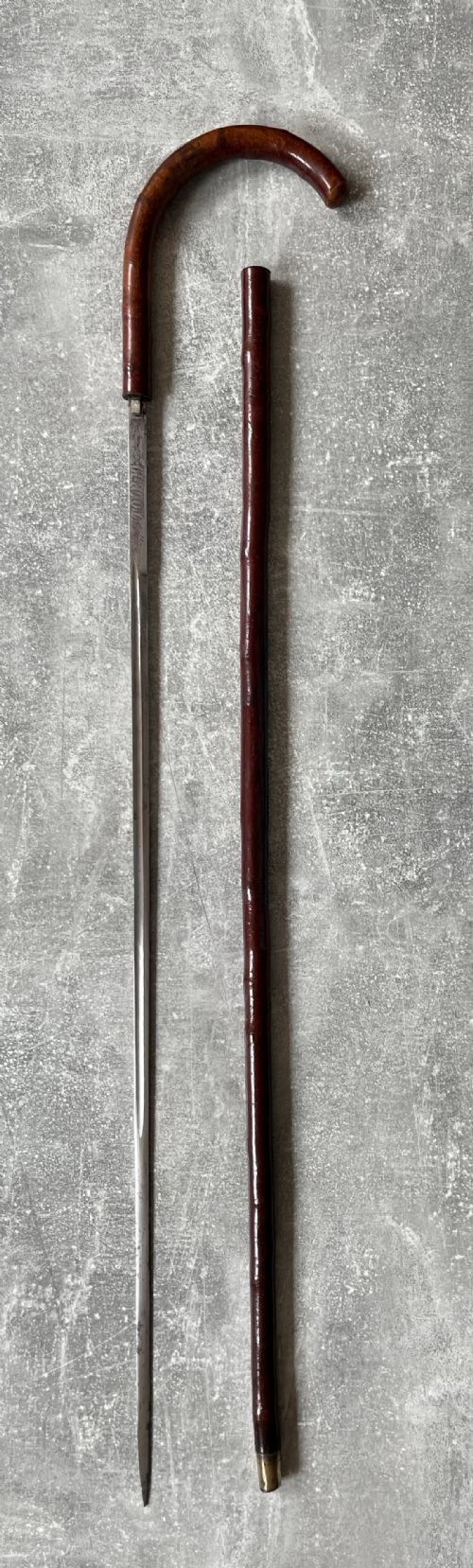
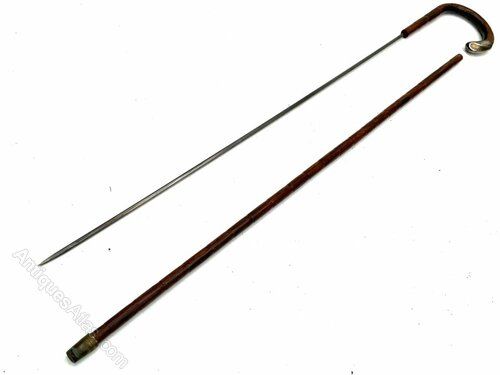
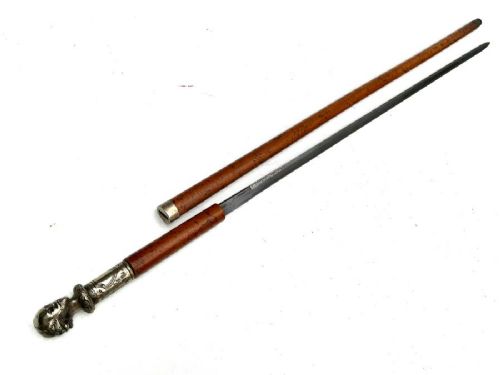
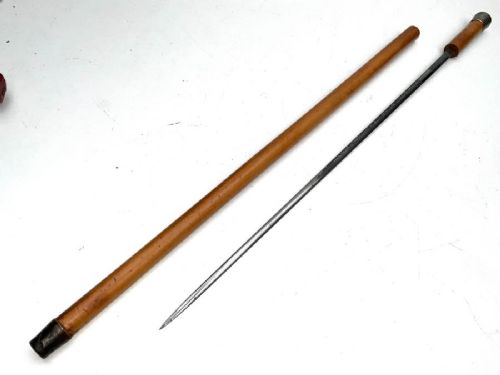
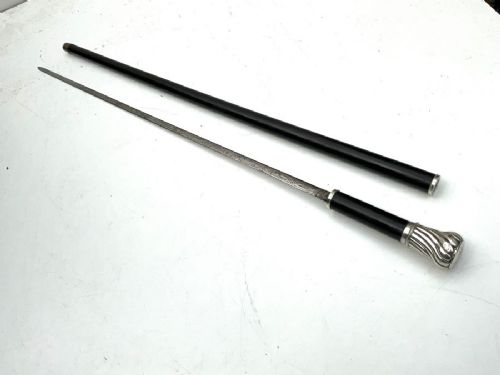
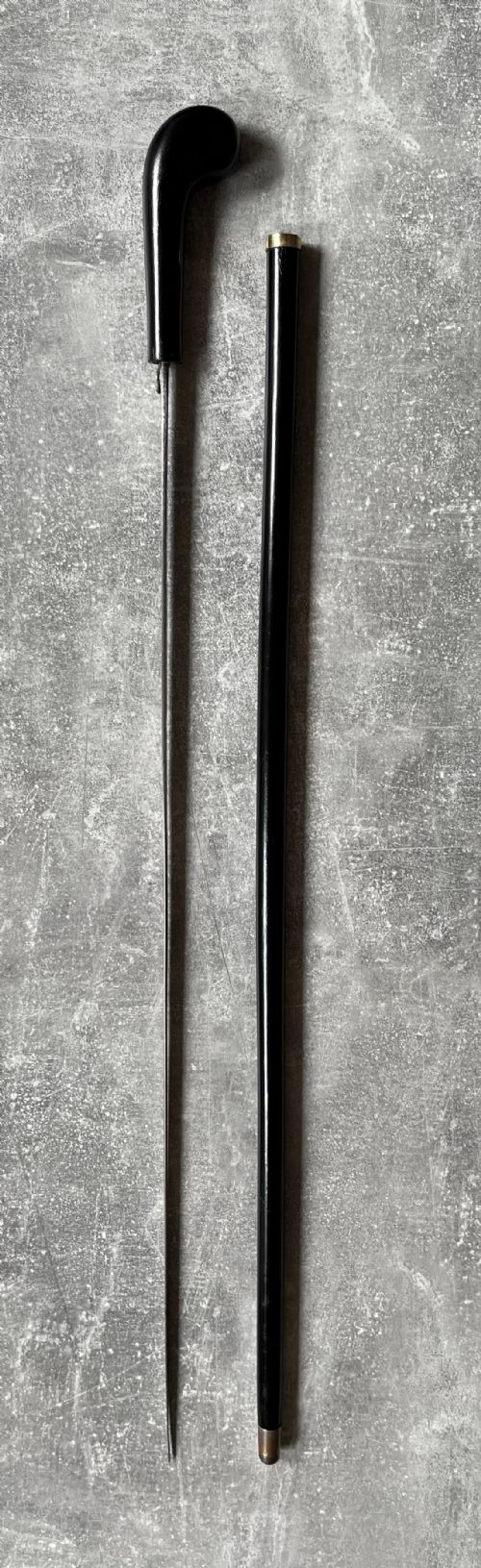
A defence walking cane combines a functional support stick with a concealed weapon, typically taking the form of a sword stick housed within a wooden shaft. These pieces emerged strongly across the Victorian, Edwardian, and early twentieth-century periods, catering to gentlemen requiring personal security during town and country walks. The examples found here span decades from the 1870s through the 1920s, showing diverse handle configurations and regional styles.
The version most commonly encountered on this page is the gent's walking stick sword stick, often fashioned from timbers such as partridge wood, malacca, cherrywood, or ebonised wood. These items frequently incorporate silver collars, horn, bone, or antler handles, alongside specialised grips like hammer head designs or horse heads. Makers and retailers incorporated quality blades, notably Toledo or Wilkinson steel, inside standard walking canes to blend utility with discretion.
How they were made
Craftsmen built these pieces by carefully routing out a wooden shaft to securely house a steel blade, often integrating a tight-fitting collar to maintain the disguised join. Timbers like malacca, rosewood, partridge wood, and bamboo provided sturdy yet workable exteriors that could be polished, ebonised, or fitted with root ball handles.
Mounts and hardware required specialist metalworking, utilising silver, brass, and steel for collars, repoussé knops, and functional blades. Handles were fashioned from horn, bone, antler, or carved wood, then securely pinned or fitted to the shaft to withstand daily use while concealing the hidden mechanism within.
The inventory spans Victorian, Edwardian, and early twentieth-century periods, including specific years like 1874, 1899, and 1919.
What varies in quality
Quality in a defence walking cane rests upon the integrity of the hidden blade and the precision of the shaft's fit. Superior examples utilise renowned steel makers like Toledo or Wilkinson for the sword blade, ensuring a resilient and finely tempered edge that locks securely into the wooden housing.
The choice of materials and decorative detailing further separates standard pieces from the finest work. The presence of hallmarked silver mounts, repoussé work, carved horn or animal form handles, and dense timbers like partridge wood or malacca signal higher workshop standards during manufacturing.
Brigg·Wilkinson
The Defence Walking Cane Glossary
- Toledo blade
- A steel blade originating from or styled after the renowned sword-making traditions of Toledo, Spain. These blades are prized for their flexibility and strength.
- Silver collar
- A metal band encircling the top of the shaft just below the handle, often bearing assay office hallmarks and decorative engraving. It reinforces the timber against splitting when the blade is drawn.
- Malacca
- A type of rattan cane featuring distinctive joints and a smooth brownish-yellow surface, valued for its lightness and resilience. It formed a popular shaft material for gentleman's walking sticks.
- Repoussé
- A metalworking technique where silver or brass is hammered from the reverse side to form a raised design. This ornamentation frequently appears on the knops and collars of finer canes.
- Knop
- A rounded handle or ornamental knob at the top of a walking stick. These were shaped from bone, horn, silver, or wood to provide a secure grip.
Defence Walking Cane: Frequently Asked Questions
What is a defence walking cane?
A defence walking cane is a traditional walking stick that conceals a steel sword blade within its wooden shaft. Gentlemen carried them for personal protection during the Victorian and Edwardian eras.
These pieces outwardly resemble standard walking sticks to maintain discretion while offering immediate access to a hidden weapon when needed.
How do you release the blade?
Most defence walking canes utilise a friction fit, a screw mechanism, or a small release catch hidden near the collar. Pulling the handle separates the wooden shaft to reveal the steel blade.
The precision of the original construction determines how snugly the two sections fit together when closed.
What materials are used for the handles?
Handles on these pieces feature a wide variety of natural materials, including carved horn, bone, antler, and silver. Some examples incorporate detailed animal forms such as horses' heads.
Timbers like malacca, partridge wood, and ebonised wood also served as shaped handgrips, sometimes taking crook or hammer head configurations.
How can I tell the period?
Dating often relies on style markers, silver hallmarks, and the specific materials favoured during different decades. Victorian and Edwardian examples frequently display hallmarked silver collars with assay dates.
The popularity of specific woods, such as malacca or partridge wood, and military associations like Imperial German styles also help narrow down the manufacturing era.