

Deep Tufted Victorian Armchair
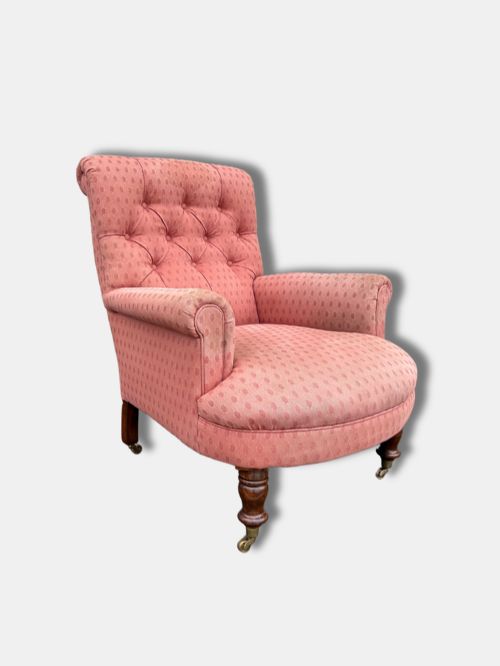
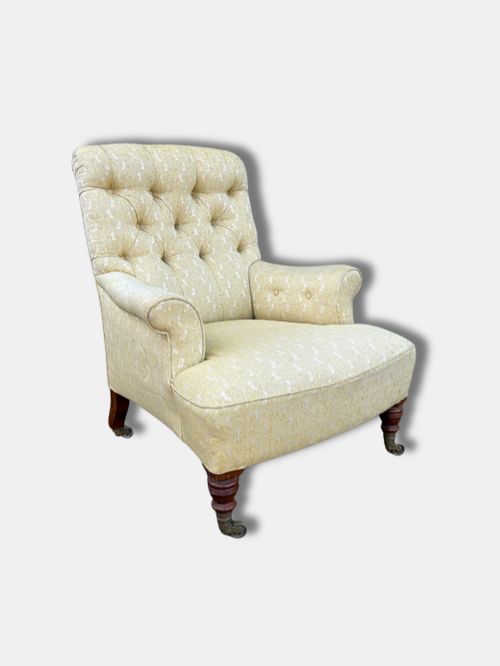
A deep tufted victorian armchair provides generous seating and dense upholstery, offering comfort and presence for any study or drawing room.
Deep Tufted Victorian Armchair
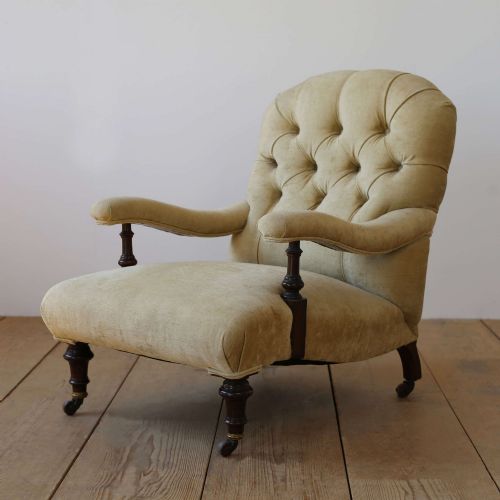
A deep tufted victorian armchair sits low on turned or carved supports, designed for long hours of reading or conversation in nineteenth-century interiors.
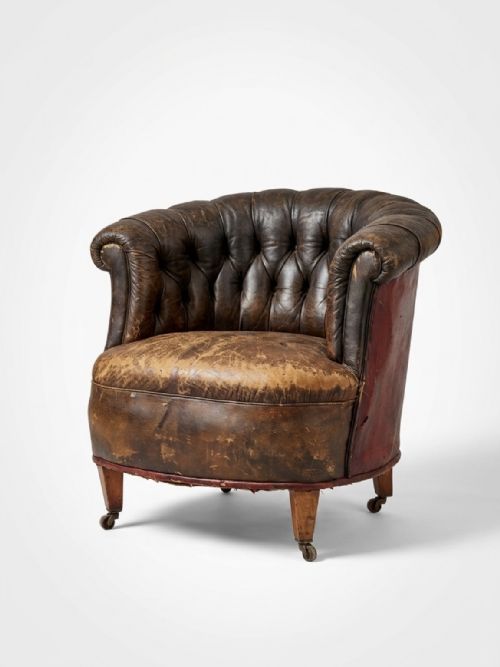
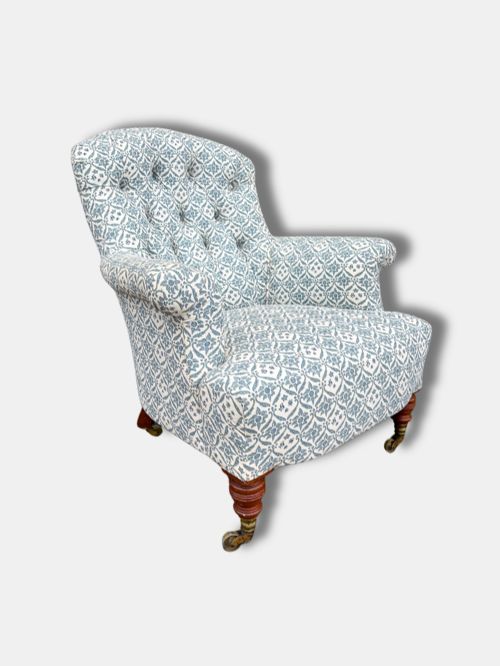
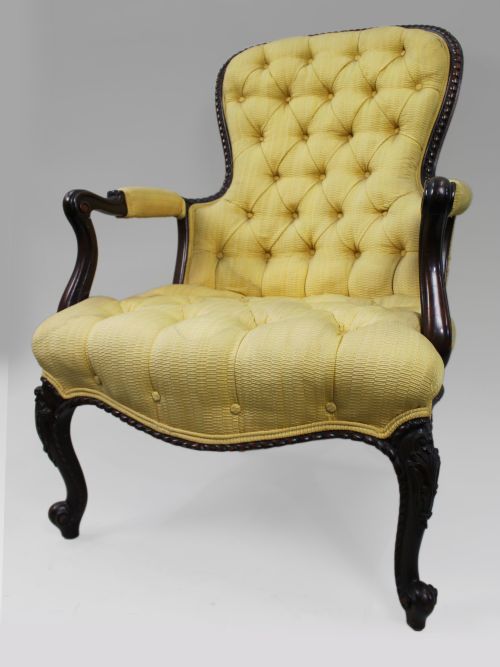
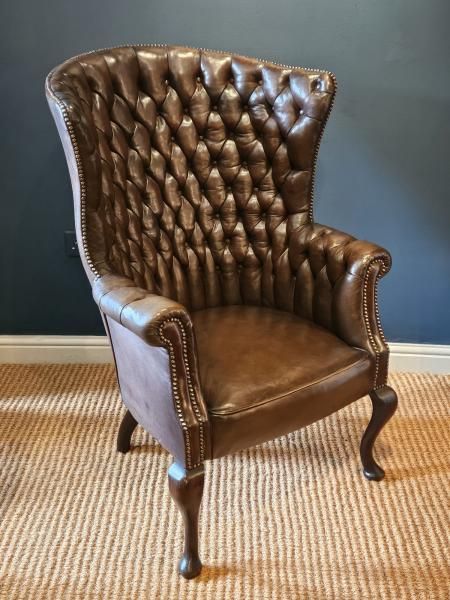
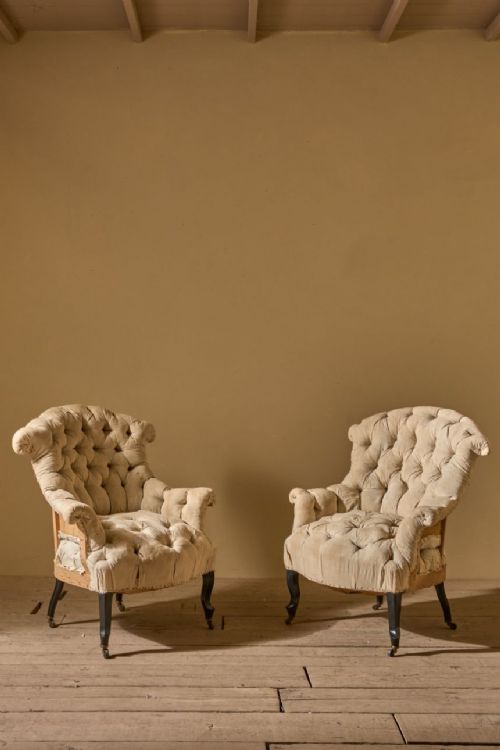
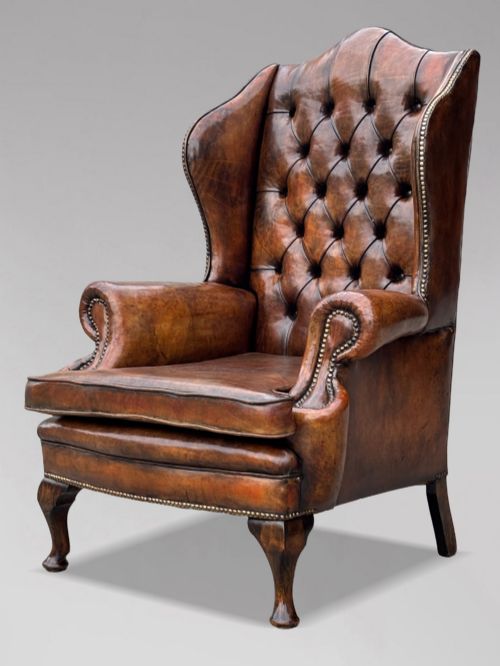
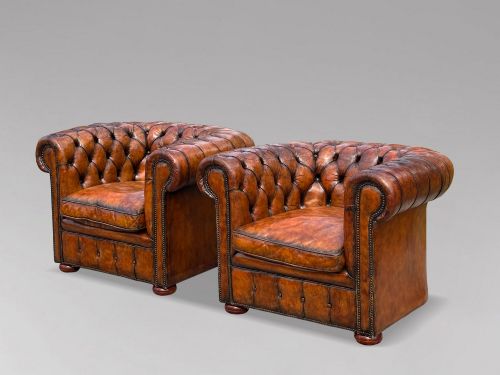
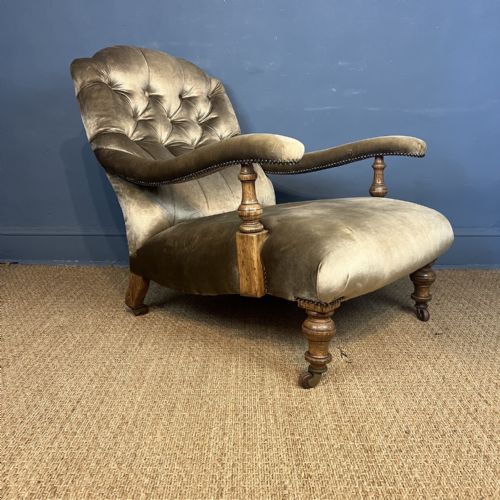
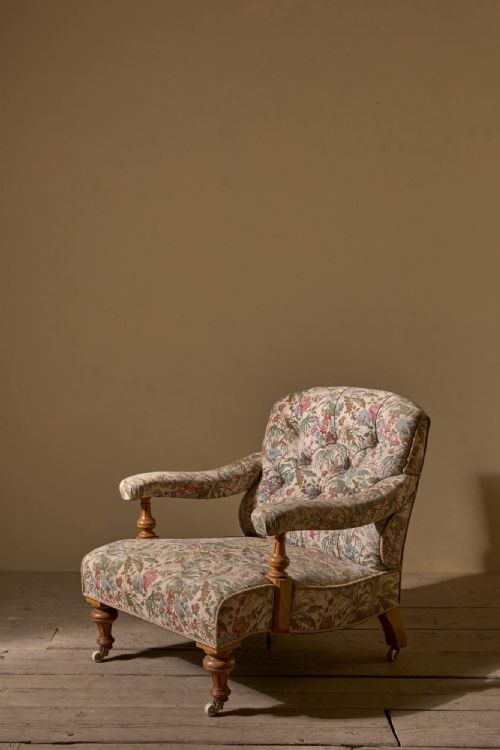
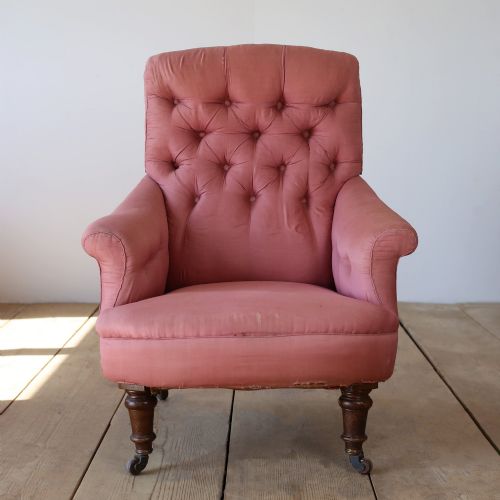
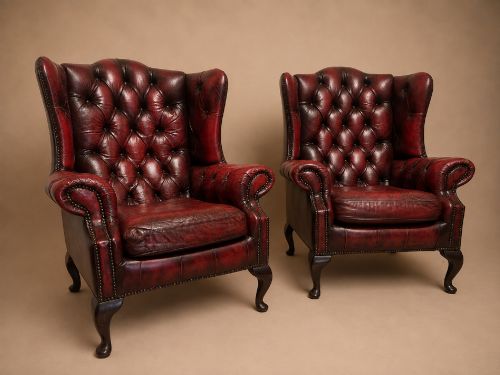
The form relies on deep buttoning across the backrest and seat, creating a rhythmic pattern of folds in the leather or fabric.
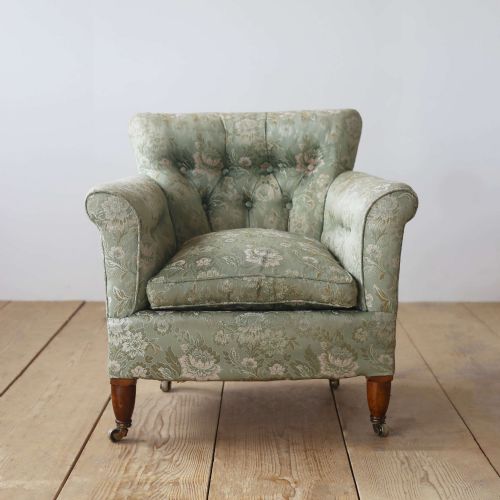
Examples on this page span library chairs, club chairs, and wing armchairs originating from nineteenth-century English and French workshops.
Materials and construction methods
Frames are built from sturdy hardwoods such as mahogany, oak, and walnut, providing a rigid internal structure capable of bearing heavy padding.
Upholstery relies on traditional stuffing secured with deep linen tufting, then finished in supple brown leather, velvet, or calico.
Small details like brass castors fitted to wooden legs allow these heavy chairs to move across carpets without damaging the floorboards.
Listings feature eighteenth and nineteenth-century periods, utilising materials such as mahogany, oak, walnut, brass, leather, velvet, and calico.
Distinguishing quality across examples
The integrity of the internal webbed frame and the uniformity of the button tufting dictate the overall craftsmanship of the piece.
Superior leather upholstery develops a rich patina with age, whereas lesser hides show cracking or excessive stiffening from poor tanning.
The subtlety of hand-carved wooden legs and the precise proportions of the wing or spoon back separate standard workshop production from finer studio output.
Howard and Sons·Holland and Sons
The Deep Tufted Victorian Armchair Glossary
- Buttoning
- The technique of pulling twine deep through upholstery padding and securing it with buttons to form regular diamond indentations. This method keeps the internal stuffing firmly distributed.
- Wingback
- An upholstered chair featuring protective side panels attached to the arms and framing the head. These wings originally blocked draughts from cold rooms.
- Calico
- A plain-woven unbleached cotton fabric used as an interior lining or base layer beneath decorative top covers. Makers often used it to finish the underside of heavy seats.
- Castor
- A small swivelling wheel attached to the base of furniture legs. Brass fittings are typical on nineteenth-century library seating.
- Spoon back
- A padded chair back shaped with a concave oval contour resembling the bowl of a spoon. This design offers ergonomic support for the spine.
Deep Tufted Victorian Armchair: Frequently Asked Questions
How do I care for antique leather?
Keep leather upholstered pieces away from direct sunlight and heat sources to prevent the hide from drying out over time.
Apply a suitable neutral leather balsam periodically to maintain suppleness and protect the surface from cracking.
Are these chairs comfortable for daily use?
Nineteenth-century seating is engineered with substantial interior stuffing and resilient springing designed for long hours of relaxation.
Their deep proportions and angled backrests suit modern reading habits just as well as they did Victorian drawing rooms.
How can I tell an original Victorian piece apart?
Examine the timber frame beneath the upholstery and check for traditional hand-cut joinery rather than modern machine screws.
Materials like horsehair stuffing and hand-turned wooden legs indicate nineteenth-century manufacturing methods.
Where should I place a wing armchair?
These large-scale chairs fit naturally beside a fireplace or in the corner of a spacious study or library.
Allow enough clearance around the piece to appreciate the curved arms and deep buttoned back from multiple angles.