
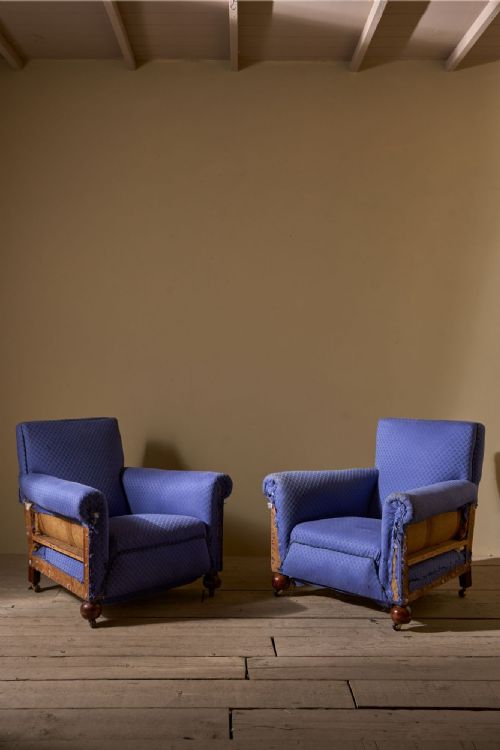
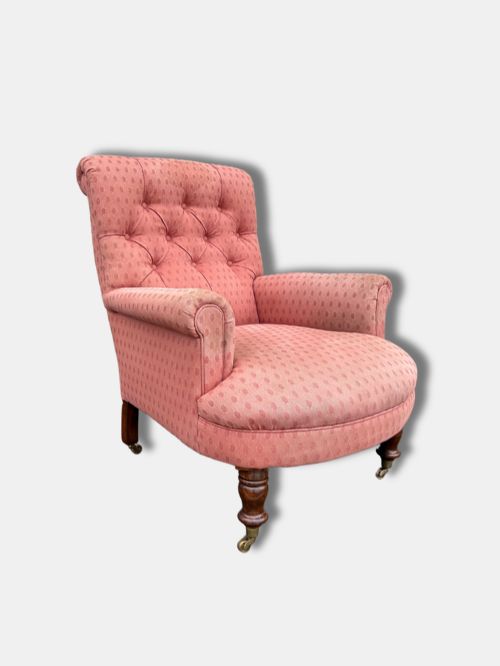
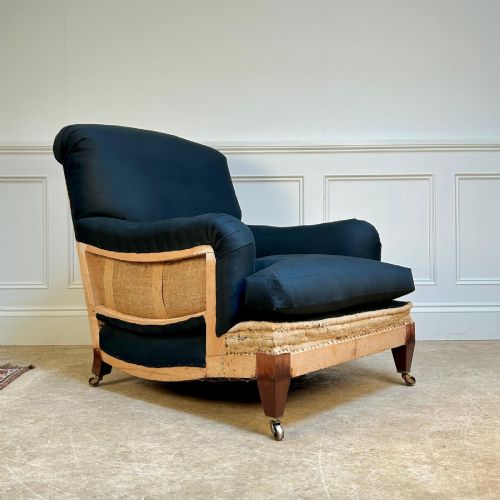
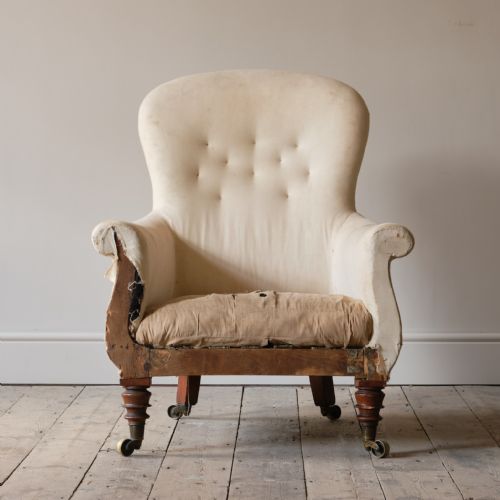

Deep Seat Easy Chair
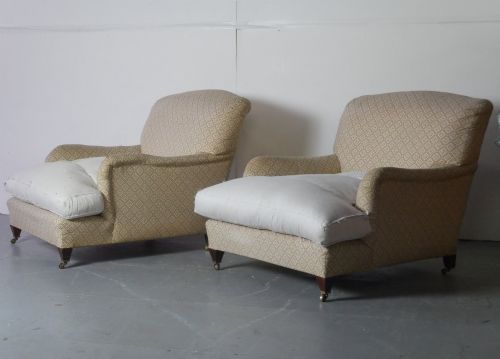
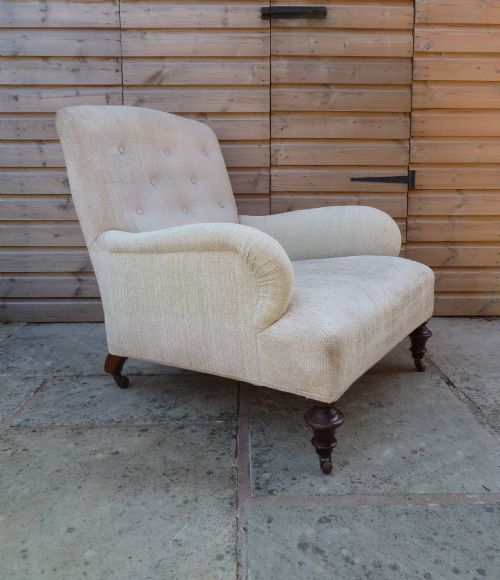
A deep seat easy chair offers generous proportions and low-slung comfort, making it the ultimate armchair for a country house library or a panelled drawing room.
Deep Seat Easy Chair
A deep seat easy chair provides a low, expansive lounge experience rooted primarily in the nineteenth century and the Edwardian era. These pieces draw on Victorian and English Country House traditions, frequently appearing as armchairs with substantial depth designed for relaxed sitting.
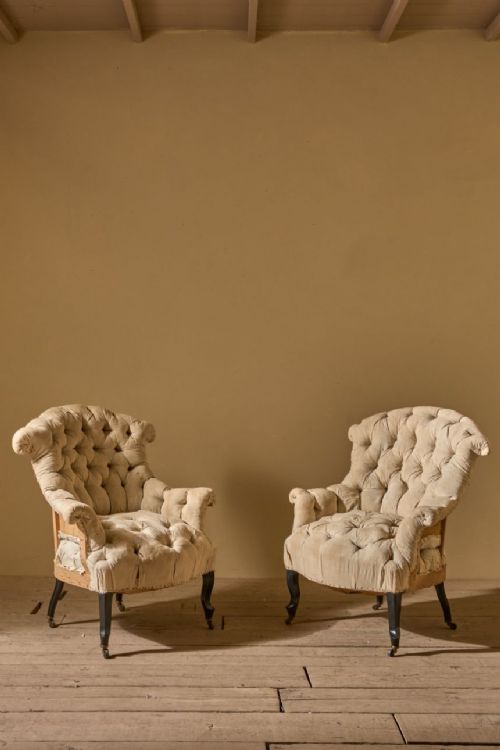
The selection ranges from nineteenth-century Victorian and William IV examples to early twentieth-century Edwardian and Art Deco club chairs. Buyers encounter various stylistic iterations, including button-backed forms, Bridgewater styles, and classic profiles reminiscent of major makers.
Most pieces date from the Victorian period through to the 1930s, reflecting the evolution of domestic comfort. The form prioritises a relaxed posture, often seen in large proportions designed for heavy use in private sitting rooms.
Materials and Construction
The frames rely on sturdy hardwoods such as mahogany, walnut, oak, and rosewood to support the heavy internal sprung upholstery. Structural integrity depends on timber and hardwood carcasses hidden beneath layers of padding and fabric.
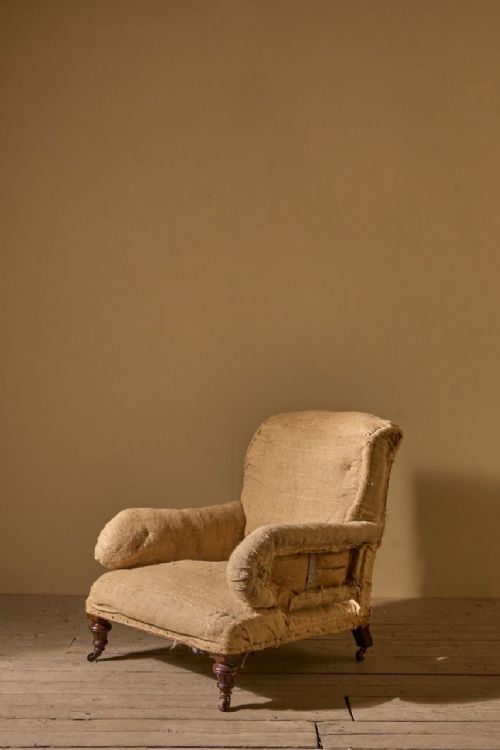
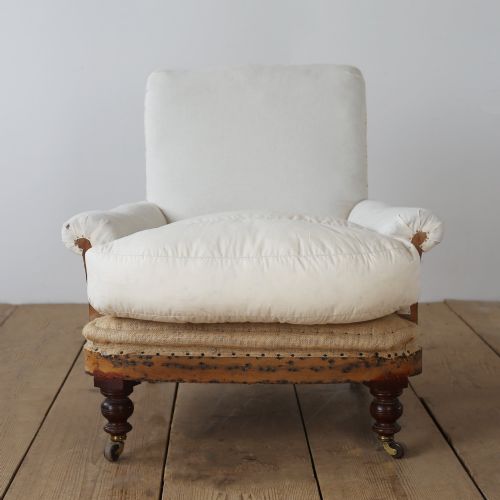
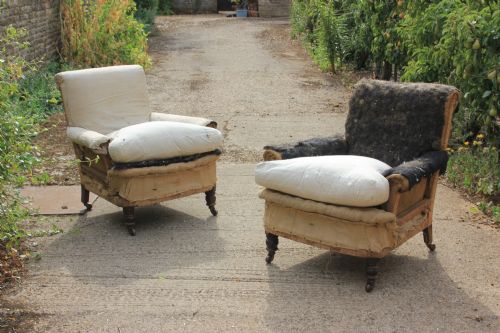
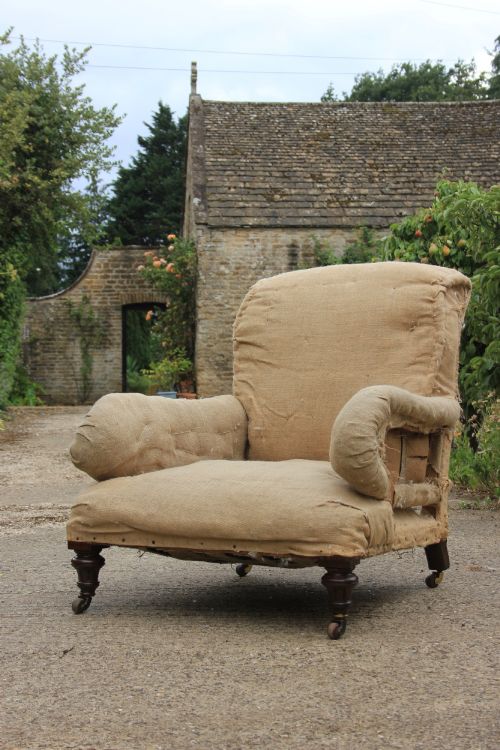
Upholstery techniques involve traditional stuffing secured with hessian and calico before final top covers of fabric, leather, or specific maker-stamped textiles are applied. Exposed wooden elements sometimes incorporate brass castors or decorative cane panels alongside structural joinery.
The listings span the nineteenth century through the Art Deco period, featuring materials like walnut, mahogany, brass, leather, and hessian.
Evaluating Craftsmanship and Proportion
Quality rests in the balance of the proportions and the integrity of the underlying frame rather than superficial decoration. A superior piece maintains a harmonious silhouette across its arms and back while utilising dense, resilient stuffing that preserves the intended slouch.
The distinction between standard commercial production and finer workshops lies in the precision of the joinery and the selection of timber. Maker attribution, such as work associated with Gillows or Howard and Sons, elevates a piece through superior hand-carved details and branded components.
Howard and Sons·SF Cullen·James Shoolbred·Gillows
The Deep Seat Easy Chair Glossary
- Bergere
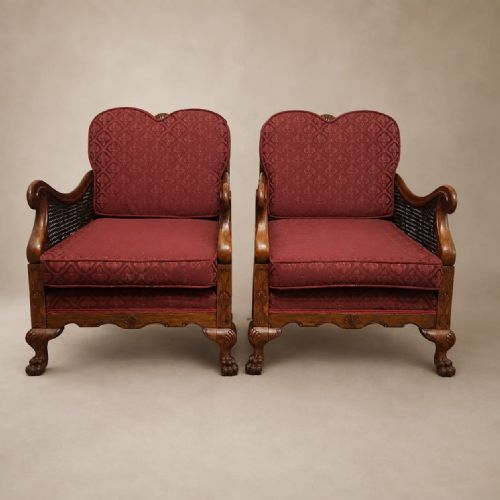
- An upholstered armchair with enclosed cane panels on the sides and back. The wooden frame usually exhibits polished walnut or mahogany.
- Button back
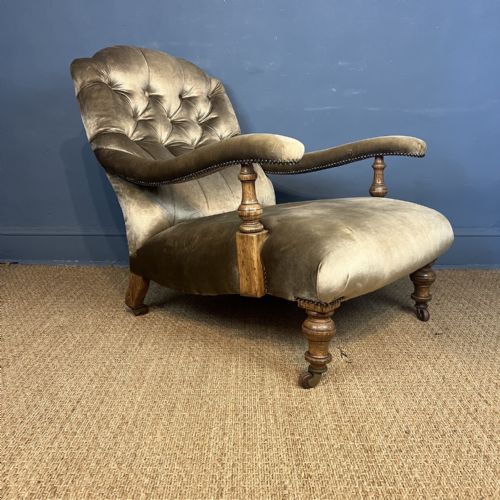
- A traditional upholstery style where depressions are formed in the padding by stitching buttons through to the frame in a grid pattern. This secures the internal filling and creates a tufted texture.
- Club chair
- A heavy, deep-seated armchair traditionally upholstered in leather or thick fabric. These comfortable seats originated in French and English clubs during the early twentieth century.
- Wing back
- An armchair with side panels or 'wings' attached to the arms and stretching up to the headrest. The design originally blocked draughts and retained heat from a fireplace.
- Cushion
- The removable squab or fixed padding resting on the seat frame. In deep seat easy chairs, these are stuffed for maximum depth and softness.
Deep Seat Easy Chair: Frequently Asked Questions
What is a deep seat easy chair?
A deep seat easy chair is a heavily upholstered nineteenth or twentieth-century armchair built with an extended seat depth designed for lounging.
These pieces emerged in Victorian and Edwardian drawing rooms, evolving into the classic club and country house styles collected today.
How do I identify a Howard style armchair?
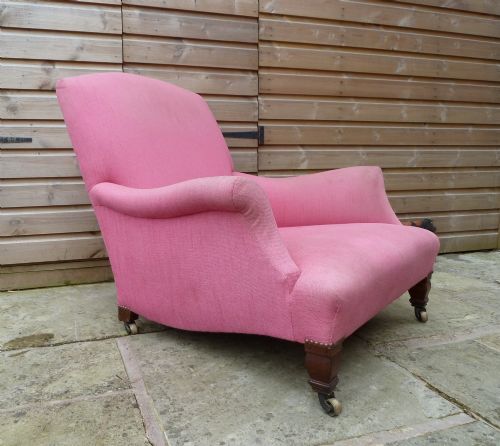
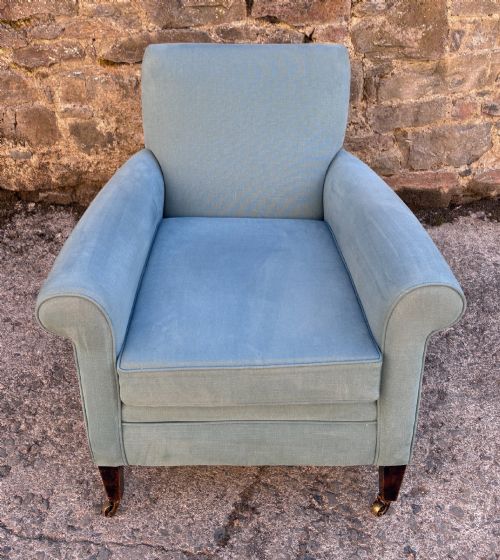
Howard style armchairs are recognised by their low-slung proportions, scrolled arms, and turned hardwood legs fitted with brass castors. Many carry specific maker stamps or bear the distinctive upholstery signatures associated with nineteenth-century London workshops.
They offer an exceptionally deep sit paired with generous padding, making them distinct from standard upright parlour chairs.
Where were these chairs used?
These chairs were traditionally placed in libraries, smoking rooms, and drawing rooms of large English country houses. They served as primary seating for reading, resting, and fireside relaxation.
Today, their generous scale suits spacious living rooms and studies where comfort is the priority.
How do I care for leather club chairs?
Leather club chairs require regular dusting with a soft cloth and periodic treatment with appropriate leather balms to prevent drying and cracking. Keeping them away from direct sunlight and heat sources preserves the natural patina.
Older leather benefits from gentle cleaning that respects the original surface finish.
Are these chairs suitable for daily use?
These sturdy armchairs were built for heavy domestic use from their inception, utilising solid hardwood frames and robust internal springs. Their durable construction makes them well-suited for everyday seating in modern homes.
Regular upkeep of the upholstery ensures they remain comfortable and supportive.