

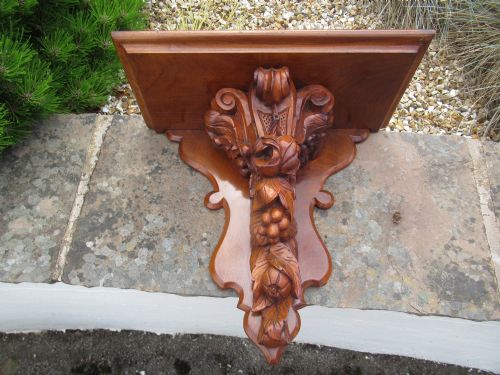


Decorative Wooden Wall Sconce
These decorative wooden wall sconce pieces combine carved timber and gilt finish to hold candles or display items upon a room's vertical surfaces.
Decorative Wooden Wall Sconce
When you search for a decorative wooden wall sconce, you encounter wall brackets, lights, and shelves shaped from timber for interior display and illumination. The selection includes twin-arm lights, mirrored brackets, and architectural shelves originating from various European and international workshops.
You are most likely to meet pieces dating from around nineteen hundred, alongside items from the nineteenth century and earlier eighteenth-century examples. Styles span Italian Baroque and Rococo revivals, Victorian walnut and gilt pieces, French provincial designs, and Anglo-Indian work.
How they were made
Carved wood forms the structural base of these pieces, utilising hardwoods and walnut shaped by hand. Craftsmen applied gesso layers over the timber to create smooth surfaces for subsequent decoration.
Gold leaf and silver gilt finishes were laid onto the prepared gesso, whilst other items received polychrome paint or fruit-wood treatments. Glass components appear in mirrored variants to reflect candle or lamplight.
Decorative Wooden Wall Sconce Retail Price Guide 2026
Typical asking prices for decorative wooden wall sconce among the pieces listed under this phrase on Sellingantiques today, from the lower quarter to the upper quarter. They describe what is for sale here now, not the wider market.
Geographic origins represented include Italian, French, and Anglo-Indian workshops, encompassing both single wall lights and matched pairs.
What varies in quality
The finesse of the hand-carved detail distinguishes finer examples from simpler production, particularly in the rendering of cherubs, architectural moulding, and foliate scrolls. Crisp execution in the timber work creates sharper definition before gilding or painting is applied.
The application and preservation of surface finishes dictate visual depth, with genuine gold leaf and layered polychrome paint retaining richer patination than later or heavier restorations. Integration of structural brackets with functional arms or display surfaces also shows varying degrees of joinery skill.
The Decorative Wooden Wall Sconce Glossary
- Gesso
- A plaster mixture applied to wood surfaces as a base for gilding or painting. This smooth coating allowed carvers to achieve fine detail before applying gold leaf.
- Giltwood
- Timber coated with gold leaf or metallic powder over a prepared ground. It provides a reflective surface that catches interior light.
- Polychrome
- Decorated in multiple colours of paint. This technique adds vivid hues to carved wooden figures and architectural motifs.
- Wall Bracket
- A supporting projection attached to a wall to hold an object or light fixture. They serve both display and functional roles in interior schemes.
Decorative Wooden Wall Sconce: Frequently Asked Questions
How were wooden wall sconces originally used?
These pieces were mounted on walls to hold candles or oil lamps, illuminating rooms before electricity became common. Many also functioned as display brackets for small ornaments or porcelain figures.
Over time, surviving examples have transitioned from primary light sources into decorative wall accents. Their design allowed them to project illumination into darker corners of period interiors.
Where should I mount a wall bracket?
Mount them at eye level or slightly above in hallways, flanking fireplaces, or beside mirrors to balance a room's proportions. Ensure the wall construction can support the weight of denser hardwoods and gilded plaster.
Consider the surrounding furniture layout so the projection of the bracket or arms does not obstruct movement through the space. Paired examples often look best arranged symmetrically.
How do I identify Italian Rococo Revival pieces?
Look for characteristic asymmetrical scrolls, shell motifs, and exuberant carved foliage typical of southern European workshops from the nineteenth and early twentieth centuries. These pieces often employ bright polychrome paint or heavy silver and gold gilding.
The carving tends to be deeply undercut, creating strong shadows and a sense of dynamic movement across the wooden surface.