





Decorative Wood Corbels
These decorative wood corbels bring carved architectural presence to an interior, offering functional support and ornate form.
Decorative Wood Corbels
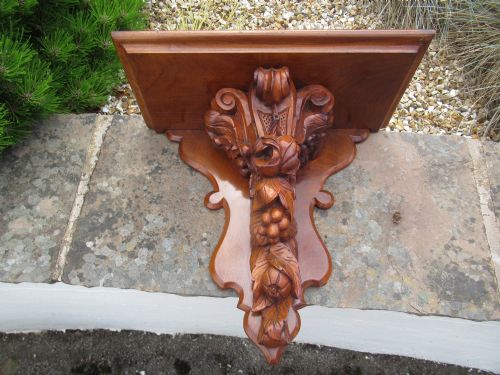
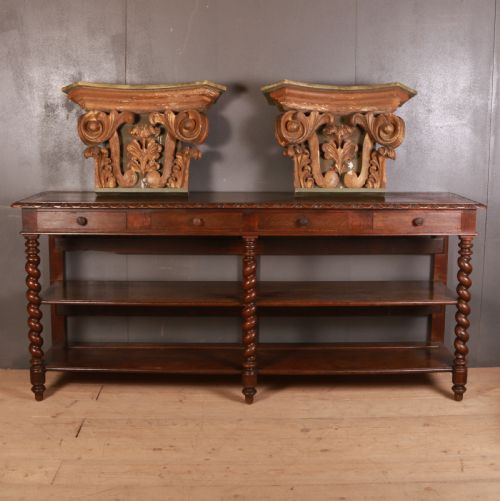
Decorative wood corbels span architectural salvage, wall brackets, and wall shelves designed to project from a vertical surface. They emerge across periods from the eighteenth century through to nineteen thirty, taking forms influenced by Rococo, Baroque, and Victorian Gothic styles.
A buyer examining these listings encounters pieces carved from walnut, red walnut, pine, and timber, alongside surfaces finished in gesso, gold leaf, giltwood, and paint. Examples range from matched pairs of cherub brackets to larger Italian capitals and Anglo-Indian designs.
How they were made
Makerly execution relies on timber carved by hand, utilising woods such as walnut and pine to achieve intricate relief work. Workshops frequently shaped these structural supports from solid timber before applying surface treatments.
Giltwood and gold leaf finishes applied over gesso create luminous decorative surfaces on specific brackets. Ormolu mounts and ebonised details appear on select nineteenth-century pieces, combining metalwork with carved timber.
Decorative Wood Corbels Retail Price Guide 2026
Typical asking prices for decorative wood corbels among the pieces listed under this phrase on Sellingantiques today, from the lower quarter to the upper quarter. They describe what is for sale here now, not the wider market.
The inventory records wall brackets, architectural salvage, and wall shelves reflecting Victorian, Rococo, and Baroque Revival styles.
What varies in quality
Depth and crispness of the carving distinguish finer decorative wood corbels from simpler productions, with superior examples displaying sharply defined motifs like cherubs or acanthus scrolls. The choice of primary timber, such as red walnut or solid pine, influences the structural integrity and visual weight of the bracket.
The sophistication of the surface finish plays a major role, where original gilding, gesso work, or historic paint layers elevate a piece above later or simpler interventions. Proportion and scale also dictate quality, particularly in large architectural salvage elements like Italian capitals.
Henri Dasson
The Decorative Wood Corbels Glossary
- Corbel
- A structural member projecting from a wall to carry a weight, usually designed with decorative scrollwork or carved motifs. In practice, these items function as architectural brackets or wall shelves.
- Giltwood
- Wood that has been covered with gold leaf or powder using a gesso base. This finish provides a reflective, ornate surface typical of Baroque and Rococo revival pieces.
- Gesso
- A plaster mix applied to wood surfaces as a preparation for gilding or painting. It allows carvers to achieve smooth details beneath gold leaf layers.
- Ormolu
- Gilded bronze used for decorative mounts and accents on furniture and brackets. It often accompanies ebonised timber in nineteenth-century decorative arts.
- Capital
- The topmost member of a column or pilaster, often salvaged and utilised as a decorative wall bracket. These architectural elements display classical carving styles.
Decorative Wood Corbels: Frequently Asked Questions
What is a decorative wood corbel?
A decorative wood corbel is a projecting architectural bracket designed to support weight or display objects on a wall.
These pieces range from functional architectural salvage to ornate wall shelves carved in various historical styles.
How were these wall brackets used?
Historically, these items served as structural supports beneath beams, mantels, or cornices, and as decorative display shelves for ornaments.
Today, they are mounted on interior walls primarily as decorative accents or small display brackets.
How do I identify the period of a corbel?
Dating relies on stylistic clues such as Baroque scrollwork, Victorian Gothic detailing, or Georgian proportions, alongside the choice of timber.
Surface preparation methods, including historic gesso and gold leaf applications, also offer strong indicators of age.
What materials are common in these pieces?
Common materials include solid hardwoods like walnut and red walnut, as well as softer timbers such as pine.
Finishes frequently incorporate gold leaf, giltwood, gesso, and paint, occasionally combined with ormolu mounts.