




Decorative Wood Clock
These decorative wood clock pieces bring warmth and striking craftsmanship to a room, offering a functional centrepiece shaped by centuries of varied design.
Decorative Wood Clock
A decorative wood clock encompasses timepieces and cases shaped from timber, ranging from mahogany and burr yew to ebonised wood and giltwood surfaces. Buyers searching for a decorative wood clock typically encounter mantel clocks, wall clocks, cartel clocks, and bracket clocks spanning periods from the Georgian era through the Victorian period and into the twentieth century.
The selection includes specific forms such as picture clocks, clock cases, and desktop boxes fitted with timepieces, alongside related items like display domes and wall brackets. Pieces range from French Neo-Classical and Louis XIV Revival styles to Edwardian and early twentieth-century interpretations.
How they were made
Makers utilised dense timbers such as mahogany and burr yew, frequently applying ebonised finishes, faux tortoiseshell, or intricate hand carving. Giltwood and ormolu mounts added metallic contrast to the timber structures.
Dials often incorporated enamel, while glass protected delicate faces and movements. Complex mechanisms, including fusée and striking movements, were housed within these wooden and gilt cases.
Decorative Wood Clock Retail Price Guide 2026
Typical asking prices for decorative wood clock among the pieces listed under this phrase on Sellingantiques today, from the lower quarter to the upper quarter. They describe what is for sale here now, not the wider market.
Listings feature periods spanning from the Georgian era through the Victorian period, Edwardian times, and into the mid-twentieth century.
What varies in quality
Quality reveals itself in the crispness of hand carving, the depth of the giltwood or ormolu mounts, and the selection of timber veneers such as burr yew or mahogany. Refined examples display careful integration between the wooden housing and the clock movement.
The sophistication of the movement, from standard timepieces to complex striking or fusée mechanisms, distinguishes standard domestic pieces from workshop-attributed items.
WETTERSTRANDS·Winterhalder & Hofmeier·Perivale of England·Henri Dasson
The Decorative Wood Clock Glossary
- Cartel clock
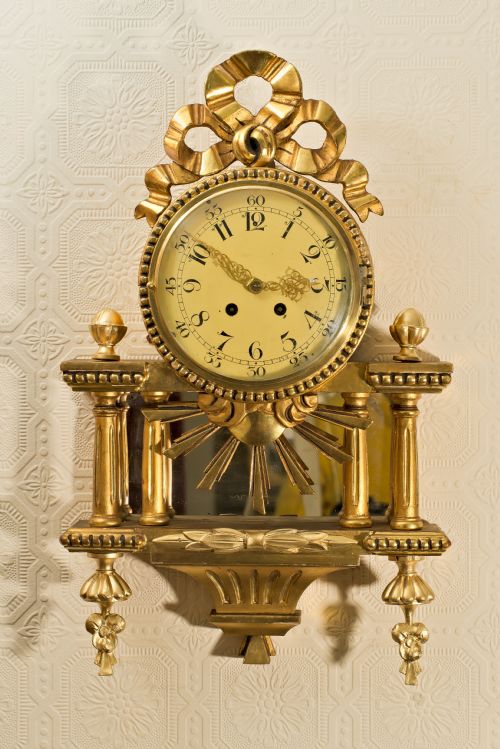
- A wall clock enclosed in an ornate frame, commonly made of giltwood or metal, designed to be mounted directly onto a wall.
- Bracket clock
- A portable table clock historically designed to sit upon a matching wall bracket or shelf.
- Fusée
- A conical pulley used in clock movements to ensure even power delivery as the mainspring unwinds.
- Ormolu
- Gilded bronze used for decorative mounts and ornaments on furniture and clock cases.
- Enamel
- A glassy substance fused to metal dials to provide a smooth, durable surface for numerals.
Decorative Wood Clock: Frequently Asked Questions
What is a bracket clock?
A bracket clock is a portable timepiece originally designed to rest upon a wooden wall bracket rather than a mantelpiece. These clocks are frequently housed in elegant wooden cases with brass or ormolu mounts.
Many examples feature complex mechanical movements such as fusée systems, reflecting high standards of period horology.
How do I identify the period of a wooden clock?
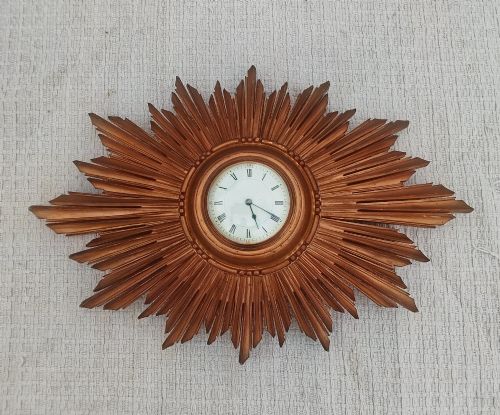
Dating relies on stylistic clues, timber choice, and construction methods. Georgian and Victorian pieces often display heavier proportions and rich mahogany, while twentieth-century examples lean toward giltwood sunburst or starburst designs.
Maker signatures on the dial or movement and specific revival styles like Louis XIV also help pinpoint the era of manufacture.
Where should I place a wall clock?
Cartel and wall clocks suit prominent spaces where their frames, such as giltwood or carved timber, can be appreciated as focal points. Ensure the wall structure can support the weight of timber and glass housings.
Keep them away from direct heat sources and damp environments to protect the wood and internal metal movements.
What maintenance do antique clocks need?
Antique clocks require gentle handling and periodic professional servicing of their mechanical movements to function accurately. The wooden cases benefit from occasional dusting with a soft cloth without harsh chemical polishes.
Ensuring the clock is placed on a level surface helps maintain the correct beat of the pendulum.