



Decorative Wine Holders
These decorative wine holders span the nineteenth and twentieth centuries, offering sturdy metal and timber forms designed to hold bottles at the table.
Decorative Wine Holders
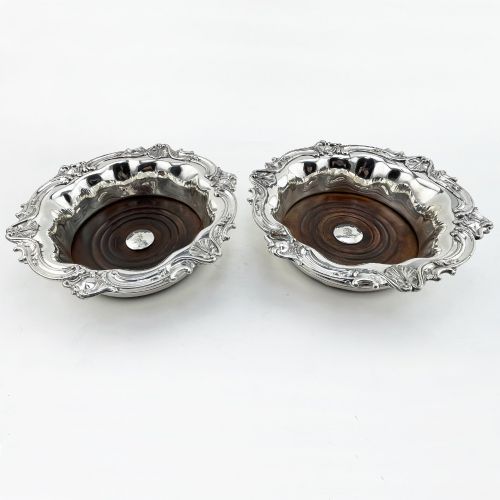
When you search for decorative wine holders, you encounter a selection of nineteenth and twentieth century pieces designed for table service and interior display. The items appearing here range from Victorian silver plated coasters and Edwardian bottle holders to twin bottle carriers from the late nineteenth century.
The forms span multiple stylistic traditions, including Regency, Edwardian, Art Nouveau, and Renaissance Revival designs. Alongside dedicated wine coasters and bottle holders, the category encompasses related vessels like tole grocery hoppers with inset wine holders and champagne magnum buckets.
Materials divide broadly between metalwork and coopered timber constructions. Brass, copper, and silver plate predominate, complemented by mahogany, oak, and painted toleware examples originating from English, Dutch, and continental workshops.
How they were made
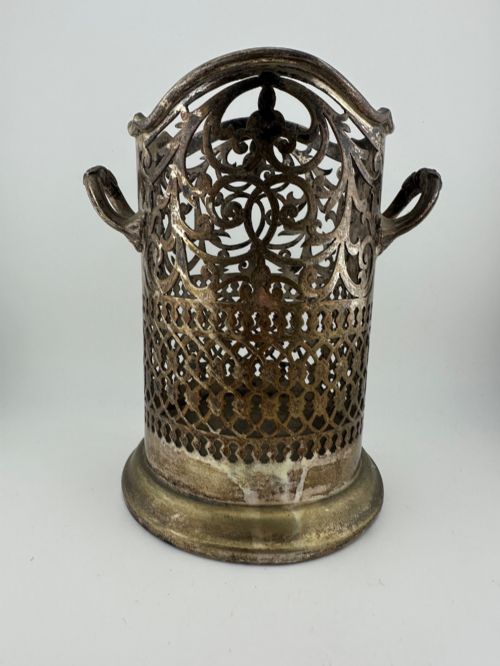
Metal vessels in this group utilise casting, embossing, and piercing techniques to achieve decorative pierced walls and solid rims. Old Sheffield plate, electroplated nickel silver, and standard silver plate provide the reflective surfaces seen across nineteenth century coasters and twin bottle holders.
Timber examples employ traditional coopered construction, assembling individual staves of oak, mahogany, or walnut into cylindrical planters and bottle holders. Metal rims, brass mounts, and liners secure the structural integrity of these wooden vessels.
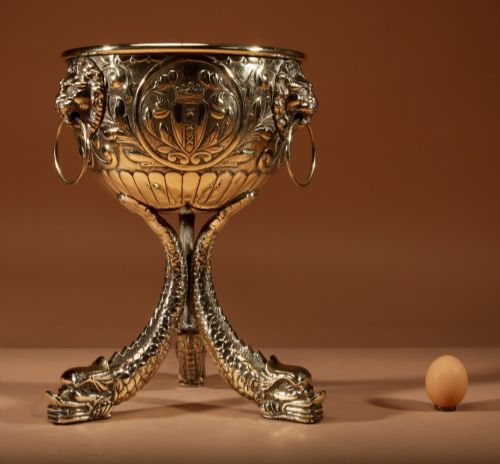
Toleware pieces involve painted sheet metal fabrication, seen in items such as grocery hoppers adapted with inset bottle holders. Dinanderie work appears in embossed and cast brass jardiniere forms, showing distinct surface patination.
Decorative Wine Holders Retail Price Guide 2026
Typical asking prices for decorative wine holders among the pieces listed under this phrase on Sellingantiques today, from the lower quarter to the upper quarter. They describe what is for sale here now, not the wider market.
Listings combine metalwork in brass, silver plate, and copper with coopered mahogany and oak, spanning the nineteenth and twentieth centuries.
What varies in quality
Quality in these pieces depends upon the execution of the metalwork and the precision of the timber joinery. Finer examples display crisp piercing, detailed embossing, and well-fitted metal rims rather than simple stamped or cast assembly.
The condition of the silver plating and the depth of the metal patination distinguish superior items. Thick plating that survives intact without excessive base metal exposure indicates better original manufacture and careful handling over time.
Timber construction quality shows in the tight fitting of coopered staves and the stability of the grain in mahogany and oak pieces. Better examples maintain sound structural joints and retain their original liners or interior mounts.
Mappin & Webb
The Decorative Wine Holders Glossary
- Silver plate
- A layer of silver bonded to a base metal such as copper or nickel silver. This technique allowed manufacturers to produce affordable tableware with the appearance of solid silver.
- Coopered
- A method of construction using curved wooden staves bound together with metal or wood bands. This technique was standard for barrels, buckets, and cylindrical wooden planters.
- Dinanderie
- A medieval term revived for ornamental brass and copper work involving casting, hammering, and embossing. Pieces made this way display rich surface textures and patination.
- Old Sheffield plate
- An early form of plated metal created by fusing a sheet of silver to a copper ingot before rolling them together. This process produces a distinct edge where the copper base shows through.
Decorative Wine Holders: Frequently Asked Questions
What materials are used for decorative wine holders?
The listings show a reliance on metals including brass, copper, silver plate, and electroplated nickel silver. Timber versions utilise coopered mahogany, oak, and walnut, while painted toleware provides another distinct surface finish.
These materials reflect the decorative preferences of the Victorian, Edwardian, and twentieth century periods, combining functional strength with ornate surface treatments.
How do I identify the period of a wine holder?
Dating relies on stylistic markers such as Art Nouveau floral lines, Victorian pierced brass work, or Regency proportions. Marks on silver plated items also help narrow down the production era.
Material choices, manufacturing techniques, and construction methods further assist in placing a piece within the nineteenth or twentieth century timeline.
How were these holders used historically?
These vessels served to present and contain wine bottles and champagne magnums at the dining table. Coasters protected table surfaces from moisture, while carriers facilitated passing bottles between guests.
Alternative domestic items like tole grocery hoppers occasionally incorporated bottle holders for dual storage purposes in period interiors.
Are wooden wine holders constructed differently from metal ones?
Wooden examples rely on coopered construction, joining curved timber staves with metal rims or bands similar to barrel making. Metal holders utilise casting, piercing, and silver plating techniques on brass, copper, or base metal.
Both construction styles achieve the cylindrical forms necessary to securely house standard wine bottles and larger champagne magnums.