



Decorative Wall Consoles
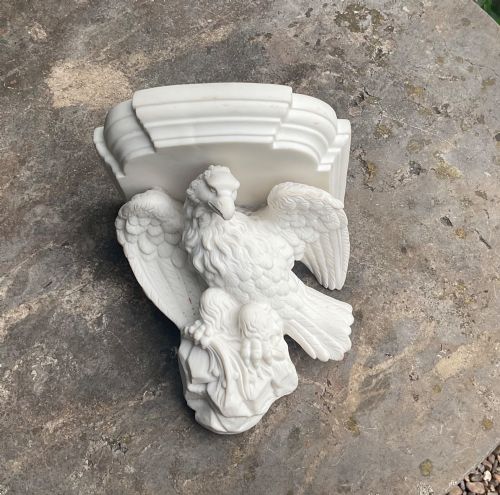
These decorative wall consoles bring architectural presence to a room, offering sculpted surfaces for display that command attention above any standard shelf.
Decorative Wall Consoles
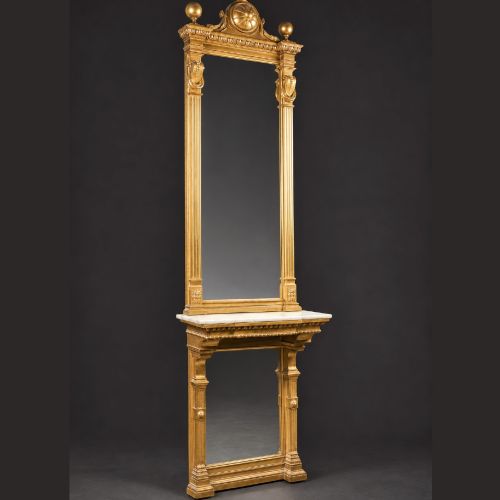
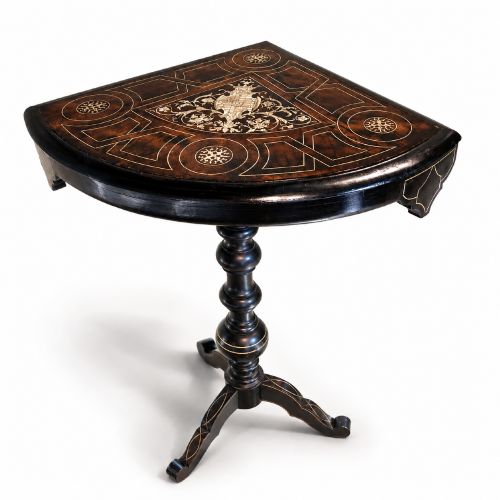
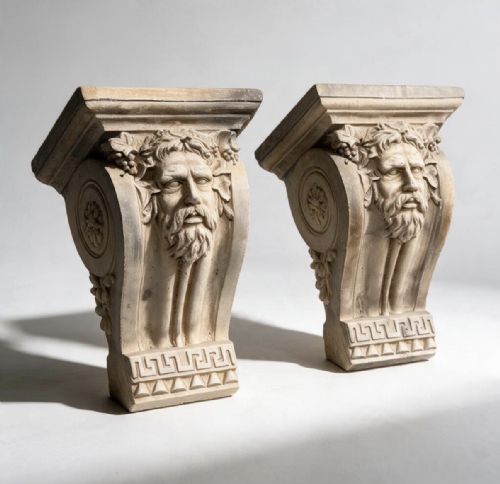
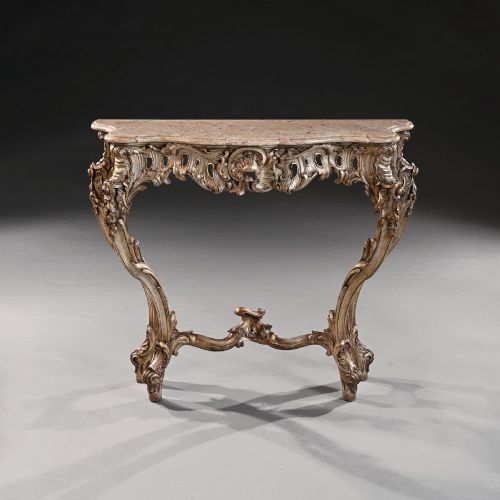
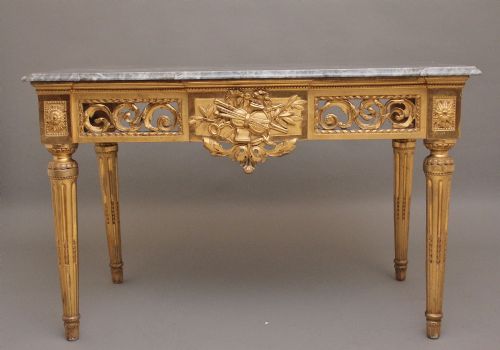
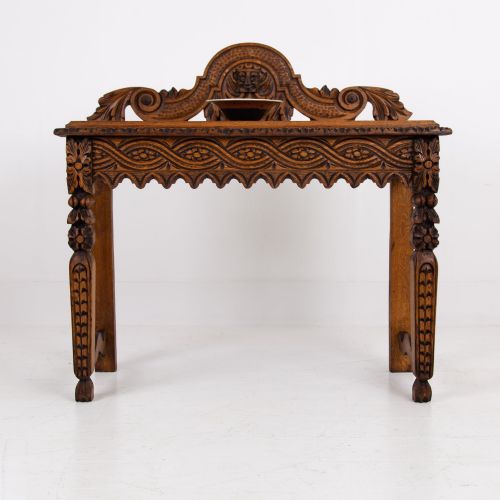
Decorative wall consoles encompass a diverse range of wall-mounted supports, brackets, and console tables designed to project from a surface. When exploring decorative wall consoles, you encounter forms spanning from modest carved brackets to substantial console tables with marble tops.
The pieces emerge principally from the eighteenth and nineteenth centuries, taking stylistic cues from Baroque, Rococo, and Neoclassical revivals. French, Italian, and English workshops dominate the selection, utilising architectural elements such as corbels and piers.
Smaller wall brackets share space with larger console mirrors and side tables fitted with shelves. This variety allows a buyer to find either a focal table or a modest display mount for smaller objects.
How they were made
Carved wood provides the structural backbone for many pieces, utilising timbers such as oak, walnut, and red walnut. Artisans applied gesso over carved wooden foundations to prepare intricate surface details for gilding.
Giltwood and gold leaf finishes appear frequently, often paired with hand painting or ebonised treatments to create contrast. Ormolu mounts and ceramic elements add further decorative weight to specific brackets and tables.
Table versions frequently incorporate shaped marble or specimen marble tops, requiring precise stone masonry to fit wooden bases. Glass and mirrors integrate into console mirrors and pier tables, held by carved wooden frames.
Decorative Wall Consoles Retail Price Guide 2026
Typical asking prices for decorative wall consoles among the pieces listed under this phrase on Sellingantiques today, from the lower quarter to the upper quarter. They describe what is for sale here now, not the wider market.
Cherubs peer from several nineteenth-century wall brackets, keeping a permanent wooden watch over your hallway.
What varies in quality
Materials dictate upper tiers of quality, particularly the inclusion of heavy specimen marble tops, fire-gilded ormolu, and dense hardwoods like burr walnut. Lesser pieces rely on simpler plaster mouldings or elementary pine frames painted to mimic richer materials.
Construction methods reveal the maker's hand, from sturdy traditional joinery on eighteenth-century architectural brackets to simpler assembly on later twentieth-century wall shelves. Attribution to known makers elevates the standing of a piece considerably.
Maple and Co·Henri Dasson
The Decorative Wall Consoles Glossary
- Giltwood
- Wood that has been coated with gold leaf or gold paint. This finish creates a reflective, luminous surface prized in Baroque and Rococo designs.
- Corbel
- A structural bracket projecting from a wall to support a weight. In decorative pieces, they often serve purely ornamental display functions.
- Ormolu
- Gilded bronze used for decorative mounts and ornaments. It adds metallic contrast to wood and marble surfaces.
- Pier Table
- A table designed to stand against a wall, typically between two windows beneath a pier mirror. They often feature slim proportions to fit narrow spaces.
- Specimen Marble
- Marble composed of various coloured fragments arranged in geometric or mosaic patterns. This material elevates the decorative value of a console top.
Decorative Wall Consoles: Frequently Asked Questions
How do I secure a heavy wall console?
Wall-mounted consoles and large brackets require fixing directly into structural masonry or solid timber studs using appropriate wall anchors.
Heavier marble-topped console tables often combine wall fixings with floor supports to ensure stability.
Where should I hang a wall bracket?
These brackets suit entryways, hallways, or living rooms where they act as prominent display ledges for porcelain, small sculptures, or clocks.
Placing them at eye level or slightly above allows the carved details and supported objects to command the space effectively.
How do I distinguish eighteenth-century pieces?
Earlier eighteenth-century items exhibit hand-carved details in dense woods, often showing natural tool marks and heavier architectural proportions.
Revival pieces from later centuries frequently adopt these historic styles but employ machine assistance or differing construction assembly.
Can console tables stand without wall support?
Some console tables feature front legs that bear the primary weight while requiring a discreet wall anchor to prevent tipping.
Others rely entirely on wall brackets and lack floor legs, making proper wall attachment essential for their survival.