

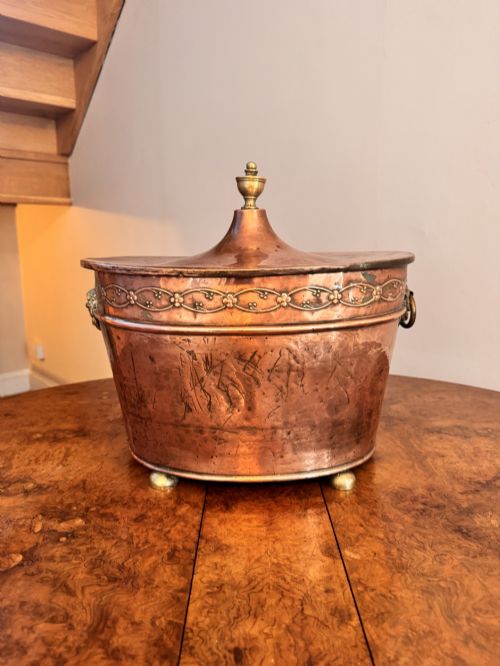


Decorative Victorian Coal Box
These decorative victorian coal box examples are solid hearth storage essentials that bring period craft into modern rooms.
Decorative Victorian Coal Box
A decorative victorian coal box is a practical fireside container built to hold fuel while enhancing the room's interior. You will find timber bodies, metal bins, and lidded scuttles designed for heavy daily use beside the hearth.
The pieces listed on this page span the Victorian and Edwardian eras, alongside related nineteenth-century forms. Walnut, mahogany, copper, and brass appear frequently alongside specialised purdoniums and double-lidded buckets.
Makers often applied marquetry inlay, mother of pearl detail, or wrought iron mounts to turn a utilitarian container into a decorative statement. These functional objects range from simple wooden bins to elaborate Arts and Crafts copper receivers.
How they were made
Cabinetmakers utilised timber like walnut and mahogany for the main bodies, often adding marquetry inlay or mother of pearl detail to the wooden surfaces. These materials provided a sturdy structure that could withstand the weight of heavy coal.
Metalworkers shaped copper, brass, iron, and black metal into linings, rims, and entire bins. Wrought iron and brass mountings added both structural reinforcement and decorative contrast to the timber and metal bodies.
Decorative Victorian Coal Box Retail Price Guide 2026
Typical asking prices for decorative victorian coal box among the pieces listed under this phrase on Sellingantiques today, from the lower quarter to the upper quarter. They describe what is for sale here now, not the wider market.
Materials recorded on this site include brass, mahogany, metal, copper, walnut, wrought iron, marquetry inlay, and mother of pearl.
What varies in quality
Quality rests in the choice of materials and the skill of the surface decoration, from simple timber boxes to elaborate inlaid designs. Better examples feature substantial brass mounts, careful marquetry, or detailed metalworking.
The integrity of the construction distinguishes ordinary utilitarian containers from finer pieces intended for formal reception rooms. Heavier gauges of metal and well-fitted lids indicate a higher standard of original manufacture.
The Decorative Victorian Coal Box Glossary
- Purdonium
- A specialised type of coal box featuring a sloping front and a shovel compartment at the back. This form became popular in wealthier Victorian households for tidier fuel handling.
- Marquetry Inlay
- The art of applying pieces of veneer to a structure to form decorative patterns. Craftsmen used various woods to create contrasting pictorial designs on the lids and fronts.
- Mother of Pearl
- An iridescent inner layer of a shell used for small inlaid decorative details. Artisans set these pieces into the timber surfaces to catch the candlelight by the hearth.
- Arts and Crafts
- A design movement emphasising handcraftsmanship and simple forms over mass production. Pieces from this tradition often display hammered copper surfaces and wrought ironwork.
- Tole
- Painted or lacquered tinware used for domestic containers. These items brought durable colour and metallic sheen into nineteenth-century domestic interiors.
Decorative Victorian Coal Box: Frequently Asked Questions
What is a purdonium?
A purdonium is a specialised lidded container designed specifically for storing coal by the fireplace. It typically includes an interior metal liner and a built-in compartment for a small shovel.
These boxes allowed Victorian households to keep fuel tidy and accessible in the main living spaces without spilling dust on the carpet.
How do I clean a brass and copper coal box?
Maintenance depends entirely on the metal finish and whether the original lacquer remains intact. Gentle dusting with a dry cloth keeps most surfaces safe from harm.
Avoid harsh chemical dips that strip away age and character. A soft cloth is usually enough for daily care.
Can I still use these for coal?
Many of these pieces retain their original metal liners and remain strong enough to hold logs or coal today. The internal metal bucket protects the outer timber or decoration from direct dirt and moisture.
Some buyers prefer to use them as magazine racks or general fireside storage rather than for fuel.
How do I date a coal box?
Dating relies on observing the materials, construction methods, and stylistic cues present in the piece. Victorian examples often feature heavy brass mountings and rich walnut, while Edwardian versions frequently showcase lighter inlaid mahogany.
Arts and Crafts pieces stand out through their use of hand-hammered copper and exposed wrought iron details.