



Decorative Victorian Caddy
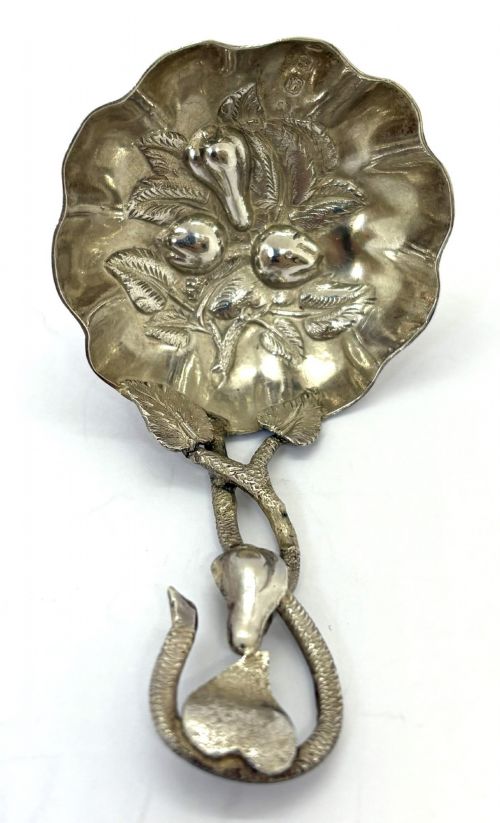
These decorative victorian caddy pieces are nineteenth-century receptacles for leaf tea, fashioned from figured woods and metals to sit upon the parlour table.
Decorative Victorian Caddy
A decorative victorian caddy is a small chest or canister designed originally to store dry tea leaves away from damp and odours. The examples found here span the nineteenth century, including pieces from the Victorian era alongside Regency and later variations.
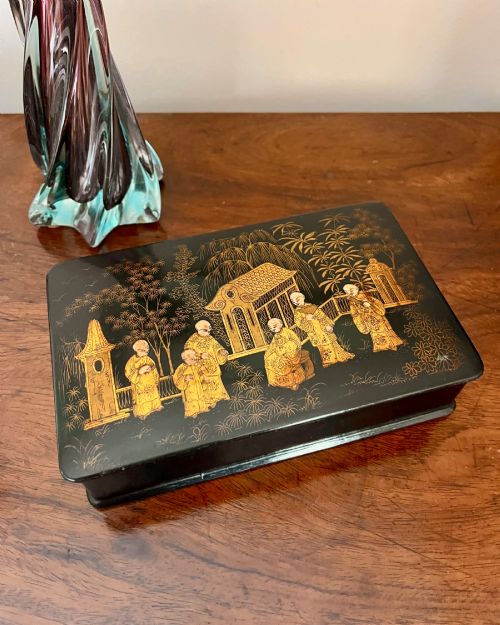
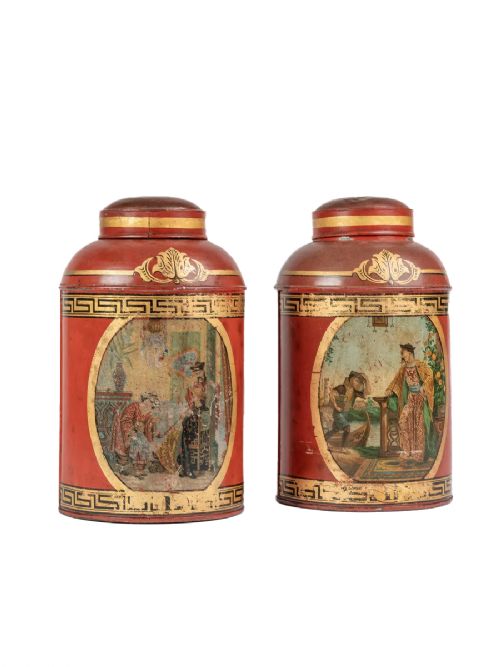
Makers and manufacturers produced these vessels in various regional styles, encompassing Chinoiserie decoration, Anglo-Indian construction, and Tunbridge Ware inlay. Buyers also encounter converted items such as tea canister table lamps and associated sewing boxes.
How They Were Made
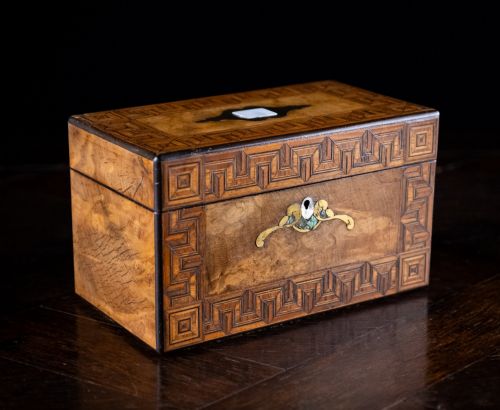
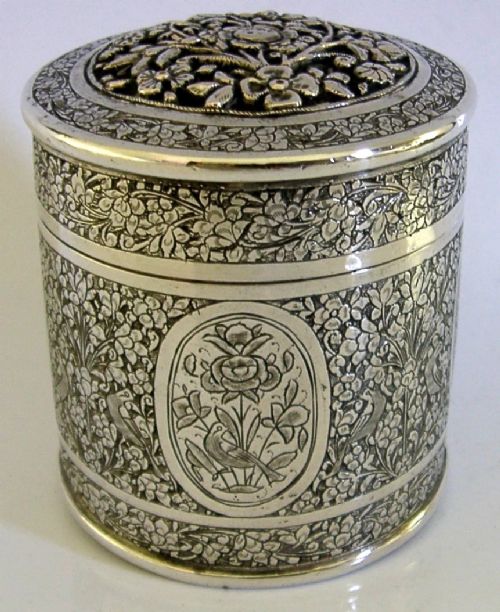
Cabinetmakers constructed the wooden caddies using dense timbers such as rosewood, walnut, and coromandel, often applying intricate parquetry, marquetry, and Tunbridge Ware mosaic patterns to the exterior surfaces. Metal versions utilised brass mounting, silver plating, and solid silver construction, sometimes shaped with bombe bodies or detailed engraving.
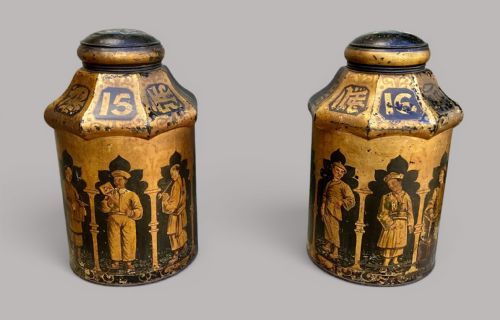
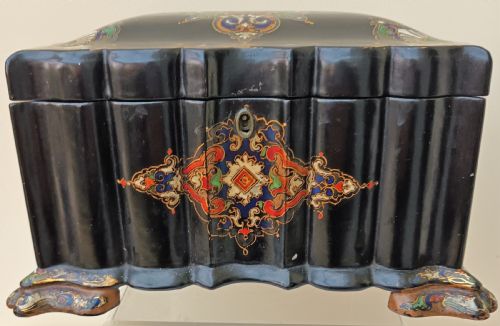
Surface ornamentation relied heavily on hand-applied lacquer, paint, and gold leaf, particularly in Chinoiserie and toleware pieces featuring oriental motifs. Artisans also employed mother-of-pearl inlay, boxwood stringing, and tortoiseshell veneer alongside papier-mâché moulding to achieve highly decorative finishes.
Listings for a decorative victorian caddy frequently feature rosewood, walnut, and coromandel timbers combined with brass hardware and Tunbridge Ware inlay.
What Varies in Quality
The standard of a decorative victorian caddy depends upon the precision of its timber selection and the complexity of its inlay work. Pieces featuring tightly figured burr walnut, elaborate Tunbridge Ware, or intricate brass banding represent the upper tier of nineteenth-century craftsmanship.
Construction methods also dictate quality, visible in the snugness of lid closures, the integrity of internal foil linings or wooden compartments, and the refinement of cast brass feet and handles. Simpler painted toleware canisters or plain mahogany boxes sit lower down the scale than multi-layered marquetry and boullework examples.
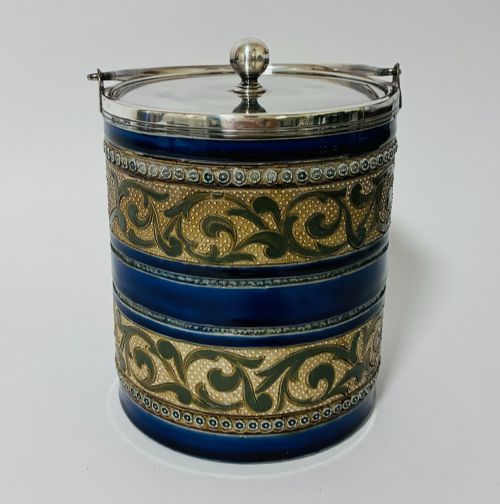
Tahan of Paris·Doulton Lambeth
The Decorative Victorian Caddy Glossary
- Tea Caddy
- A box or container made to hold loose tea leaves. They typically feature internal compartments and lids to preserve the aroma of the contents.
- Tunbridge Ware
- Small wooden objects decorated with mosaic patterns made from thousands of tiny tinted wood blocks. This meticulous technique was centred in Kent during the nineteenth century.
- Boullework
- An elaborate form of marquetry consisting of tortoiseshell and brass inlaid in contrasting patterns. It takes its name from André-Charles Boulle, a master cabinetmaker to Louis XIV.
- Chinoiserie
- European decorative art imitating Chinese artistic styles. It often appears on nineteenth-century lacquerware and painted metal canisters.
- Coromandel
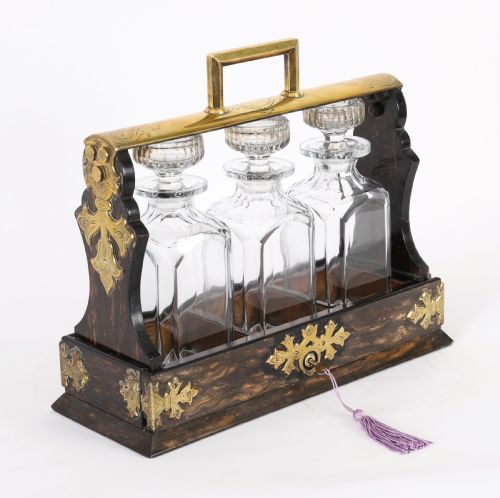
- A dense, heavy cabinet wood imported from Asia, valued for its dark brown colour and dramatic contrasting grain. It frequently forms the primary carcass of high-status boxes.
Decorative Victorian Caddy: Frequently Asked Questions
What is a decorative victorian caddy used for?
These boxes were originally kept in the parlour or dining room to store expensive dry tea leaves securely under lock and key. Servants brought the caddy to the table so the mistress of the house could measure out the tea for each pot.
Today, owners utilise them as decorative objects on sideboards or as receptacles for small keepsakes, jewellery, and trinkets. Their compartmentalised interiors remain practical for organising modern desk or vanity items.
How do I tell different nineteenth-century wood types apart?
Rosewood displays a dark, heavily grained reddish-brown appearance with distinct black streaks, while walnut exhibits a lighter chocolate tone with rich figure lines. Coromandel is heavier and darker still, showing striking golden-yellow striations against a near-black background.
Burr timber varieties show swirling, knotty grain patterns that create shimmering movement across the surface. Boxwood and pollard oak offer lighter, contrasting tones frequently utilised for stringing and decorative inlay borders.
What is Tunbridge Ware inlay?
Tunbridge Ware is a specialised form of mosaic woodwork where artisans glued together tiny prisms of naturally coloured woods to form pictorial or geometric mosaics. These microscopic tiles were then sliced and applied to the exterior surfaces of boxes and tea caddies.
Common motifs include butterflies, flowers, and architectural views like local castles. The resulting patterns require close inspection to appreciate the sheer number of individual wood pieces involved.
How should I care for a wooden tea caddy?
Keep wooden and lacquered caddies away from direct sunlight and radiators to prevent the dry heat from cracking the timbers or lifting the delicate veneers. Maintaining a stable room humidity protects both the wood and any mother-of-pearl or brass inlay.
Dust the exterior gently with a dry, soft cloth rather than using liquid polishes that might seep into old cracks or damage historic surface finishes. Wax can be applied very sparingly to bare wood surfaces if they appear dry.