



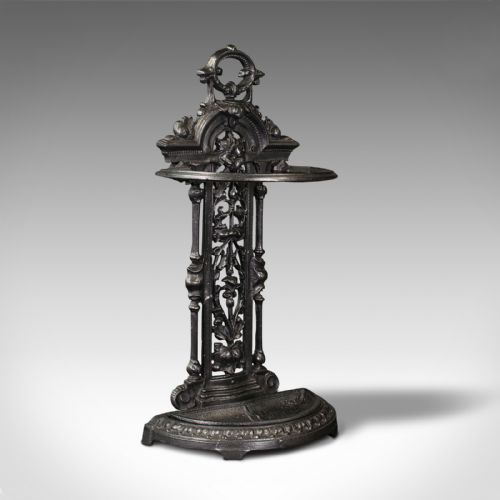
Decorative Umbrella Rack
A decorative umbrella rack brings useful hallway order with strong metalwork and fitted trays, holding heavy walking sticks and wet gear right where guests arrive.
Decorative Umbrella Rack
A decorative umbrella rack serves as a practical hallway furnishing designed to hold walking sticks, canes, and wet umbrellas. These pieces appear across Victorian, Edwardian, and mid-century periods, adopting forms from simple upright frames to combined coat and hat stands.
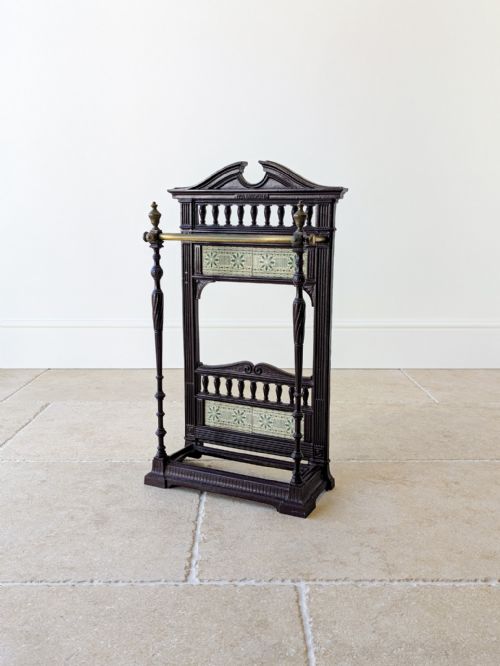
The selections on this page span several decades of production, incorporating styles such as the Aesthetic Movement, Gothic Revival, and Art Nouveau. Most examples function primarily as stick and umbrella stands, utilising sturdy footprints to support heavy metal and wood structures.
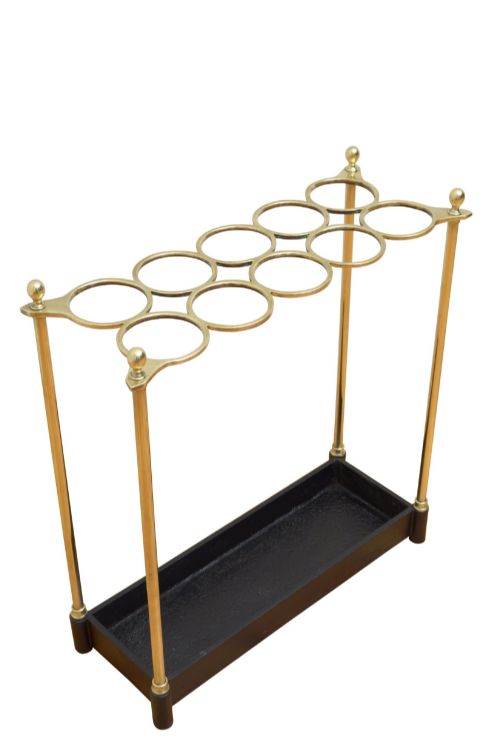
Halls and entranceways remain the traditional setting for these items, where open framework or cast bowls contain moisture from the outdoors. Buyers will encounter varied silhouettes, ranging from brass cylinders to elaborate foundry castings shaped like crossed pikes or mythological figures.
Materials and construction methods
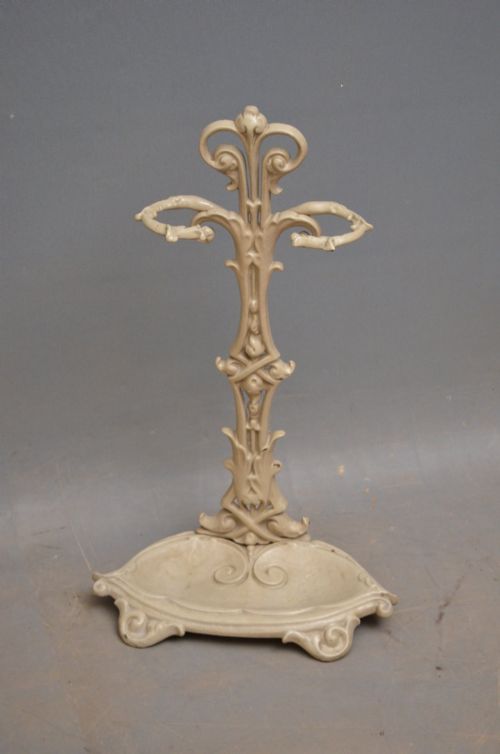
Foundries produced many robust examples using cast iron, often working in designated styles associated with makers such as Coalbrookdale. Molten metal poured into moulds created intricate openwork panels, botanical motifs, and structural frames designed to bear heavy loads without tipping.
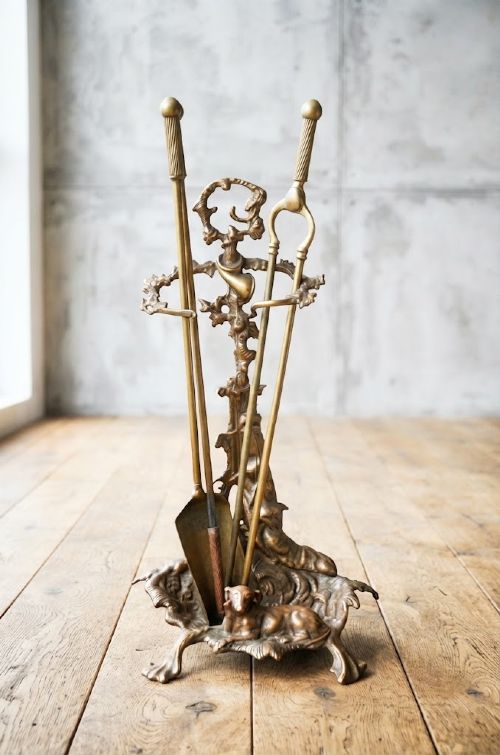
Brass formed another primary material, shaped into large cylindrical vessels, decorative ball finials, and companion stands depicting hunting scenes. Artisans also utilised ebonised wood and applied paint finishes to create contrasting textures within late nineteenth-century entrance furniture.
Decorative Umbrella Rack Retail Price Guide 2026
Typical asking prices for decorative umbrella rack among the pieces listed under this phrase on Sellingantiques today, from the lower quarter to the upper quarter. They describe what is for sale here now, not the wider market.
Current listings feature cast iron, brass, and ebonised wood across Victorian, Edwardian, and Art Nouveau styles.
Distinctions in execution and design
Quality rests upon the crispness of the casting and the ambition of the design, distinguishing standard commercial production from foundry work with sculptural depth. Pieces formed with detailed mythological figures or complex architectural motifs show superior craftsmanship compared to plain utilitarian frames.
The integrity of the original drip tray and the preservation of surface finishes also separate standard examples from finer survivals. Integrated components, substantial weight, and well-defined patination on brass and iron elements indicate higher standards of period manufacture.
Coalbrookdale
The Decorative Umbrella Rack Glossary
- Aesthetic Movement
- A late nineteenth-century design style emphasising visual beauty over narrative content, often featuring stylised plant forms and Japanese-inspired motifs. Pieces from this movement prioritize artistic arrangement.
- Coalbrookdale
- A prominent English ironworks known for producing sophisticated cast iron furnishings and architectural components. Foundry items bearing this association display high technical skill in metal casting.
- Ebonised wood
- Timber treated with a chemical stain or black finish to imitate expensive ebony wood. This technique creates a dark, uniform surface frequently used on Victorian hall stands.
- Gothic Revival
- An architectural and decorative style drawing inspiration from medieval forms, incorporating pointed arches and heavy vertical lines. This aesthetic appears frequently on nineteenth-century ironwork stands.
- Drip tray
- A removable metal or ceramic base positioned beneath the rack to catch moisture from wet umbrellas. This component protects hallway flooring from water damage.
Decorative Umbrella Rack: Frequently Asked Questions
Where should an umbrella rack go?
These pieces traditionally stand in entrance halls, porches, or boot rooms where wet coats and walking gear accumulate upon arrival.
Positioning the stand near the primary entryway allows visitors to deposit umbrellas immediately upon stepping inside.
How do I protect my floor?
Most stands include an integrated metal or ceramic base designed to catch water dripping from wet canopies.
Checking that the original drip tray remains intact ensures floors stay dry during heavy weather.
Can these hold heavy walking sticks?
Cast iron and brass construction provides the substantial weight needed to support heavy wooden canes and metal-tipped shafts without tipping over.
Sturdy frames handle multiple walking sticks alongside standard umbrellas without straining the structure.
How do I date an iron stand?
Stylistic clues such as Aesthetic Movement motifs or Gothic Revival arches help assign pieces to Victorian or Edwardian production periods.
Foundry marks and registration numbers cast into the metal also offer direct evidence of the manufacturing date.