






Decorative Travel Clock
These decorative travel clock examples are portable timekeepers housed in brass, glass, and porcelain cases, prized by collectors for their intricate French mechanical and decorative artistry.
Decorative Travel Clock
When you search for a decorative travel clock, you are looking at portable timepieces designed for journeys, most commonly represented here by Carriage Clocks from the Victorian era and the late nineteenth century. These pieces originate predominantly from French workshops and British Victorian makers, taking the form of upright glass-sided cases equipped with carrying handles.
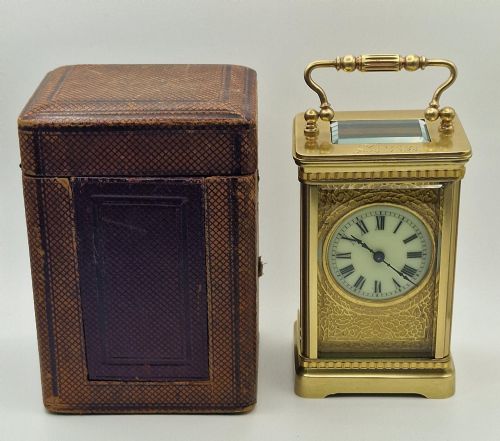
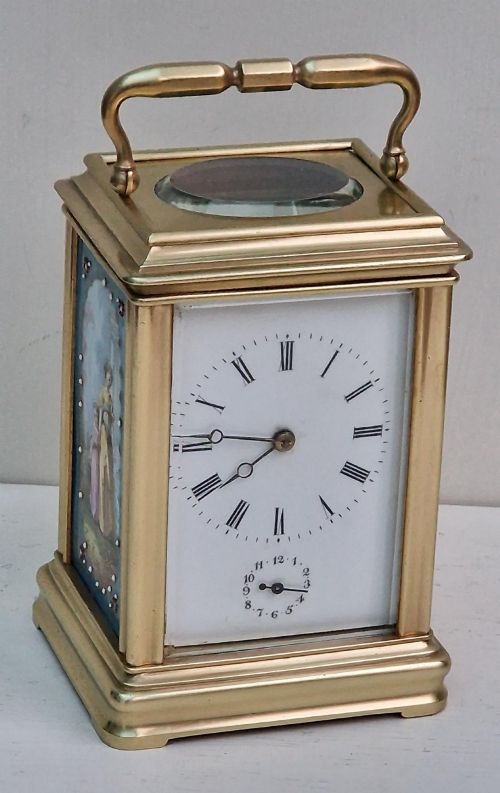
The assortment you encounter on this page spans simple brass framed designs to elaborate pieces decorated with enamel paintings, porcelain panels, and intricate frets and columns. Certain examples include repeater mechanisms and double sided dials, reflecting the diverse utility and aesthetic ambition of nineteenth century horology.
How they were made
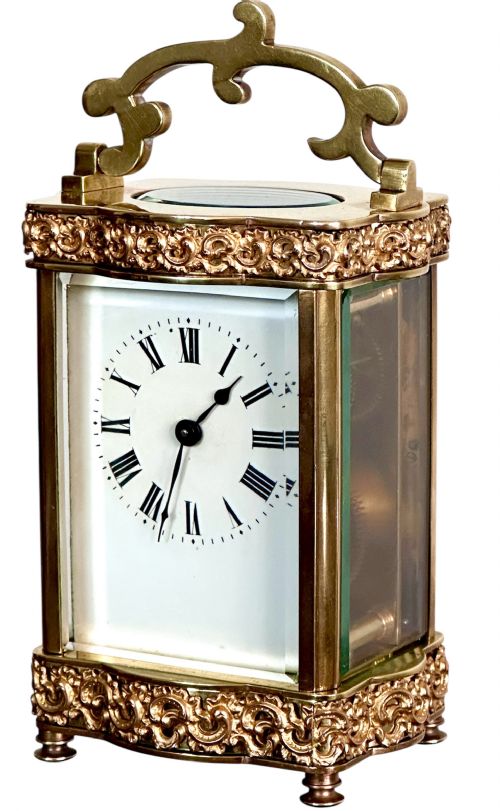
Makers constructed the structural frames of these timekeepers using brass, gilt brass, and gilt bronze, often shaping the metal into serpentine outlines or adding columns and decorative frets. Enamel and porcelain panels were integrated into the design for painted floral and figurative motifs.
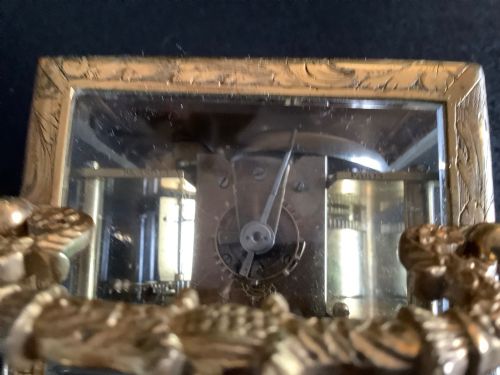
Protective outer housings were fashioned from leather to shield the portable mechanisms during transit, while transparent glass panels allowed the interior movement to remain visible from multiple sides.
Decorative Travel Clock Retail Price Guide 2026
Typical asking prices for decorative travel clock among the pieces listed under this phrase on Sellingantiques today, from the lower quarter to the upper quarter. They describe what is for sale here now, not the wider market.
Listings feature Victorian and nineteenth century French carriage clocks utilising brass, gilt bronze, enamel, porcelain, and leather.
What varies in quality
The distinction between standard and superior pieces rests in the extent and execution of surface decoration, such as fully engraved gilt bronze cases versus plain brass frames. Hand painted enamel designs and porcelain panels add considerable visual complexity to the better examples.
Mechanical sophistication also defines the range, separating straightforward timepieces from repeater clocks that strike the hours and quarters, as well as uncommon configurations like double sided dials or signed works by notable makers.
Duverdrey and Bloquel·Paul Garnier
The Decorative Travel Clock Glossary
- Carriage clock
- A small, spring driven timepiece designed for travel during the nineteenth century. These clocks typically feature a rectangular brass frame with glass panels.
- Repeater
- A mechanism in a clock that chimes the hours and quarters on demand when a lever or button is pressed. This complication required advanced gear work.
- Gilt bronze
- Bronze metal coated with a thin layer of gold or gold coloured alloy to provide a lustrous finish. It was frequently used in French decorative metalwork.
- Capucine
- An early form of portable striking clock with a bell on top and carrying handles, often associated with French production. It represents a traditional precursor to the standard carriage clock.
- Fret
- An ornamental pattern formed by piercing or perforating metal plates. These openwork designs allowed sound to escape from the clock case.
Decorative Travel Clock: Frequently Asked Questions
What is a carriage clock?
A carriage clock is a portable spring driven timepiece enclosed in a brass and glass case, originally built for travellers in the nineteenth century.
These clocks feature a handle on top and a platform escapement, allowing them to keep accurate time while being moved.
How do repeater clocks work?
A repeater mechanism allows the clock to strike the last hour and quarter hour when you press a button or pull a cord on the case.
This function was particularly useful for checking the time in the dark during horse drawn or rail journeys.
How do I date a French carriage clock?
Dating involves examining the style of the case, the complexity of the movement, and any signatures or hallmarks stamped on the brass backplate.
Pieces from the mid nineteenth century often display simpler gilt brass frames, while 1890s examples frequently incorporate elaborate enamel paintings and porcelain panels.
Where were most decorative travel clocks made?
The vast majority of these portable timekeepers originated in French workshops, particularly in Paris and provincial centres, during the nineteenth century.
British retailers and makers also retailed and produced quality brass carriage clocks during the Victorian period to suit domestic buyers.