




Decorative Timber Vessels
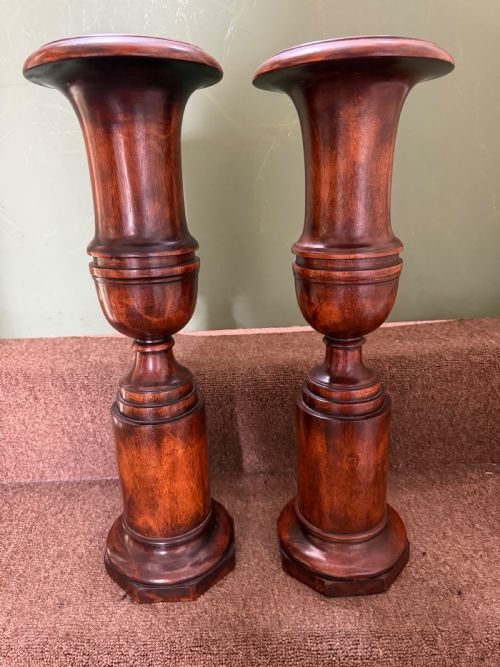
These decorative timber vessels bring warmth and tactile grain to a room, ranging from turned walnut urns to rustic turned bowls.
Decorative Timber Vessels
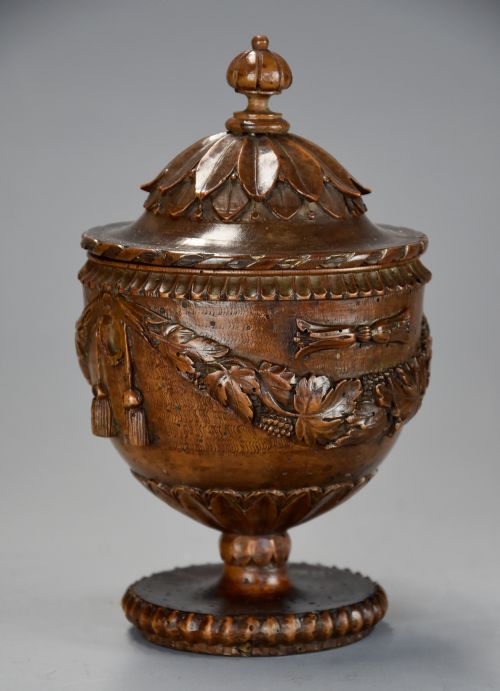
When you search for decorative timber vessels, you find a varied group of turned and carved objects spanning several centuries, from Georgian pieces to early twentieth century items. These encompass functional treen transformed into display pieces, including spill vases, lidded urns, and large carved bowls.
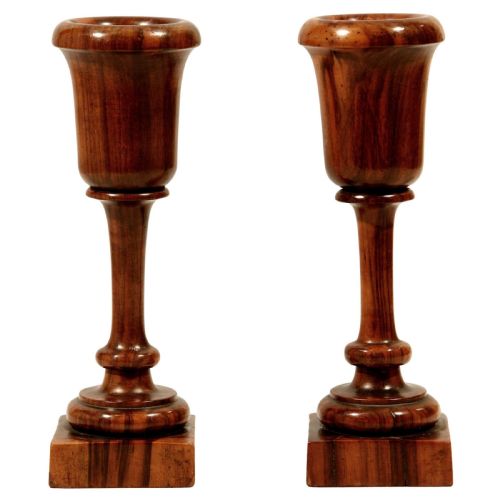
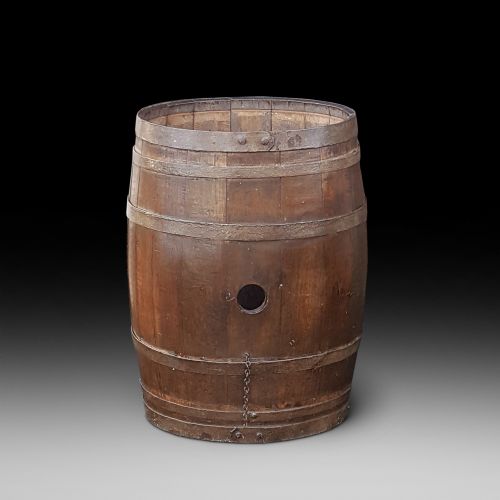
You are most likely to encounter turned walnut vases and hardwood spill stems on this page, alongside coopered barrels and dug out bowls. The selection bridges formal neoclassical design and simpler primitive folk art or maritime craftsmanship.
Objects range from finely carved lidded urns with neoclassical lines to robust utilitarian vessels like oak and lignum vitae spill vases. Each piece reflects the enduring appeal of turned and carved timber in domestic interiors.
How they were made
Maker's workshops utilised dense hardwoods such as lignum vitae and walnut, chosen for their ability to take a sharp, clean turn on the lathe and hold crisp carved details. Craftsmen employed traditional turning techniques to shape symmetrical urns, goblets, and slender spill vases from solid timber.
Other vessels, such as large bowls and barrels, relied on cooperage or dugout construction methods where solid wood was hollowed out or staves were bound with iron. Surface finishing often involved hand-carving and polishing to develop a deep patina on the timber.
Among the turned urns and fine spill vases, you might even spot a tiny carved model ship sailing across a wooden mantelpiece.
What varies in quality
The distinction between standard items and superior examples lies in the crispness of the turning and the choice of timber. Finely figured walnut and dense lignum vitae with well-defined neoclassical proportions or crisp carving sit at the upper end of the range.
Surface preservation and depth of patina dictate desirability among turned treen and vessels. Pieces that retain their original rich surface polish without excessive modern intervention show the true hand of the maker.
The Decorative Timber Vessels Glossary
- Treen
- Small wooden domestic objects made by turning or carving. This encompasses items such as spill vases, goblets, and small boxes.
- Lignum Vitae
- A dense, heavy hardwood known for its oily nature and rich dark colour. It was frequently used for turned items requiring durability.
- Spill Vase
- A small container designed to hold wooden spills used for lighting fires or candles. They are often turned from walnut, yew, or other hardwoods.
- Coopered
- Constructed from curved wooden staves joined together and bound with metal hoops, typical of barrels and casks.
- Patina
- The surface sheen and colour acquired by timber through age, handling, and polishing over many years.
Decorative Timber Vessels: Frequently Asked Questions
What are decorative timber vessels?
These are turned and carved wooden items made for display or domestic use, spanning centuries of craftsmanship.
They include urns, vases, bowls, and boxes shaped from various hardwoods.
How were these vessels used?
Many started as functional household items such as spill holders, snuff boxes, or small barrels for storage.
Over time, their decorative qualities and pleasing timber grain made them sought-after display objects.
How do I live with timber vessels?
Keep wooden pieces away from direct heat sources and sudden humidity changes to protect the timber grain.
Display them on tables, shelves, or sideboards where their varied forms and patinas can be appreciated up close.
How can I tell periods apart?
Neoclassical forms and fine walnut turning often point towards the eighteenth or early nineteenth century.
Robust dug out bowls and Arts and Crafts items typically indicate later periods like the Edwardian era.