




Decorative Three Fold Screen
A decorative three fold screen divides a room or frames a hearth with the weight of nineteenth and twentieth century craft.
Decorative Three Fold Screen
A decorative three fold screen partitions a space or protects a room using three hinged panels hinged together for movement. These objects appear in nineteenth century and mid twentieth century forms, ranging from modest fireplace accessories to full height room dividers.
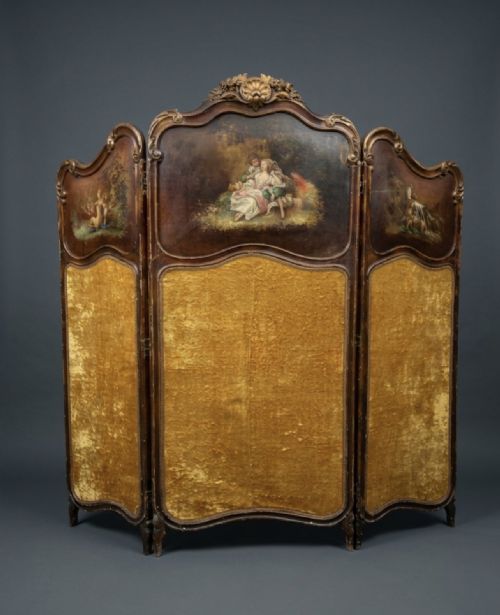
The versions most commonly met on this page are nineteenth century French and Continental pieces alongside later Arts and Crafts and Oriental examples. Walnut, oak, and hardwood frames hold painted leather, embroidered velvet, oil paint, and lacquer panels.
Makers and workshops constructed these folding screens to serve practical domestic duties while displaying intricate decorative schemes. Styles span from French Rococo Revival and Louis XIV Revival to Persian Revival and Chinoiserie.
Materials and construction
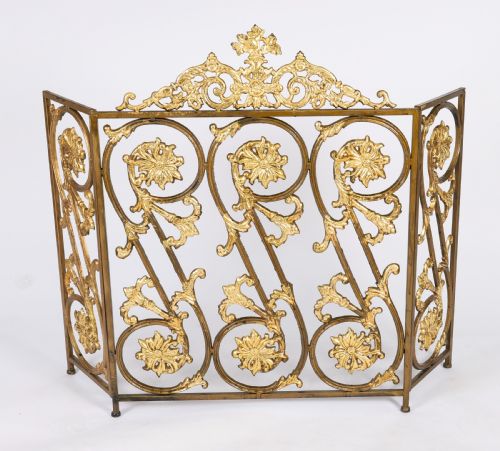
Woodwork forms the structural core of these pieces, utilising walnut, oak, and diverse hardwoods shaped into three hinged panels. Giltwood, brass, and gilt brass provide metallic framing and decorative mounts.
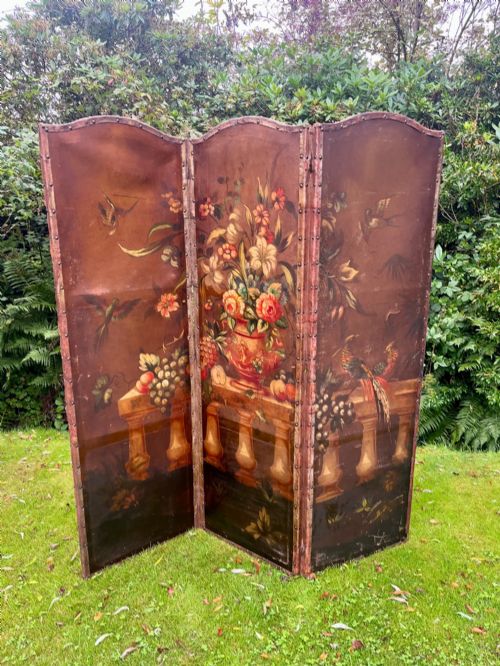
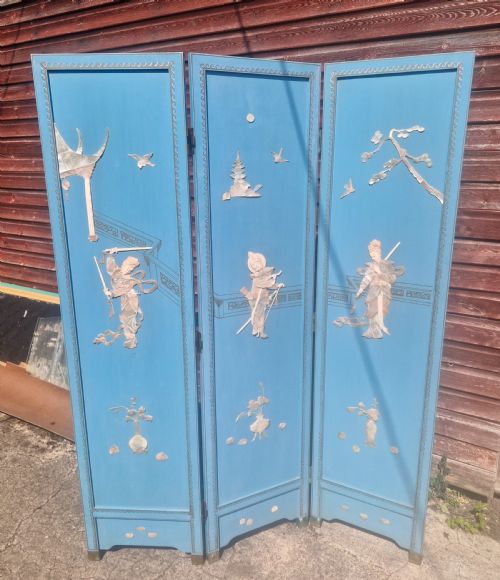
Surface decoration relies on traditional artisan techniques including hand painted leather, oil paint on canvas or wood, and woven Aubusson tapestries. Lacquer work and bone inlay appear on specific Oriental examples, while others employ William Morris velvet fabric.
Listings feature pieces spanning the nineteenth century through the 1950s, incorporating brass, leather, velvet, and lacquer.
Evaluating quality and execution
Quality rests upon the depth of hand execution in the painted or embroidered panels and the structural integrity of the timber framing. Painted leather and pastoral scenes executed by skilled hands display finer brushwork and richer pigments than simpler commercial outputs.
The choice of materials dictates the upper tiers of the range, particularly where substantial hardwood frames accompany elaborate bone inlay or genuine Aubusson textiles. Subtlety in stylistic revival ornamentation distinguishes superior pieces from standard domestic partitions.
The Decorative Three Fold Screen Glossary
- Fire screen
- A movable screen placed before a fireplace to block radiant heat when a fire is not burning. These often feature glass, needlework, or painted panels mounted in brass or wooden frames.
- Modesty screen
- A small folding screen historically used in domestic interiors to shield a person from draughts or direct view. They share construction methods with larger room dividers but operate on a more intimate scale.
- Aubusson
- A tapestry weave originating from the French town of the same name. These textiles frequently depict pastoral scenes and appear mounted within nineteenth century wooden frames.
- Chinoiserie
- A European artistic style reflecting Chinese aesthetic influences. This style utilises motifs of landscapes, figures, and flora executed in lacquer or paint upon screens.
- Lacquer
- A durable finish applied in multiple layers to wood surfaces. It creates a smooth, glossy coating often associated with Asian decorative arts.
Decorative Three Fold Screen: Frequently Asked Questions
What is a decorative three fold screen used for?
These screens serve to divide interior spaces, conceal areas of a room, or act as ornamental barriers near fireplaces. Their three panel folding design allows them to stand unsupported in various configurations.
Historically, they also blocked heat from hearths or protected occupants from draughts in large rooms. Today, they function primarily as decorative focal points that introduce historical pattern and texture to an interior.
How do I date a folding screen?
Dating relies on examining the timber construction, hinge types, and the stylistic vocabulary of the painted or textile panels. Nineteenth century examples frequently display French Rococo Revival or Arts and Crafts motifs.
Materials such as hand painted leather or specific velvet fabric weaves offer further chronological markers. Comparing the joinery methods and decorative techniques against documented period pieces helps narrow the decade of origin.
How do I care for painted leather panels?
Painted leather requires protection from direct sunlight and excessive humidity to prevent cracking and pigment loss. Dusting should be performed gently with a dry, soft cloth.
Avoid applying modern cleaning chemicals or oils to the painted surface. Maintaining stable indoor environmental conditions preserves both the leather substrate and the original artwork.
What is the difference between a fire screen and a room screen?
Fire screens are typically smaller objects designed specifically for placement before a hearth, often featuring a single panel or low folding leaves. Room screens stand taller to partition floor space and create private zones within a larger interior.
Despite their differing intended locations, both types share similar construction methods and stylistic revivals. The scale and proportion usually indicate whether a piece belonged by the fireplace or in the centre of a room.