

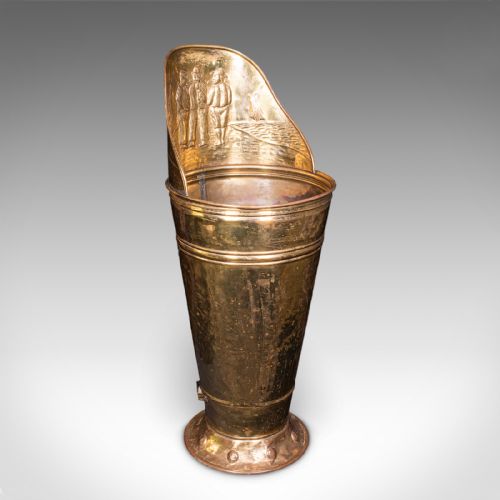


Decorative Stick Stand
A decorative stick stand turns the functional necessity of storing wet umbrellas and walking canes into an architectural feature of the hallway.
Decorative Stick Stand
A decorative stick stand is an essential hall furnishing designed to hold umbrellas, walking canes, and parasols while managing the water they bring indoors. The pieces on this page span the Victorian and Edwardian eras through to the nineteen thirties, encompassing utility forms alongside artistic works.
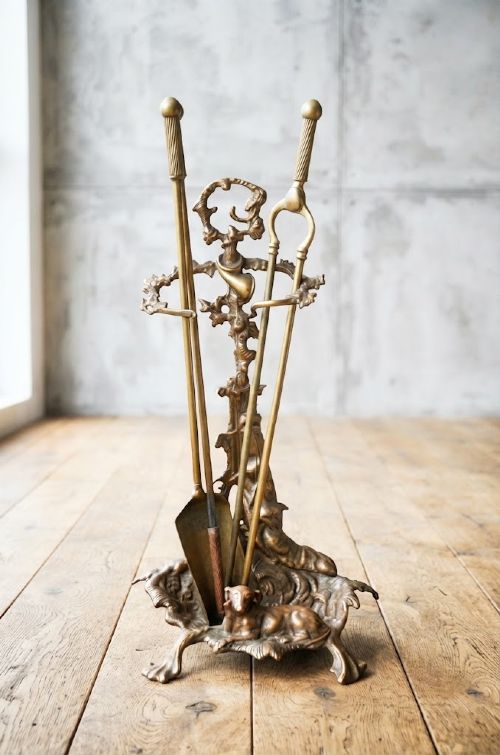
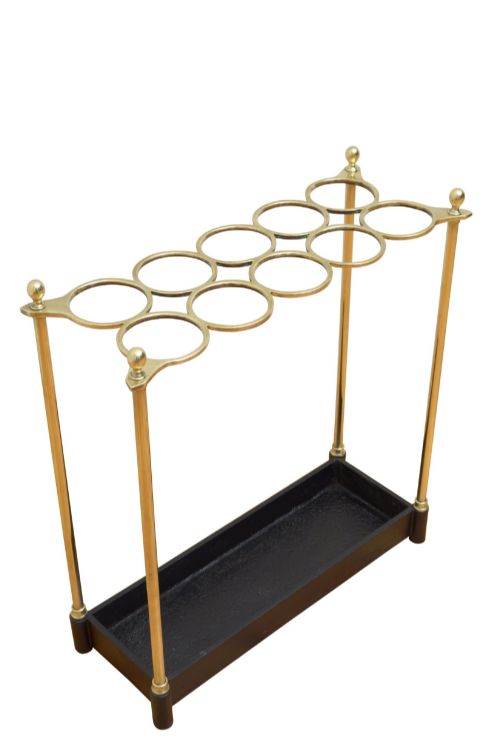
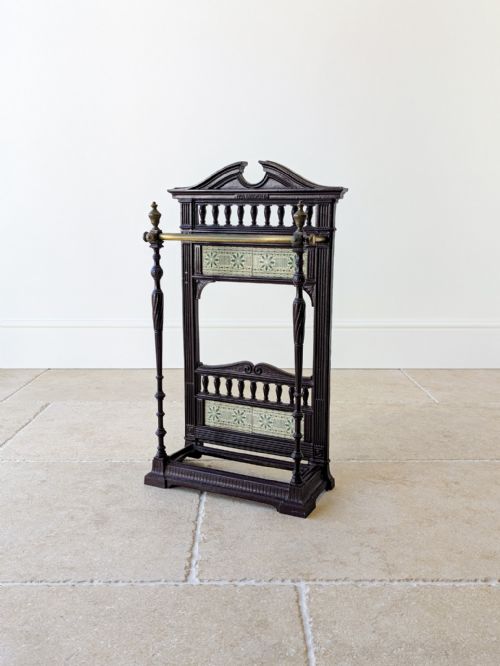
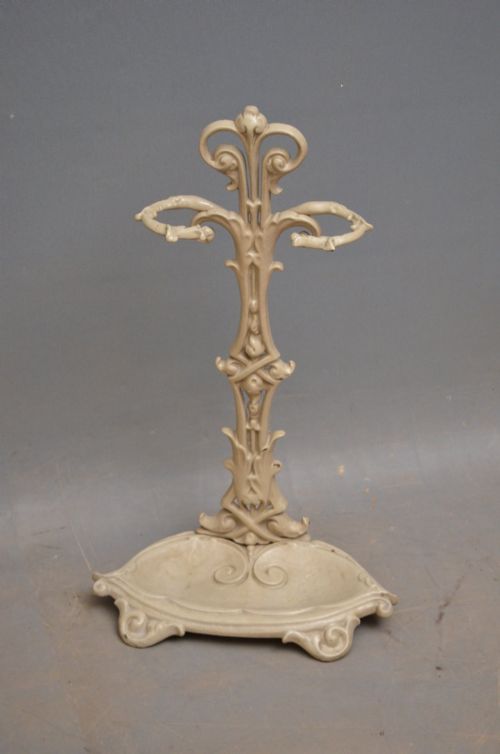
Cast iron and brass dominate the selection, appearing in heavy utility designs and lighter aesthetic models alike. You will encounter straightforward umbrella stands alongside multi-purpose pieces that double as planters, fire iron stands, or hat and coat holders.
The styles range from restrained Regency and Victorian Gothic Revival through to flowing Art Nouveau and Aesthetic Movement creations. Makers and foundries utilised durable metals and ceramics to create objects that stood up to daily country house or townhouse use.
How they were made
Foundries shaped heavy structural elements using cast iron and brass, often producing intricate openwork patterns or figurative subjects like Hercules and William Wallace. These metals provided the necessary weight to prevent tipping when loaded with heavy walking sticks and damp umbrellas.
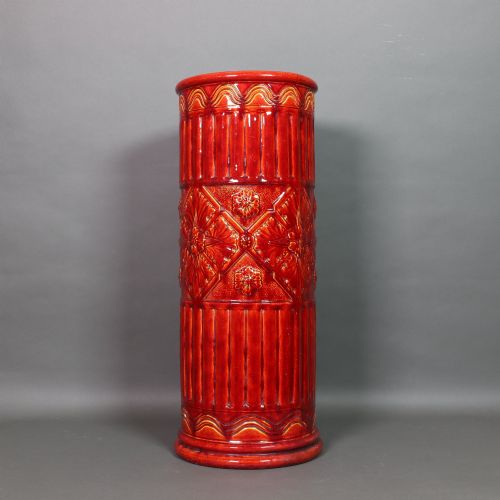
Potteries and ceramic workshops contributed glazed earthenware, porcelain, and faience bodies, bringing colour and pattern to hall furniture. Artisans combined these ceramic liners with metal frames to catch drip water without rusting the floor.
Copper, painted wood, and leather also feature in the construction of barrels, buckets, and tree trunks adapted for umbrella storage. These varied media demonstrate how makers utilised whatever durable materials were at hand to keep hallways dry and orderly.
Decorative Stick Stand Retail Price Guide 2026
Typical asking prices for decorative stick stand among the pieces listed under this phrase on Sellingantiques today, from the lower quarter to the upper quarter. They describe what is for sale here now, not the wider market.
One dramatic hall stand is formed from three crossed iron halberds or pikes, ready to fend off unwanted guests before they reach the parlour.
What varies in quality
Structural integrity and the retention of original drip pans dictate the worth of a metal stand. Replacements or missing trays alter the completeness of the object, whereas intact matching components preserve its original domestic function.
Coalbrookdale·Burmantofts Faience
The Decorative Stick Stand Glossary
- Cast iron
- An iron-carbon alloy poured into a mould to form solid, heavy objects. It allows for crisp relief details and provides the necessary ballast for hall stands.
- Aesthetic Movement
- A late nineteenth-century design style emphasising visual beauty over narrative subject matter. It often incorporates Japanese motifs and stylized natural forms.
- Art Nouveau
- A decorative style popular around nineteen hundred characterised by sinuous, organic lines and floral motifs. It breaks away from historical revival styles.
- Faience
- Tin-glazed earthenware known for its bright colours and smooth surface. Burmantofts produced notable examples used in architectural ceramics and umbrella holders.
Decorative Stick Stand: Frequently Asked Questions
How do I clean an iron stick stand?
Dust regularly with a soft brush and remove any accumulated mineral deposits in the base tray carefully. Avoid abrasive cleaners that might strip the original painted or patinated surface.
Keep the metal dry after emptying rainwater to prevent surface corrosion from developing inside the well.
Were these stands only used for umbrellas?
Many of these pieces served multiple domestic purposes in the entrance hall or country house boot room. Makers designed them to accommodate riding crops, hunting poles, and walking canes alongside wet umbrellas.
Some variants incorporated hooks for hats and coats or double as fire iron stands for the hearth.
Where should I place a metal stand?
Position the piece on a hard, water-resistant floor surface near the main entrance of your home. Ensure the base has its original metal or ceramic liner to protect your flooring from lingering moisture.
Keep the stand away from direct and constant dampness to preserve the integrity of cast iron and brass surfaces.
How do I identify an Edwardian stand?
Edwardian pieces often display lighter proportions and influences from the Arts and Crafts or Art Nouveau movements. They frequently feature clean cast brass elements or stylised floral motifs.
Compare the construction methods and stylistic motifs against dated examples from the early twentieth century to confirm the period.