



Decorative Spill Vases
These decorative spill vases are functional holders designed to store thin wooden spills for transferring a flame.
Decorative Spill Vases
When you search for decorative spill vases, you encounter a selection of historic containers created to hold wooden tapers for lighting fires, candles, and lamps. The examples on this page span several eras, originating from British workshops and international makers alike.
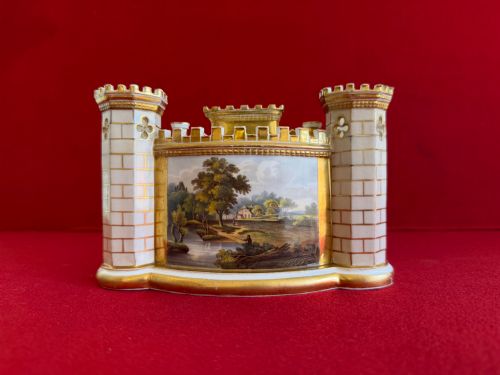
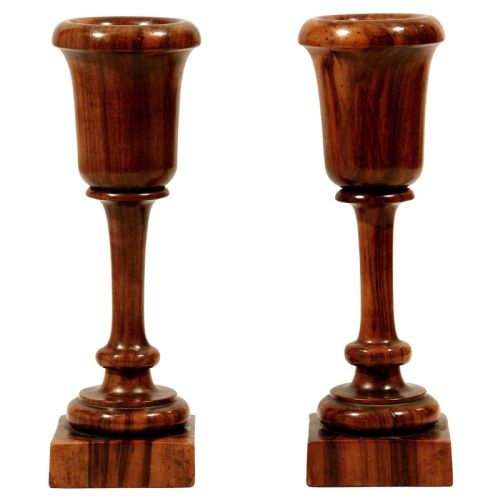
Most pieces you meet here take traditional forms, ranging from earthenware figures and castles to turned wooden urns and glass vessels. Makers shaped these items from ceramic, porcelain, and timber to sit neatly on mantelpieces.
Earlier pieces align with Regency and Georgian periods, while later items reflect Victorian and Edwardian tastes, including Royal Worcester creations and Staffordshire flatbacks. Ceramic and porcelain versions dominate the selection.
Materials and construction
Potters shaped porcelain, earthenware, and bisque porcelain into elaborate figural or architectural forms, frequently applying enamel, gold leaf, and gilt highlights to the surfaces. Artisans also turned solid blocks of yew wood and lignum vitae to create durable wooden stem vases.
Makers utilised specialised techniques such as moriage decoration on Japanese Satsuma earthenware and classical relief moulding on blue jasperware. Hand-painting appears across porcelain and ceramic bodies, often depicting pastoral or animal scenes.
Decorative Spill Vases Retail Price Guide 2026
Typical asking prices for decorative spill vases among the pieces listed under this phrase on Sellingantiques today, from the lower quarter to the upper quarter. They describe what is for sale here now, not the wider market.
Highland cattle gaze out from porcelain surfaces, keeping watch over centuries of hearthside history.
Assessing quality
Quality rests upon the crispness of the modelling, particularly in figural and architectural pieces where fine details define the form. Sharp hand-painting and careful application of gilding distinguish superior ceramic work from simpler production.
In wooden examples, the precision of the turning and the choice of dense hardwoods such as lignum vitae determine the standard of the piece. Well-preserved enamel and minimal wear to surface decoration mark the better examples.
Royal Worcester·Vion et Baury·Wedgwood
The Decorative Spill Vases Glossary
- Spill
- A thin slip of wood or paper used for transferring a fire from a hearth to a candle or pipe. These vessels were made specifically to hold bundles of them.
- Bisque
- Unglazed porcelain with a matte, marble-like texture that highlights fine sculptural details. It gained popularity during the nineteenth century for decorative figures.
- Flatback
- A ceramic figure modelled fully on the front with a flat, unadorned reverse designed to sit against a wall. Stafforshire potteries produced many variations of this style.
- Jasperware
- A type of fine stoneware developed by Wedgwood, characterised by a matte surface and contrasting applied classical reliefs. Blue is the most common background colour.
Decorative Spill Vases: Frequently Asked Questions
How were spill vases used?
Households placed them on mantelpieces within easy reach of the hearth. A person would take a wooden spill, touch it to the fire, and use it to light other household flames.
This method saved matches and burning paper before safety matches became common. The vases protected the delicate tapers while displaying them as decorative ornaments.
How do I date a spill vase?
Dating relies upon material composition, decorative style, and factory marks. Regency and Georgian pieces often show neoclassical forms, whereas Victorian items frequently feature bright enamels and elaborate moulding.
Pottery marks, handwritten inscriptions, and specific manufacturing techniques help narrow the period of origin. Wood-turned examples require examining the timber grain and turning style.
Are these vases fragile?
Ceramic, porcelain, and glass examples require careful handling due to their age and material composition. Bisque porcelain and delicate painted surfaces need gentle dusting without harsh cleaning agents.
Wooden and metal-mounted pieces are generally more robust but still benefit from stable indoor humidity. Proper placement away from high-traffic edges prevents accidental drops.