
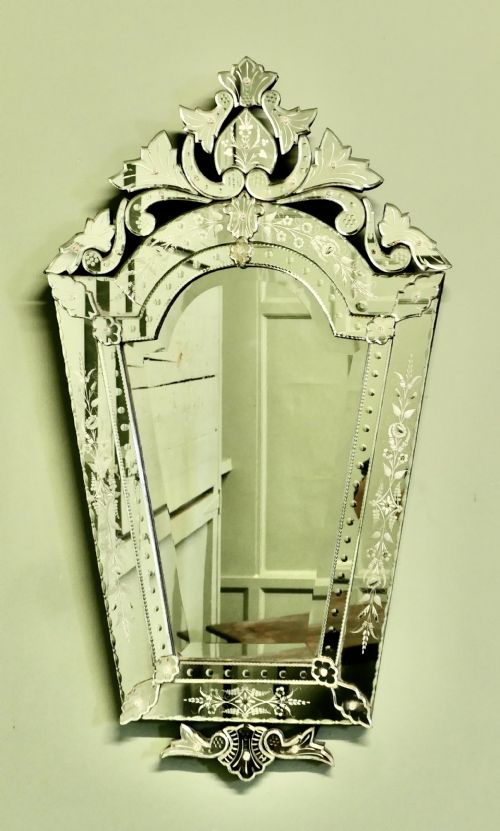
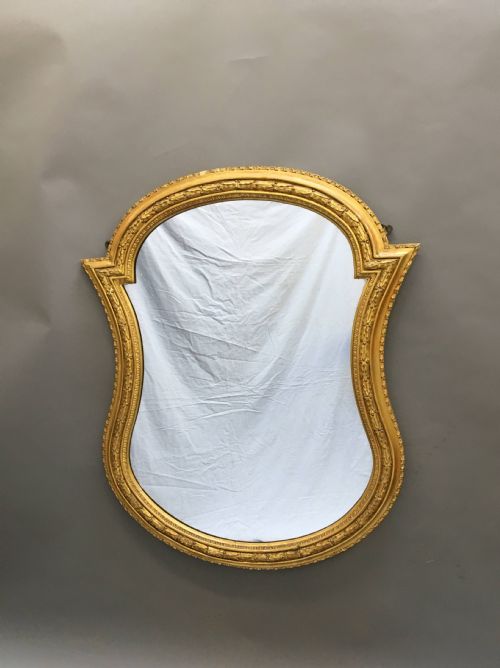
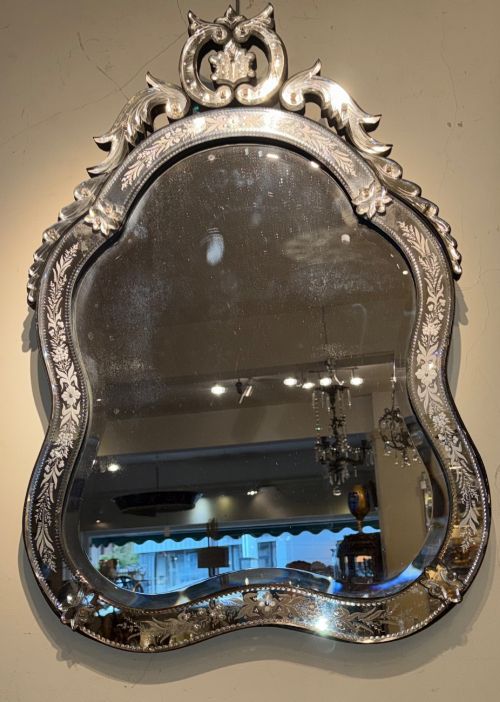
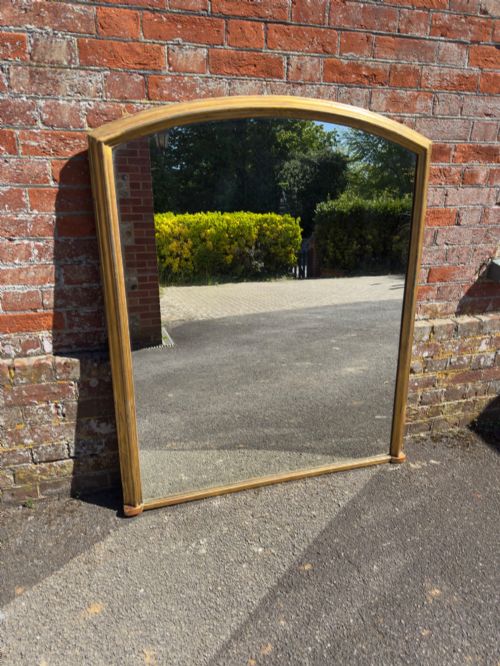


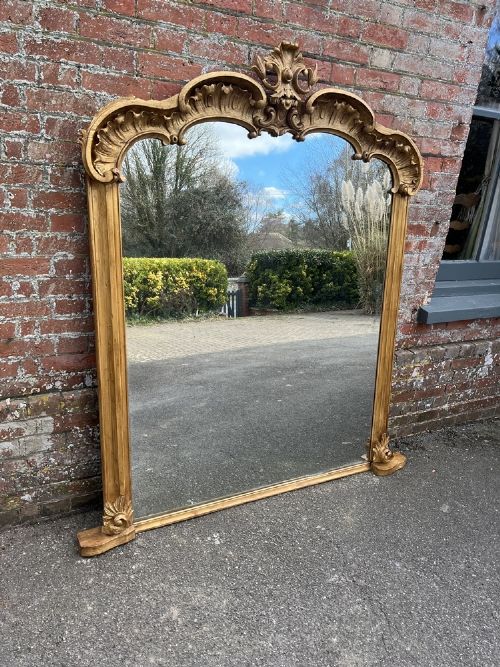


Decorative Shape Wall Mirror
A decorative shape wall mirror brings character to a room through curved frames, gilt surfaces and unusual silhouettes.
Decorative Shape Wall Mirror
A decorative shape wall mirror encompasses framed glass pieces shaped in quatrefoil, shield, diamond, or simple arched profiles. These items appear across periods from the nineteenth century through to the mid twentieth century, drawing on styles such as French Chateau, Rococo Revival, and Art Deco. Buyers looking for a decorative shape wall mirror will find examples ranging from Italian hand painted pier glass to large English overmantels.
The selection on this page leans heavily toward nineteenth century carved wood and gesso overmantels alongside Venetian and Art Deco wall pieces. Forms vary from tall vertical formats to geometric wall hangings framed in wood, brass, or velvet. Each piece serves to reflect light while acting as a focal point within a room scheme.
How they were made
Makers constructed the frames of these mirrors using carved wood, often applying a layer of gesso before finishing the surface with gold leaf, paint, or giltwood. Carving detailed motifs like laurel leaves required skilled handwork, particularly on elaborate overmantel frames and Italian Renaissance walnut pieces. Glass plates were cut to fit specific geometric profiles such as quatrefoil, shield, and diamond shapes.
Alternative frames relied on brass, velvet, and inlaid walnut to achieve distinct aesthetic effects ranging from French chateau opulence to mid century modern austerity. Paint was applied directly to wood surfaces on decorative Italian and French pieces, creating softer colour tones than traditional metallic gilding.
One Victorian mirror comes wrapped in plush velvet, proving that even reflections need a tactile winter coat.
What varies in quality
Quality in these pieces is dictated by the crispness of the hand carving on the wood and gesso frames, where deeper relief work and sharply defined leaf motifs separate finer items from simpler production. The application of gold leaf versus basic paint or modern metallic finishes alters the depth and visual warmth of the frame over time.
The preservation of the original glass plate and the integrity of the underlying wooden structure also determine the standing of an individual mirror. Pieces featuring integrated panels, complex bevels, or specialised shapes like quatrefoil and diamond demonstrate greater craftsmanship than standard rectangular formats.
The Decorative Shape Wall Mirror Glossary
- Gesso
- A plaster mixture applied to carved wood frames to provide a smooth base for gilding or painting. This material is characteristic of nineteenth century overmantels.
- Overmantel mirror
- A large wall mirror designed specifically to hang above a fireplace mantel. These pieces often feature shaped tops and substantial carved frames.
- Quatrefoil
- A symmetrical decorative shape composed of four partially overlapping circles. It appears frequently in nineteenth century mirror frames.
- Pier glass
- A tall mirror designed to hang on the wall between two windows, often placed above a small pier table. Italian examples often feature hand painted details.
- Giltwood
- Wood that has been coated with gold leaf or a gold coloured metallic finish. It defines many Rococo Revival and Victorian frames.
Decorative Shape Wall Mirror: Frequently Asked Questions
How do I hang a heavy overmantel mirror?
Large overmantel mirrors require secure wall fixings anchored directly into masonry or substantial timber studs due to their considerable weight and solid wood construction.
Professional mirror hangers often utilise mirror plates screwed into the frame back to distribute the load evenly across the wall.
Can these mirrors be used in bathrooms?
Original antique mirrors featuring gesso, wood, and silvered glass are sensitive to high humidity and moisture. Steam can damage the traditional backing and cause the gilt surface to deteriorate.
Dry interior rooms like hallways, living spaces, and bedrooms remain the most suitable environments for preserving these pieces.
What is the difference between an overmantel and a wall mirror?
Overmantel mirrors are proportioned specifically to sit horizontally above a fireplace, often featuring grand architectural shapes and substantial carved crests. Standard wall mirrors are scaled for general wall placement across rooms.
Both types utilise decorative framing but serve different spatial functions within historic interior layouts.